
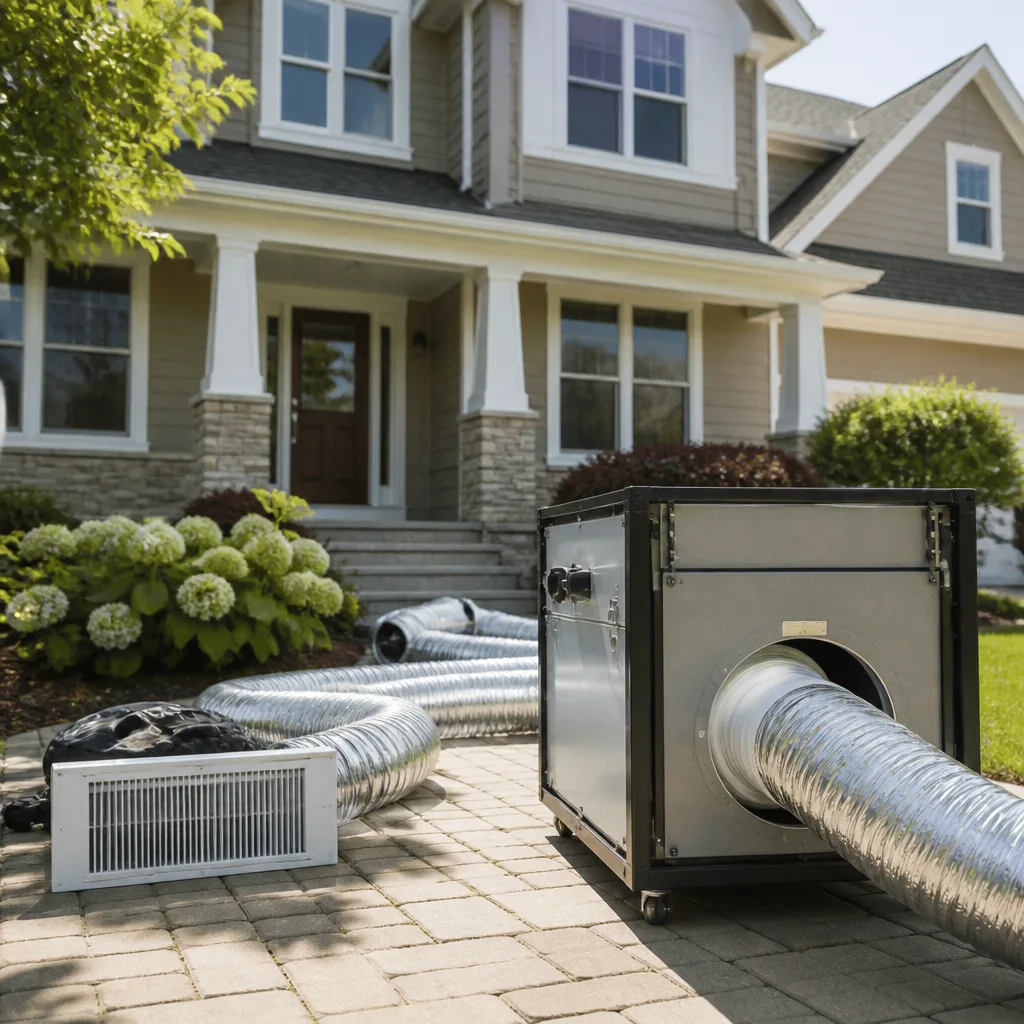
 Whole-home duct cleaning
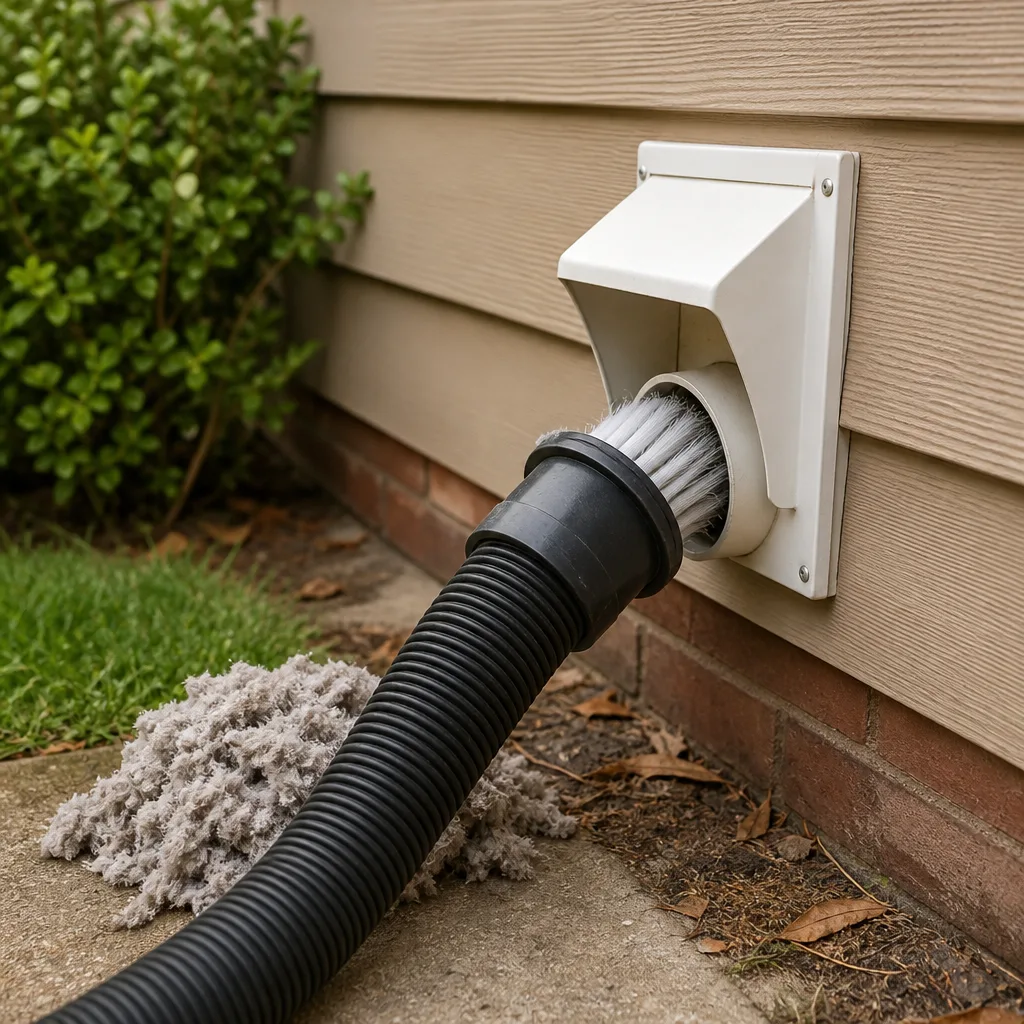 Dryer vent cleaning
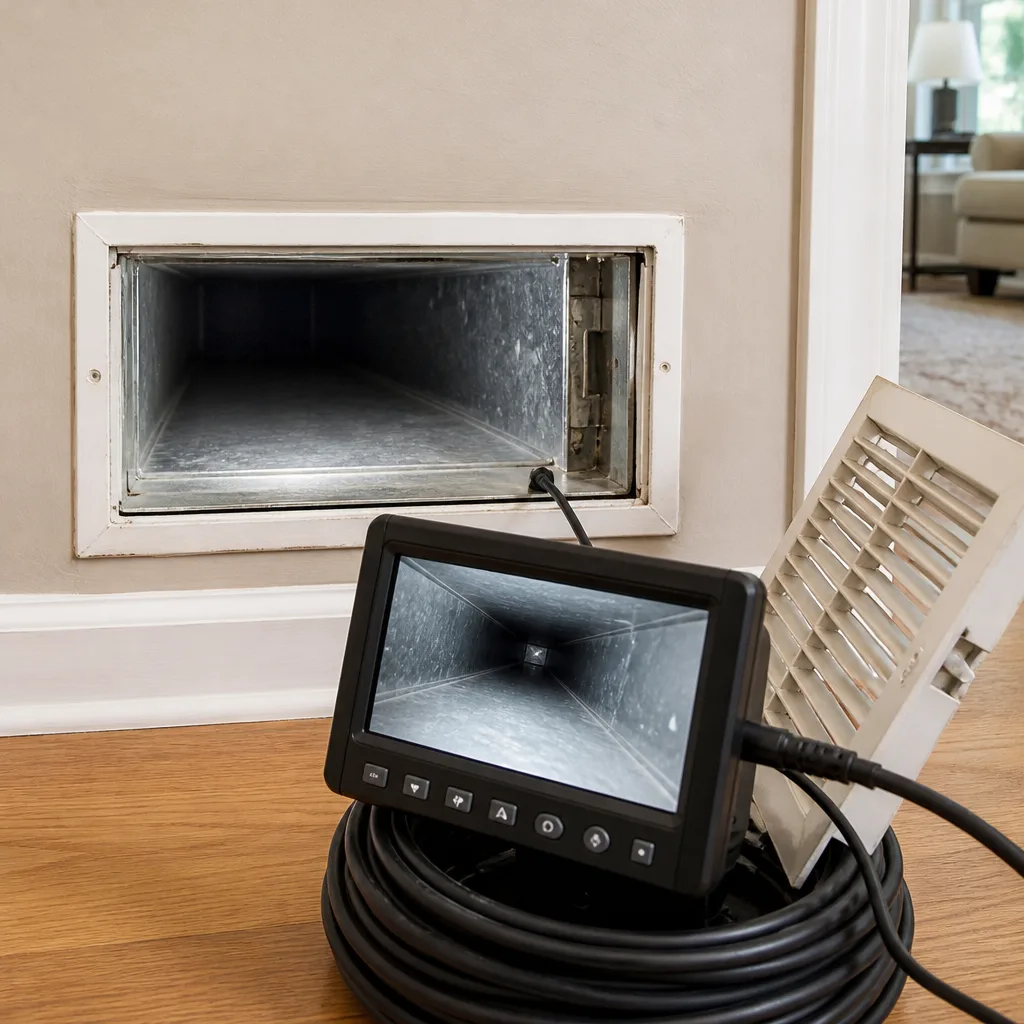 Camera inspection
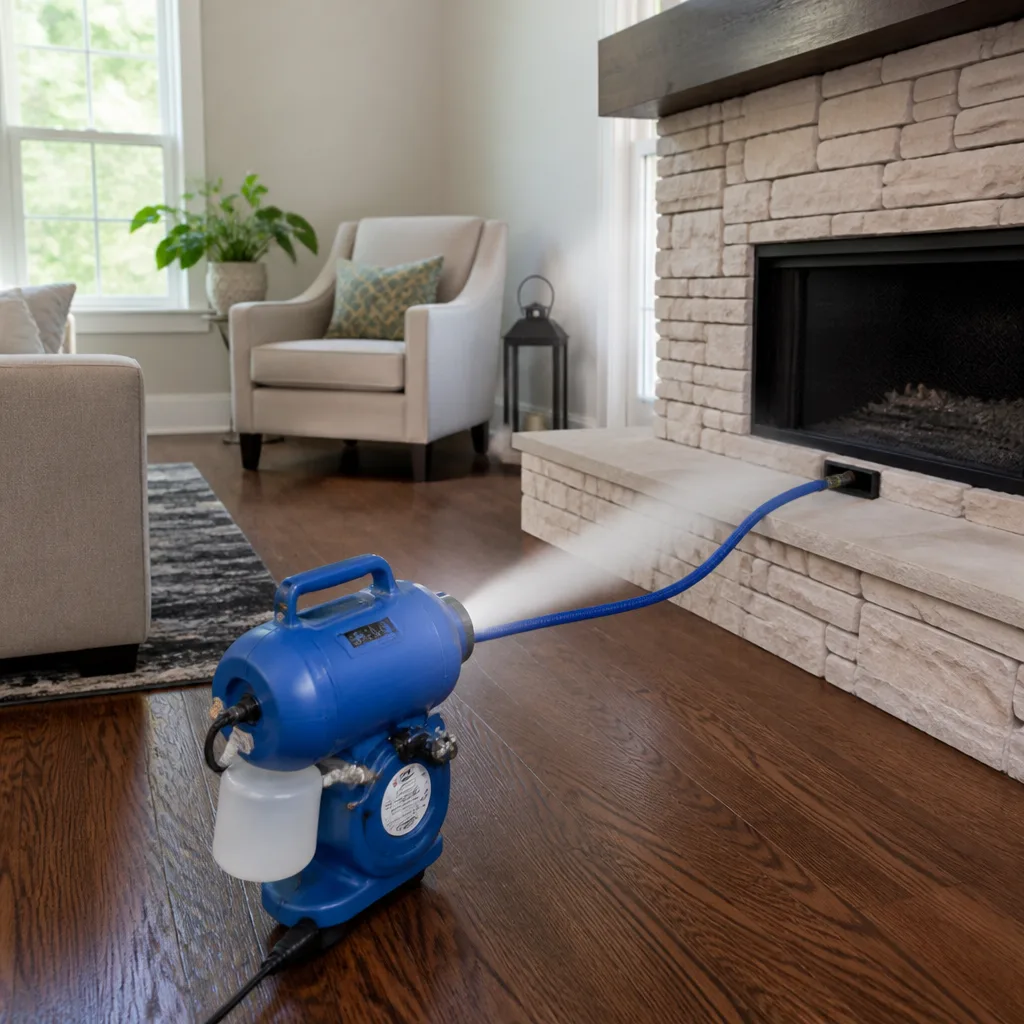 Sanitizing & deodorizing
Whole-system duct and dryer vent check with before-and-after photos - you see exactly what came out of your vents
That "$99 whole-house special" is a bait ad - the real number appears once they are in your hallway, or the "clean" is a shop-vac at the register. We photograph the inside of your ducts before and after instead.
Abatement Technologies Register & Grille Cleaning: The Miami Owner’s Guide
If you own an Abatement Technologies air filtration or negative-air unit, register and grille cleaning isn’t a cosmetic afterthought. It’s how the system keeps doing what it was built to do. In Miami, we clean and service Abatement Technologies registers and grilles as part of the duct and filtration work we perform, and most register and grille deep cleaning jobs on residential systems run between $150 and $350 depending on how many openings you have and how much buildup has set in. Owners usually realize something’s wrong when airflow drops off in one room, or when they pop a register off and find a layer of gray fuzz that looks like dryer lint but isn’t.
That fuzz is what we call filter cake residue; fine particulate that squeezed past the primary filter and collected on the grille vanes, the register boot, and the first few inches of duct. It happens faster in Miami than almost anywhere else because the humidity keeps dust damp enough to stick instead of blowing through. Dale Whitmore, our owner, has pulled registers out of Coral Gables homes where the buildup was thick enough to measure with a ruler. The register looks like a vent. It’s actually the final filter point, and when it’s clogged, your Abatement unit is working against itself.
Key Takeaways:
- We stock common Abatement Technologies register sizes and compatible aftermarket replacements on the truck
- Typical installed cleaning and replacement cost: $150 – $350, written before work starts
- Most register and grille service calls are completed in one visit
- We’re an independent service provider, not affiliated with Abatement Technologies
- Every job carries our 365-Day Done Right Promise in writing
Which Abatement Technologies Models This Applies To
Abatement Technologies puts registers and grilles on several equipment lines, including their portable HEPA filtration units, their negative-air machines, and the ducted filtration systems used in restoration and indoor-air-quality work. The register designs vary by series. Some use stamped aluminum grilles with fixed vanes; others use adjustable steel registers with a damper blade behind the grille. The patching between an Abatement OEM grille and a quality aftermarket equivalent is usually straightforward, but there’s one compatibility gotcha that catches people: the flush-mount grilles on Abatement’s portable units use a non-standard frame depth, and a generic big-box grille will sit proud of the surface by an eighth of an inch or more. It looks wrong and it leaks air around the frame.
To identify what you have, look for the model plate on the unit itself, then check the register opening dimensions. Abatement registers are sized by the opening, not the outside frame. A “12 x 12” grille fits a 12-inch by 12-inch rough opening. If you measure the old grille face and order that size, you’ll end up with one that’s too big. We keep a range of OEM Abatement grilles and quality aftermarket equivalents on the truck in common sizes like 10×10, 12×12, and 14×14, plus the less common rectangular sizes that show up on older negative-air units. We also service equipment from Lennox, Trane, and Carrier where the register work overlaps with duct cleaning.
Styles & brands we work with
Signs Your Abatement Technologies Register & Grille Cleaning Is Failing
- Visible fuzz or dark buildup on the grille vanes. This is fine particulate that made it past the primary filter. It means the register is now doing filter duty, and the restriction is cutting airflow. In Miami’s humid air, this buildup often looks slightly damp and sticks to the metal instead of brushing off dry.
- One room stopped cooling or heating evenly. When a register loads up with debris, the air takes the path of least resistance. The room with the cleanest register gets the airflow, and the room with the clogged one feels stale. People blame the HVAC system; it’s often the register.
- Whistling or rushing noise from the grille. Restricted airflow through partially blocked vanes creates turbulence. The noise is the air squeezing through a smaller opening than the grille was designed for.
- Dust streaking on the ceiling or wall around the register. Air leaking around the register frame carries fine particles that stick to surfaces. If you see gray streaks radiating from the grille edges, the register isn’t sealing properly or the buildup is redirecting airflow outward.
- The damper blade won’t move or the vanes won’t adjust. On adjustable Abatement registers, dust and humidity combine into a paste that seizes the moving parts. Force the blade and you’ll snap the linkage. We see this often on restoration equipment registers that haven’t been serviced between jobs.
Replacement Cost & What’s Included
For a Miami residence, cleaning and servicing Abatement registers and grilles typically runs $150 to $350 for the whole home, depending on the number of registers and the condition of each. If any registers need replacement, the grille itself adds $18 to $65 per opening for standard sizes, and the part cost is on your quote before we touch anything. You get the written price in your hands first. No revisions at the door, no surcharge for the van showing up.
The work includes removing each register, cleaning the grille vanes, cleaning the register boot and the first reachable section of duct behind it, checking the damper mechanism, and re-seating everything with a proper seal. We use negative-air extraction on the duct side, which means we pull the loosened debris out under suction instead of letting it fall back into the duct and re-deposit on the register a month later. The 365-Day Done Right Promise covers the work in writing. If a register we cleaned loads back up within the year, we return and make it right at no charge. That’s the Kingswell Guarantee, and it’s been the same standard since 2004.
See the difference
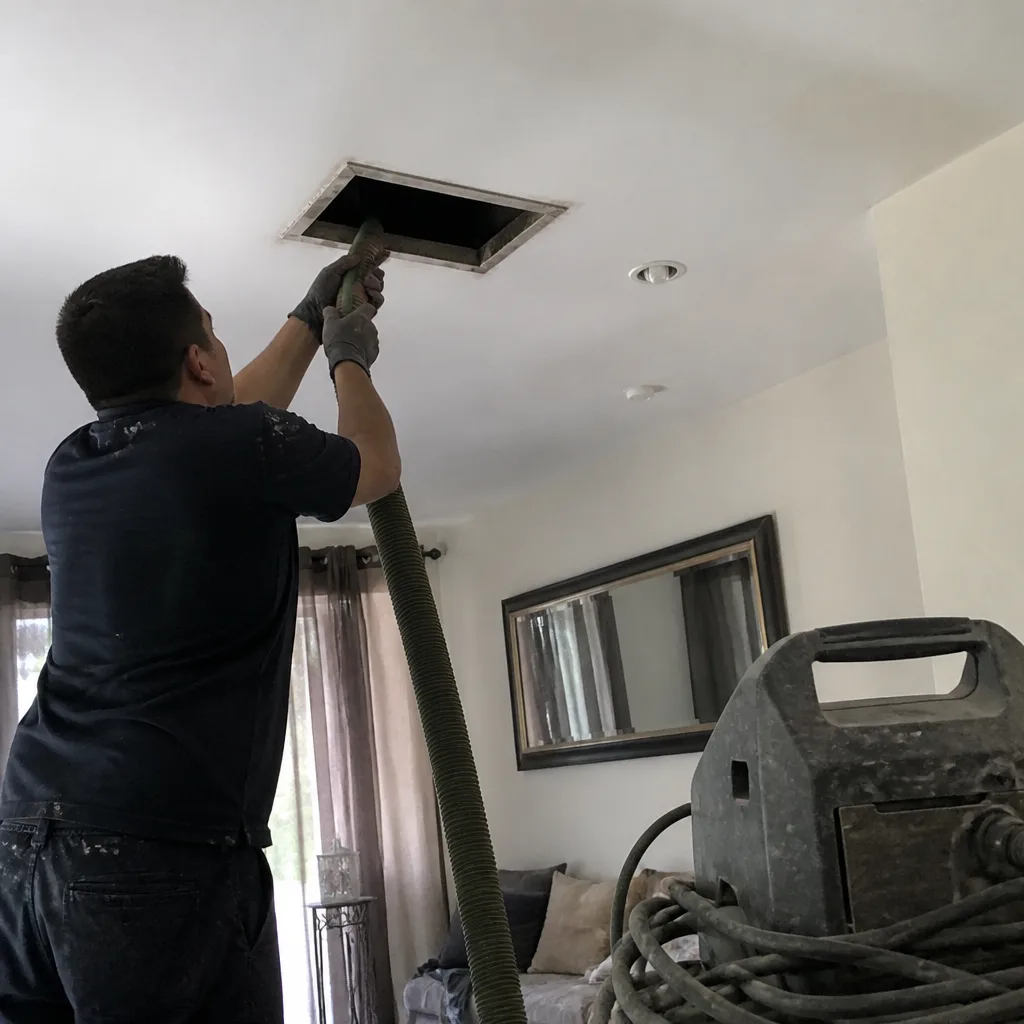 Before
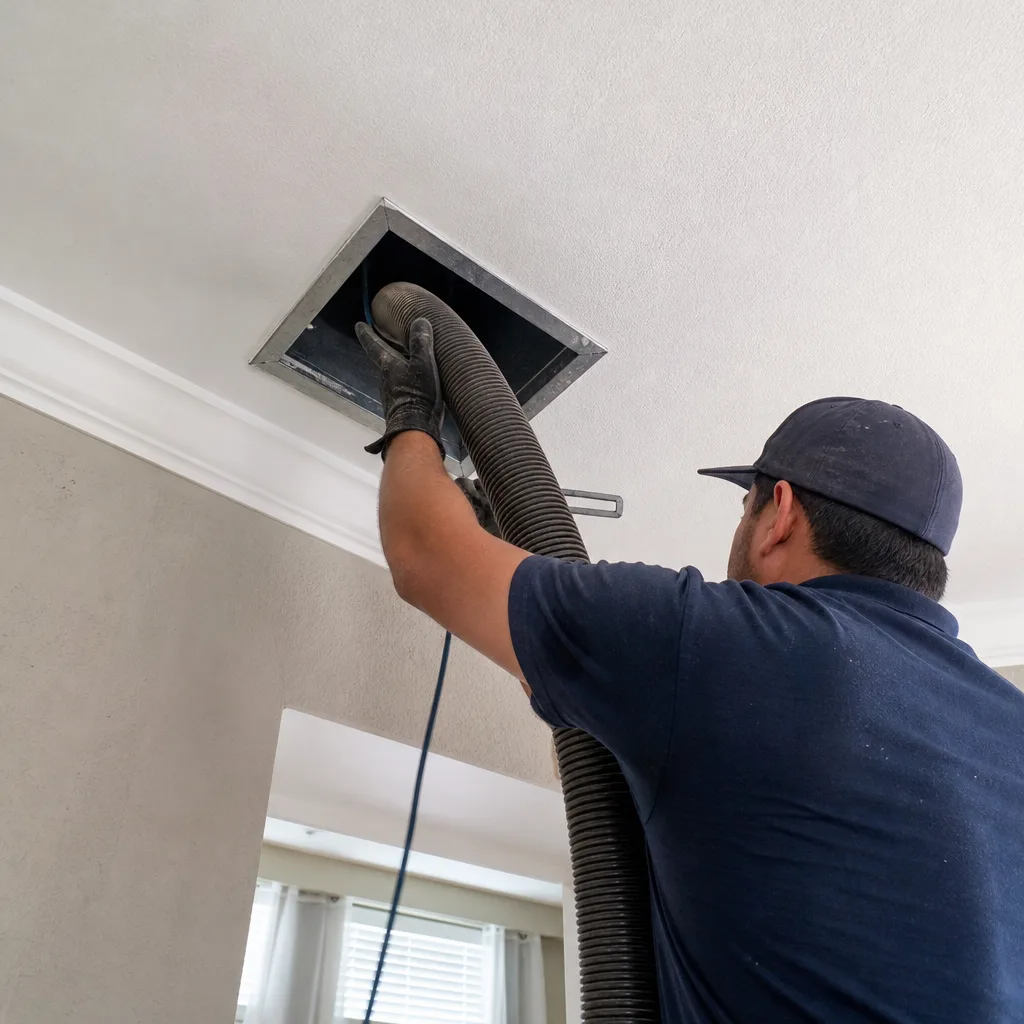 After
After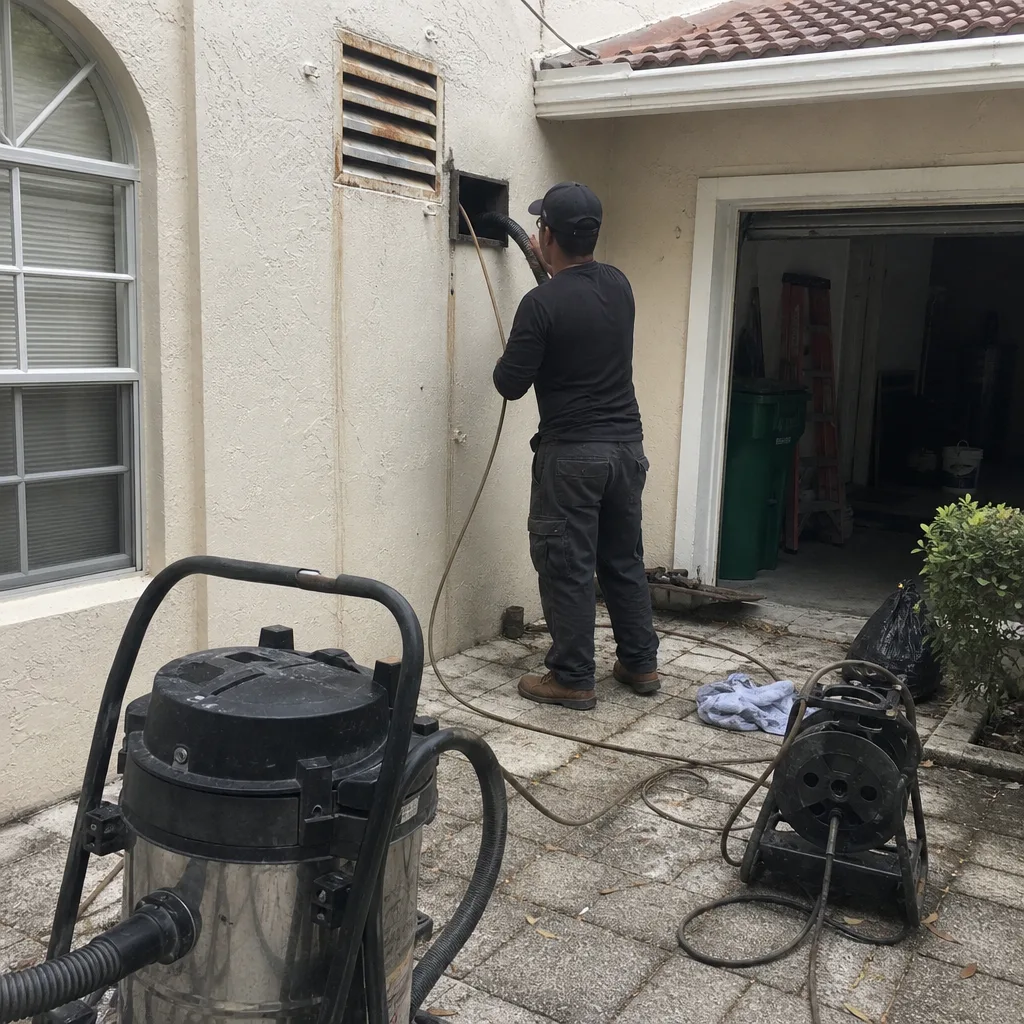 Before
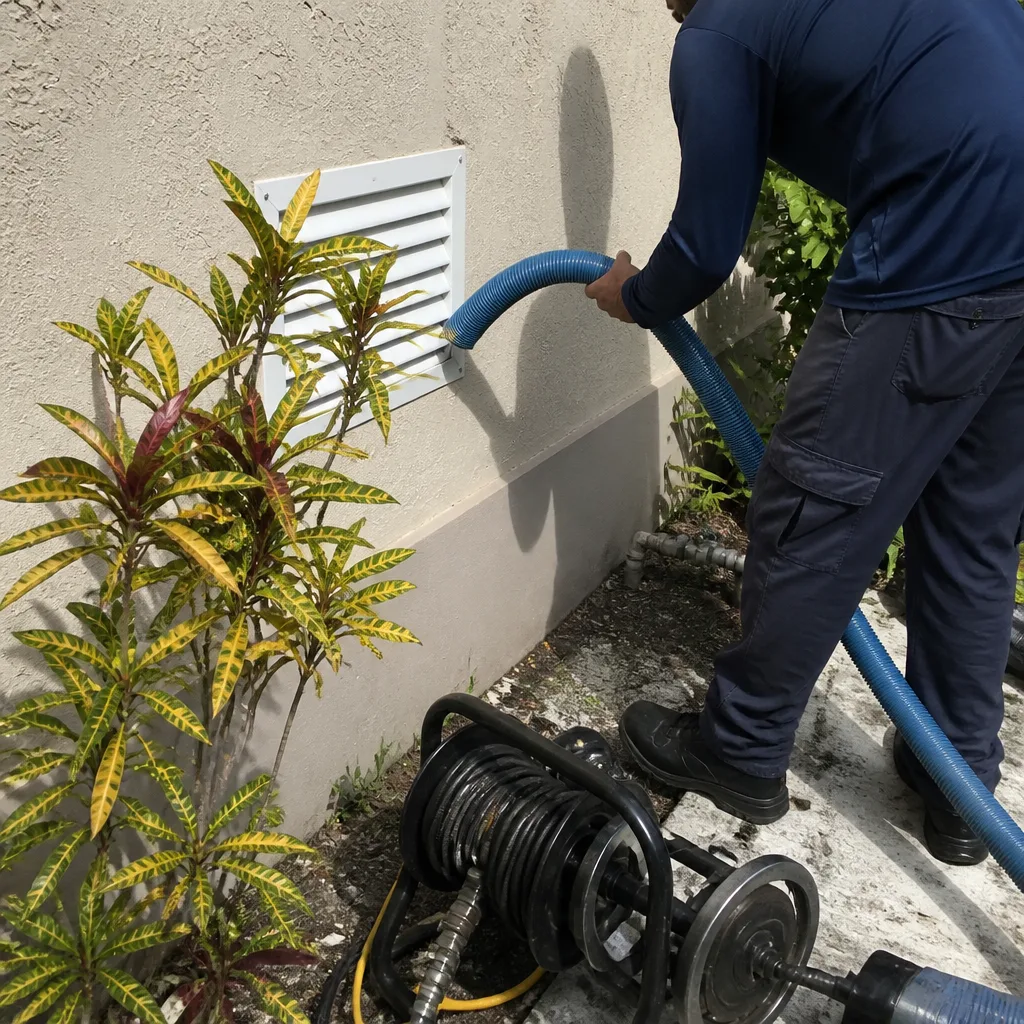 After
After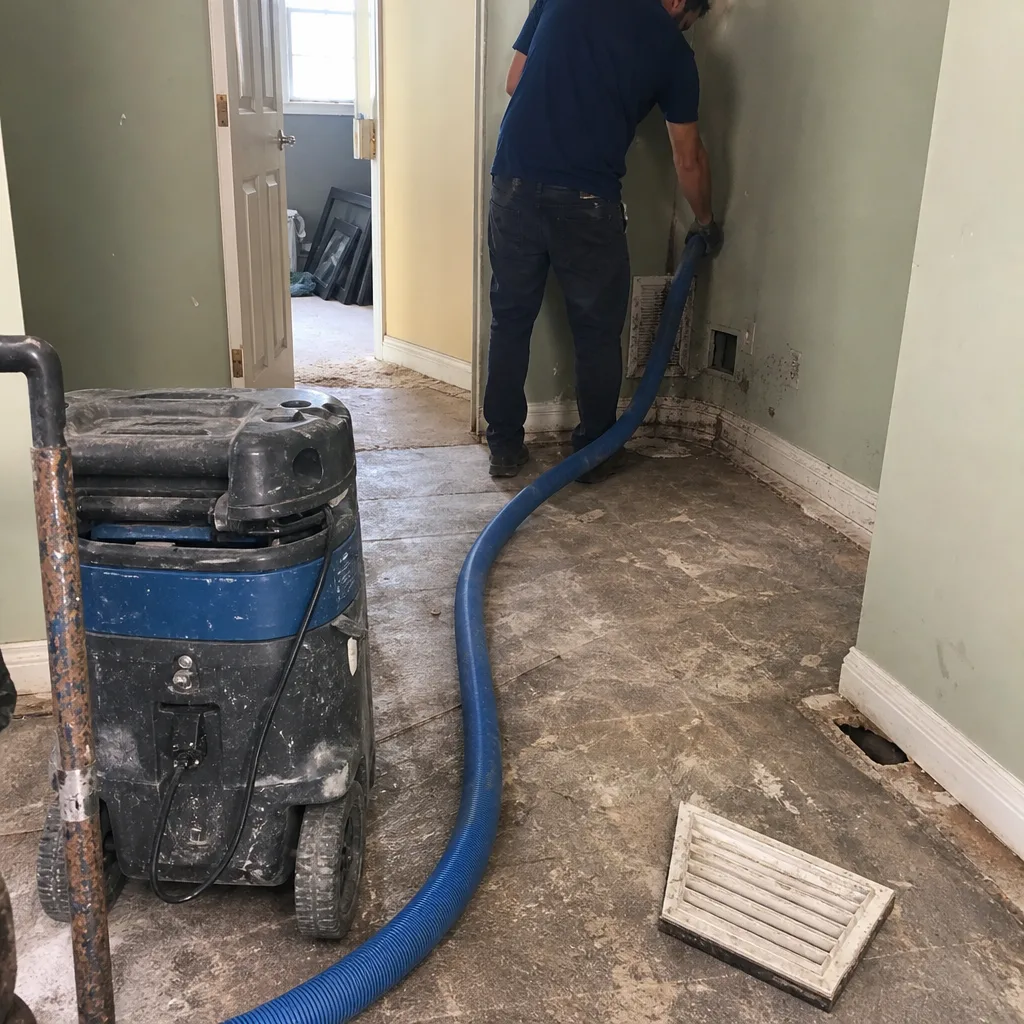 Before
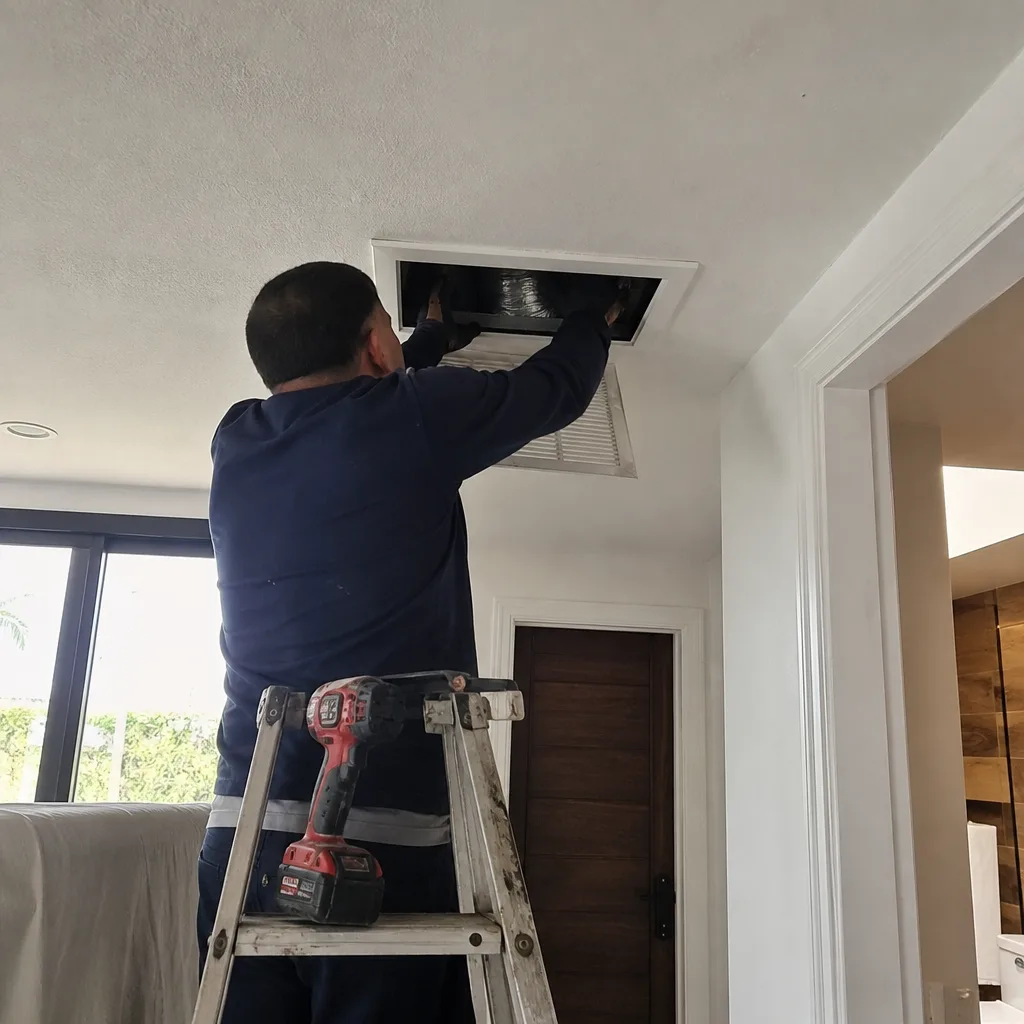 After
AfterDIY or Call Us?
There are things an owner can safely do. You can pop a register off and look at it. You can wipe the visible grille surface with a damp cloth. You can check whether the damper blade moves freely. That inspection tells you what you’re dealing with, and it gives you something specific to describe when you call. Tell me what you’re seeing and I’ll tell you what it actually means – no upsell attached.
What gets people into trouble is going past the register into the duct with a shop vac and a flexible hose. The suction isn’t strong enough to pull the debris loose from the duct wall, and the turbulence kicks fine particles into the room air. On Abatement filtration units, you’re also working around HEPA filter seals that are easy to mis-seat, and a mis-seated filter bypasses the filtration entirely. We run professional-grade negative-pressure equipment, so the debris comes out of the system and into a filtered container, not into your living room. If the register cleaning looks straightforward, we’ll tell you. If it needs the truck, we’ll tell you that too. Call (850) 779-9240 and describe what you’re seeing.
FAQs
Miami’s humidity means registers and grilles typically last 8 to 12 years before the metal starts showing corrosion or the damper mechanism seizes beyond repair. Coastal salt air near the water can shorten that to 5 to 7 years unless the grilles are aluminum. Cleaning extends the functional life, but pitted steel grilles are a replacement, not a cleaning job. Call (850) 779-9240 and we’ll give you an honest read on whether yours are worth saving.
Bent vanes, a seized damper linkage, and stripped mounting holes can sometimes be repaired if the metal is sound. But when corrosion has set in or the vane bending is extensive, the repair cost approaches the price of a new grille, and the new part will last longer. We’ll show you the old part and the damage before we recommend replacement.
For a typical Miami home with 8 to 12 registers, the work takes 2 to 3 hours from arrival to cleanup. Each register gets pulled, cleaned, inspected, and re-seated, and the duct side gets negative-air treatment before we put everything back. We’ll give you the arrival window when you book, and we hit it.
We keep common Abatement-compatible sizes on the truck, including 10×10, 12×12, and 14×14, plus the rectangular sizes that show up on older negative-air units. If we don’t have your exact size, we source it and return to install, and the part price is on your original written quote. We’re an independent service provider, so we can pull from OEM and quality aftermarket lines to match what makes sense for your unit.
Contact Kestrel Air Duct Miami
If your Abatement Technologies registers are loaded up, whistling, or just not moving air the way they used to, call us. Ask for Dale. You’ll get a straight answer about what’s happening, what it costs to fix, and whether it needs doing now or can wait. The written price comes before the work. The guarantee comes in writing with the work. And if it fails within the year, we’re back at no charge. Call (850) 779-9240 for a free estimate.
Written by Dale Whitmore, Owner, Kestrel Air Duct Miami at Kestrel Air Duct Miami, serving Miami and nearby areas.