
Last updated October 15, 2026
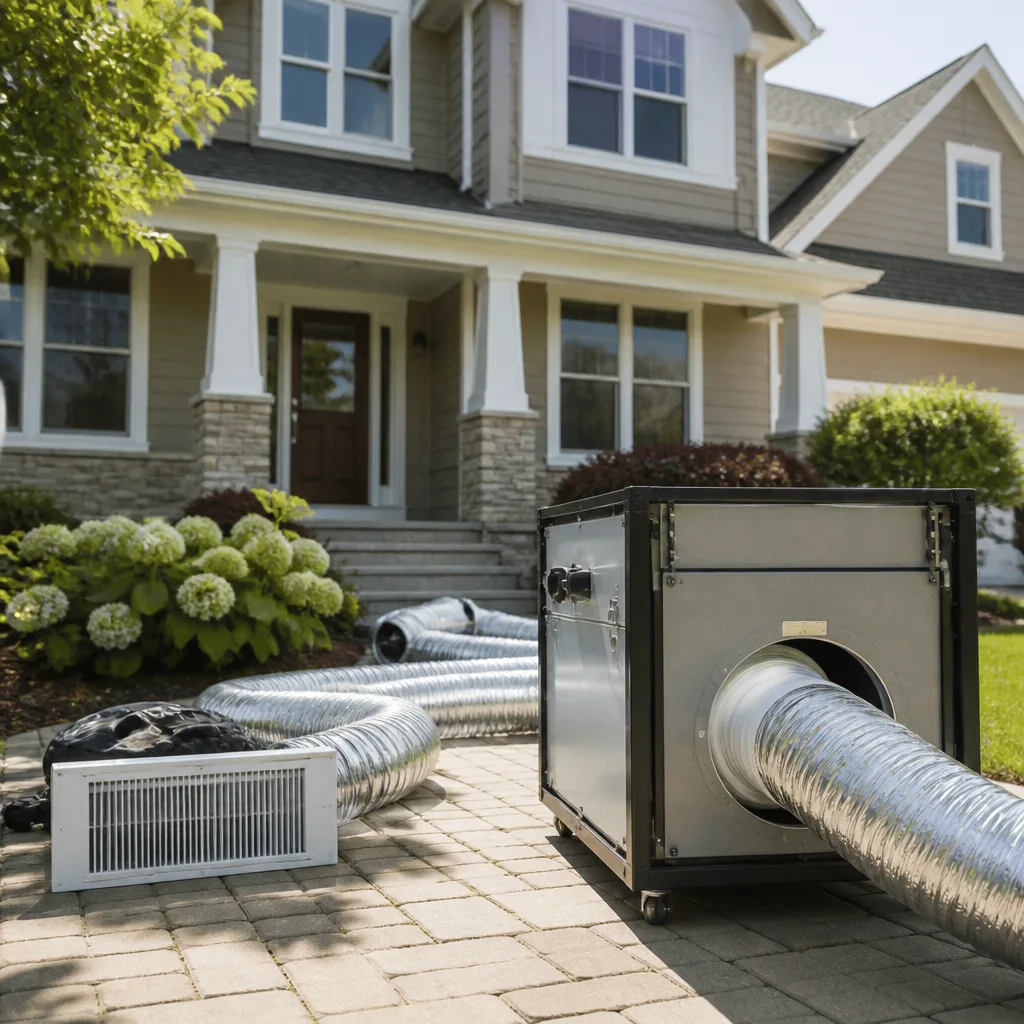 Whole-home duct cleaning
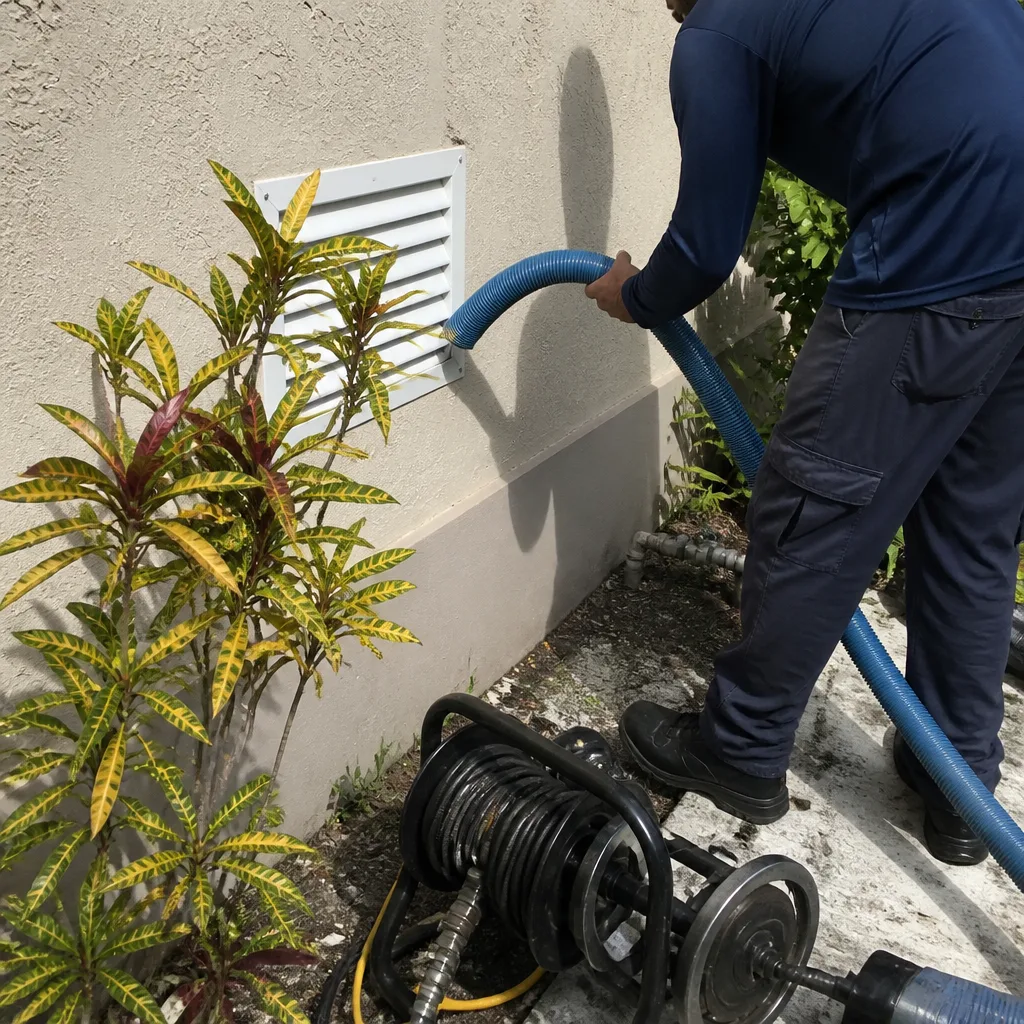
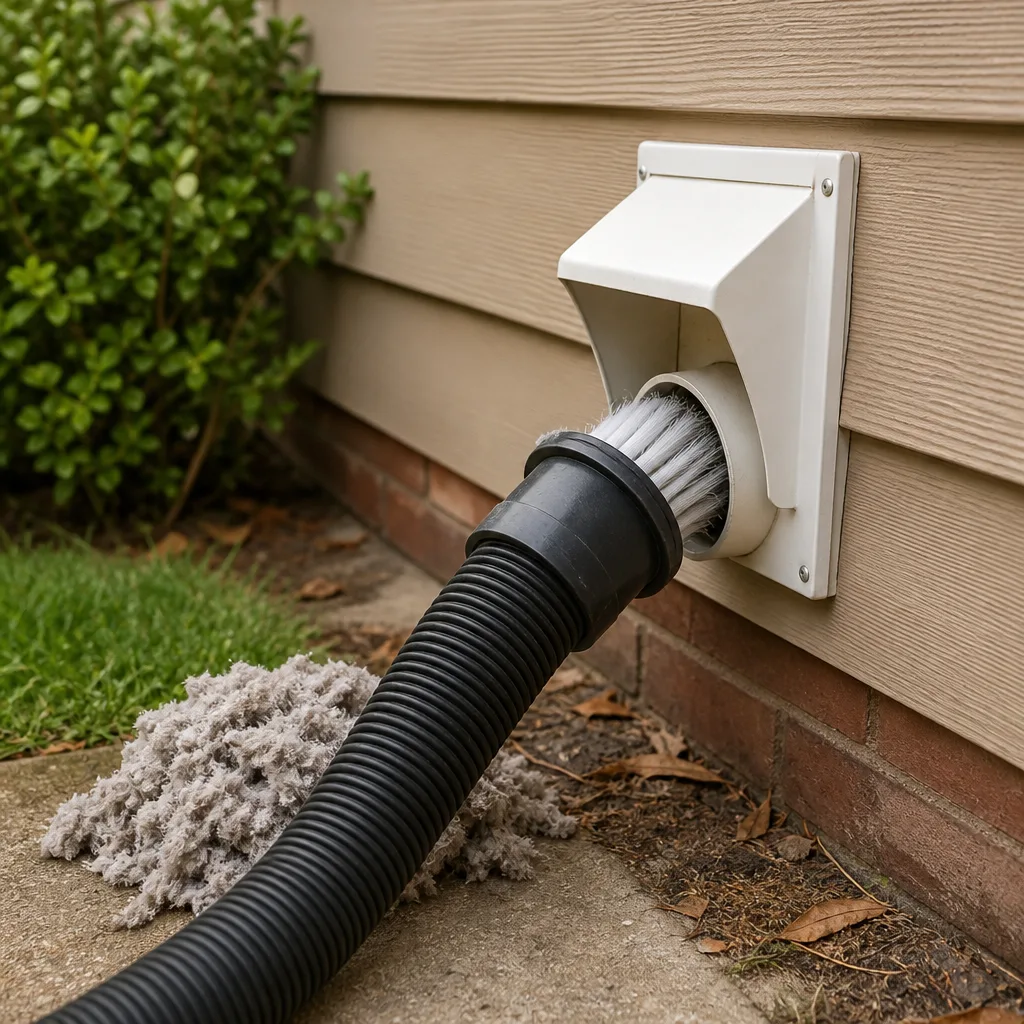 Dryer vent cleaning
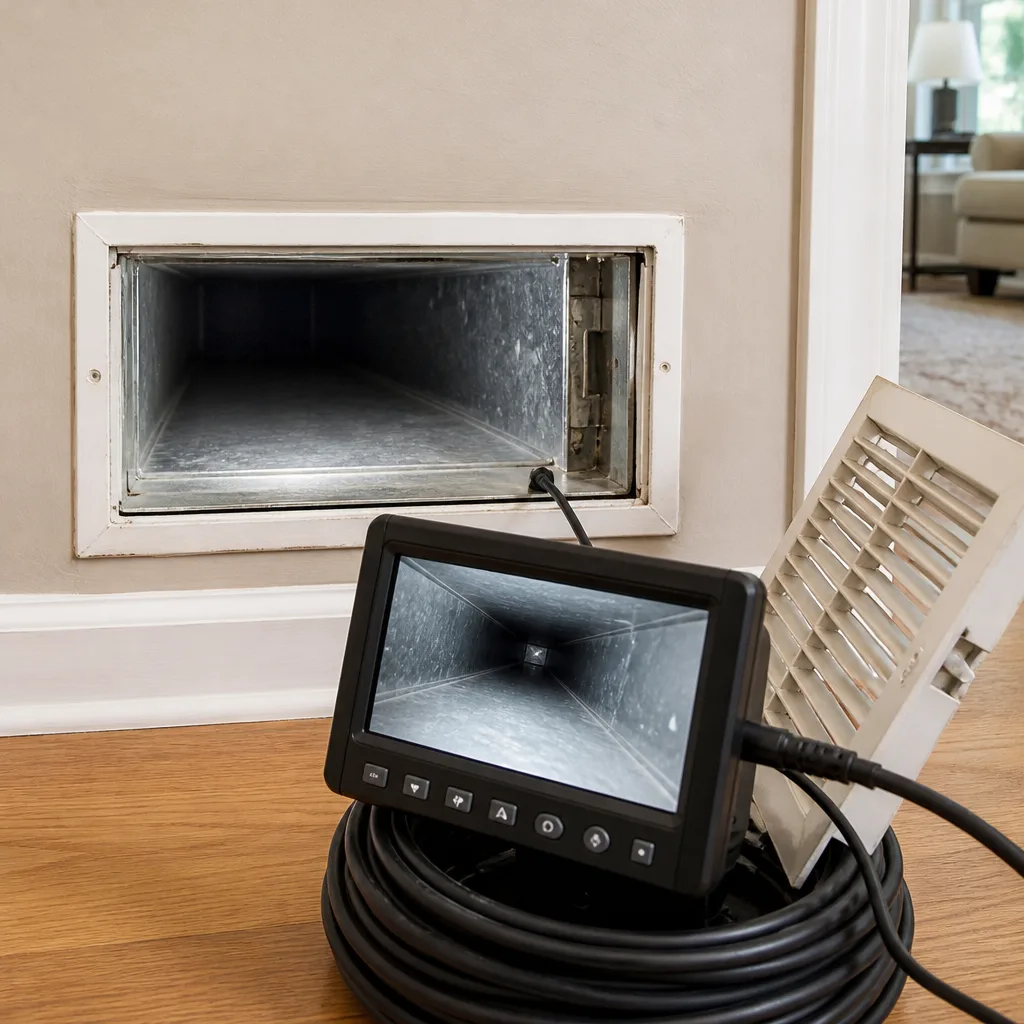 Camera inspection
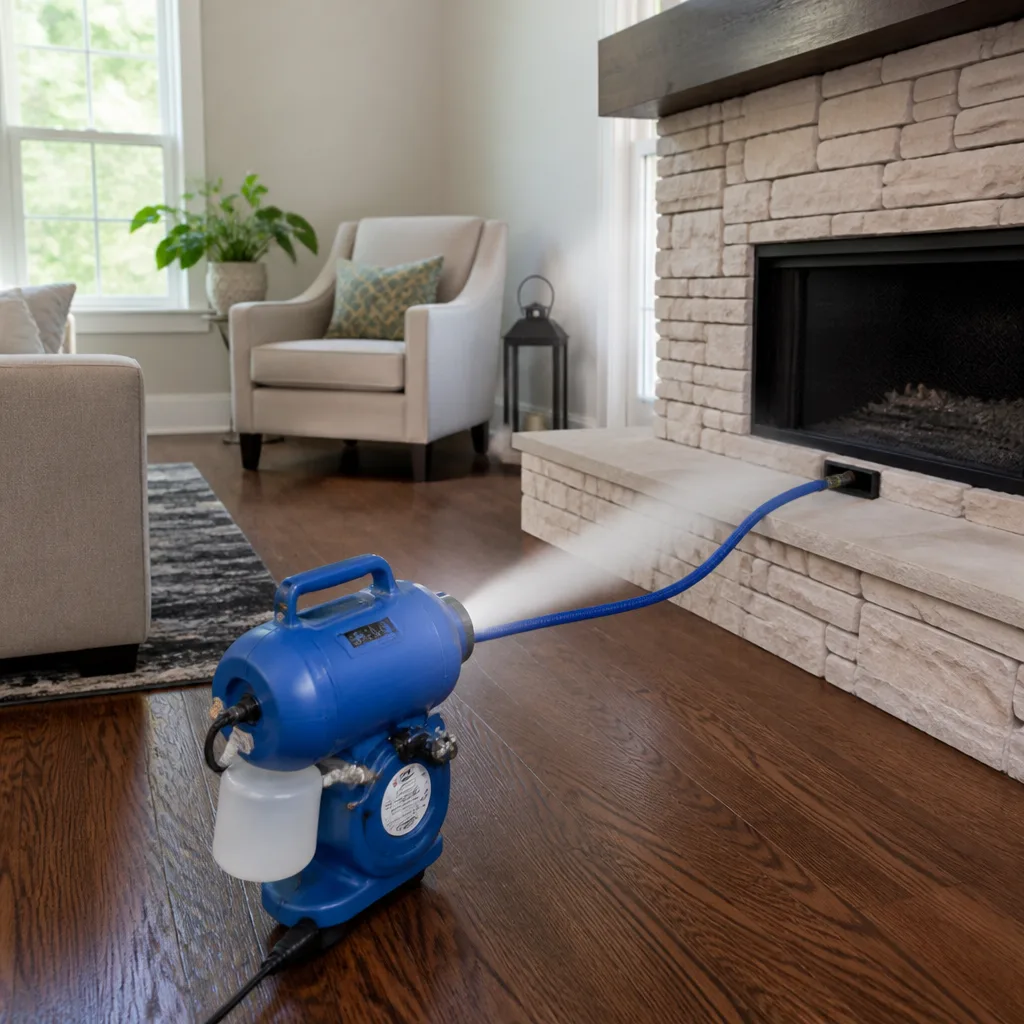 Sanitizing & deodorizing
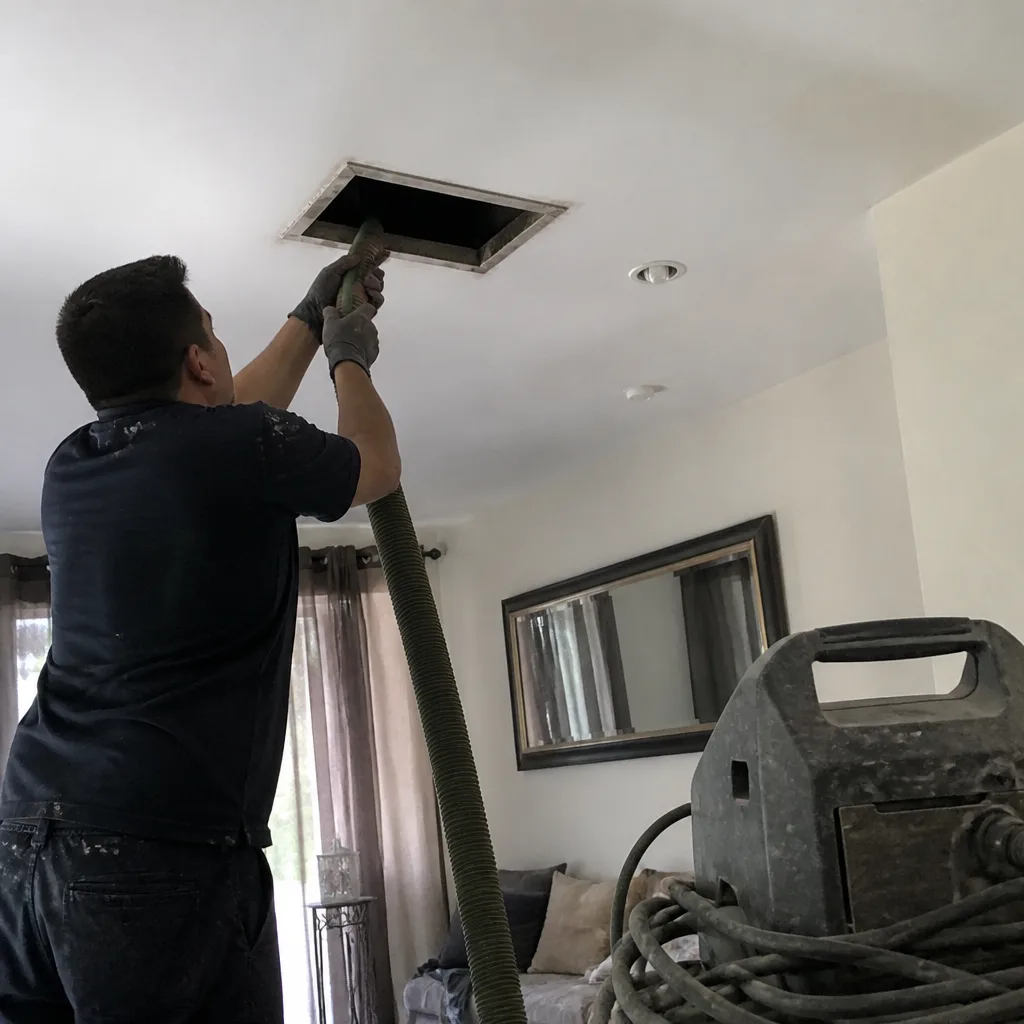
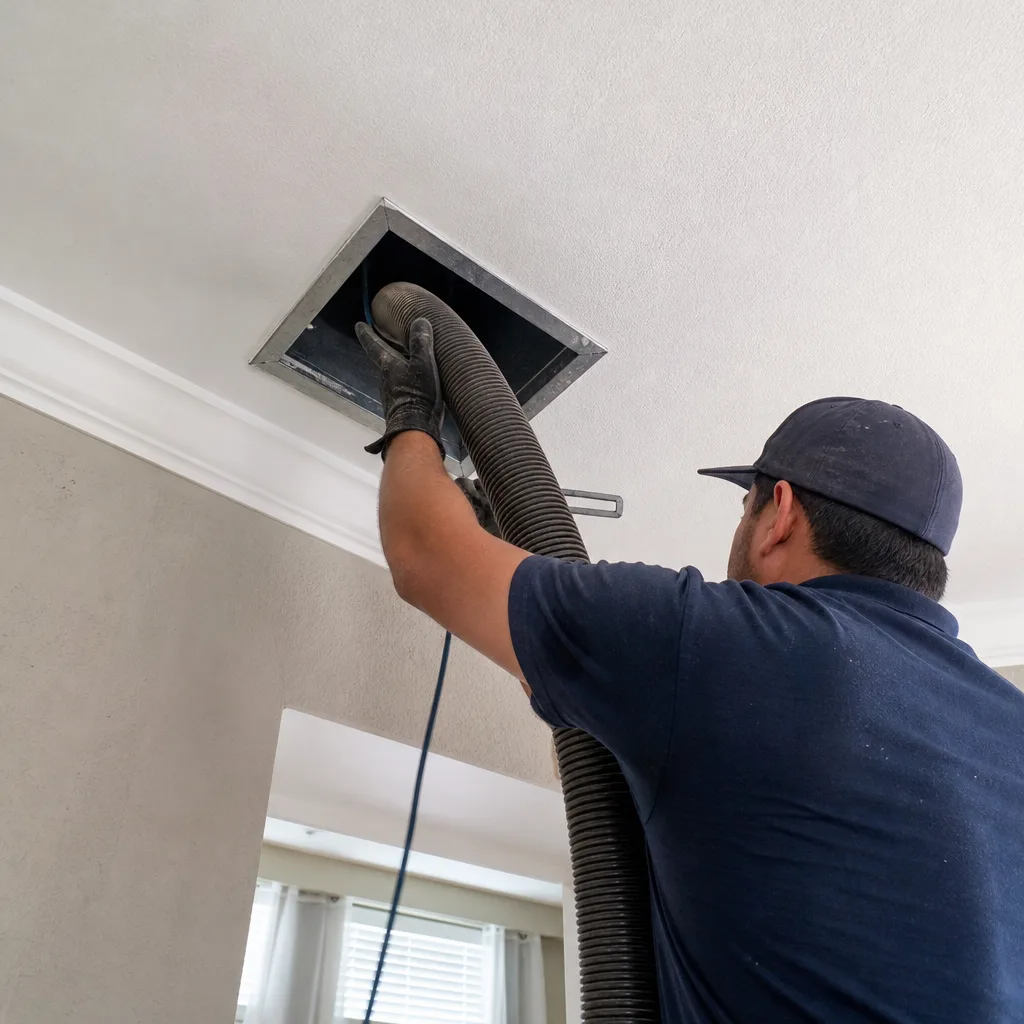
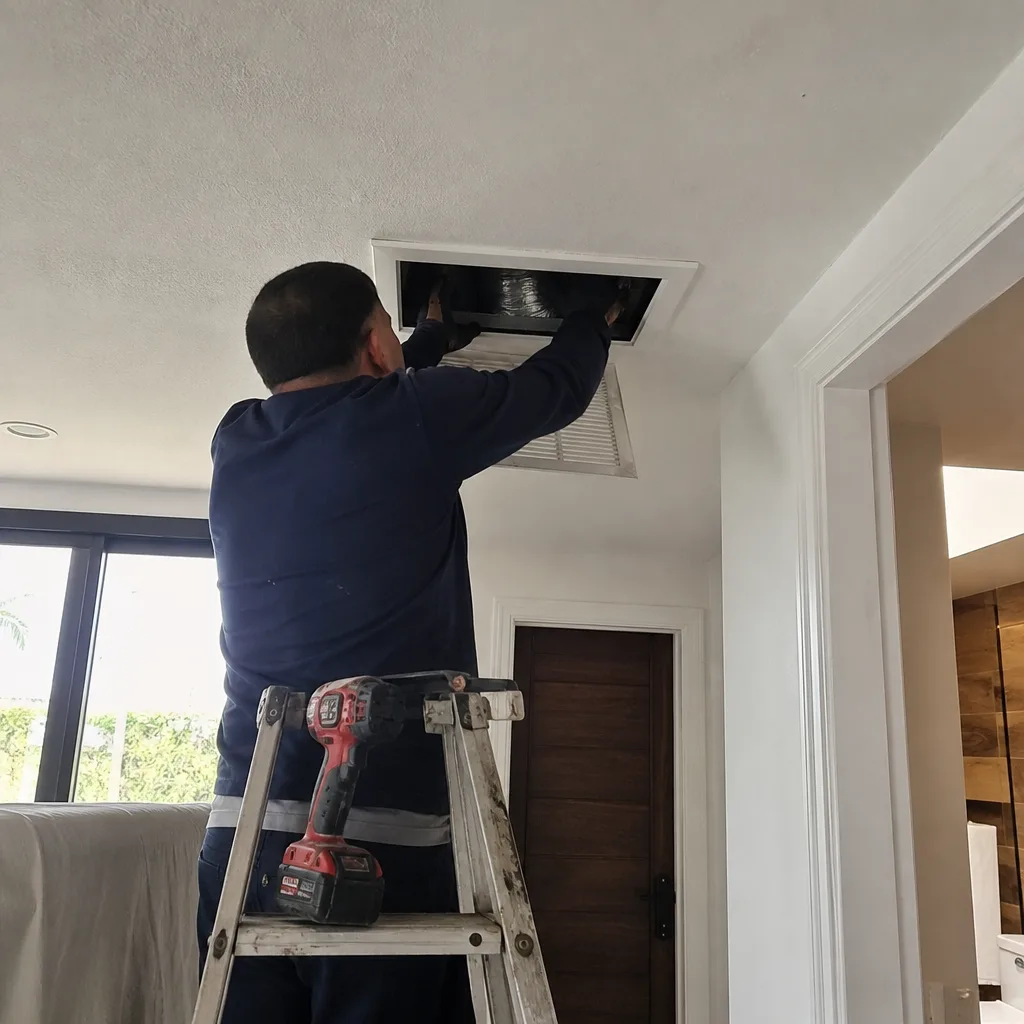
Whole-system duct and dryer vent check with before-and-after photos - you see exactly what came out of your vents
That "$99 whole-house special" is a bait ad - the real number appears once they are in your hallway, or the "clean" is a shop-vac at the register. We photograph the inside of your ducts before and after instead.
Air Duct Cleaning Permits, Codes & Inspections in FL: What You Need to Know
A Miami-Dade homeowner paid $4,200 for duct replacement work, then hit a wall three years later at closing. The buyer’s inspector pulled the permit history, found nothing on file for the duct modification, and the sale stalled until the seller paid for an after-the-fact permit, a county inspection, and a correction order. Most people assume our Air Duct Cleaning services never touch the permit system. For a straightforward cleaning, they’re right. But the line between cleaning and alteration is thinner than most Miami contractors let on, and unpermitted work has a way of surfacing at the worst possible moment. This guide draws that line precisely, using Florida Building Code Chapter 6, Miami-Dade county amendments, and real scenarios we encounter in the field.
Styles & brands we work with
Quick Answer
Routine air duct cleaning in Florida does not require a permit. It is classified as maintenance under the Florida Mechanical Code. However, a permit and a licensed mechanical contractor are required the moment work crosses into alteration: replacing duct sections, installing new branch runs, modifying the air handler, applying EPA-registered antimicrobial encapsulants in a way that constitutes a material change, or changing a duct system’s classification from Class I to Class II air distribution. The trigger is alteration, not dirt removal.
Table of Contents
- Maintenance vs. Alteration: Where the Permit Line Actually Sits
- Florida Building Code Chapter 6 and the Miami-Dade Amendments
- Class I vs. Class II Duct Systems and Why the Distinction Changes Everything
- EPA-Registered Antimicrobial Encapsulants: The Documentation Trap
- How to Pull Permit History on a Miami-Dade Address in Under Three Minutes
- Discovering Unpermitted Duct Work: The After-the-Fact Permit Process
- Common Mistakes to Avoid
- When to Call a Professional
- Frequently Asked Questions
- The Bottom Line
Maintenance vs. Alteration: Where the Permit Line Actually Sits
The Florida Mechanical Code separates work into two buckets: maintenance and alteration. Maintenance is work that keeps a system functioning as originally designed. Cleaning duct surfaces with rotary brush agitation, pulling negative air through the system with a HEPA-filtered unit, and washing accessible registers all fall under maintenance. No permit, no license requirement beyond a basic business registration. Alteration is work that changes the system’s capacity, configuration, material, or classification. That’s the bucket that requires a licensed mechanical contractor and a permit.
Here’s the practical line: if a technician removes a section of duct and cleans it in place, that’s maintenance. If a technician cuts out a rusted section and rivets in a replacement collar or new flex run, that’s alteration. The code does not care how small the replacement is. A two-foot patch and a twenty-foot trunk line replacement trigger the same permit requirement. We’ve watched Miami-Dade inspectors flag duct repairs as small as a single damaged branch run discovered during a pre-sale inspection.
The reason Miami-Dade is stricter than most of Florida comes down to the county’s position as a high-velocity hurricane zone. Duct systems in Miami-Dade must withstand wind-driven rain and pressure differentials that don’t exist in Gainesville or Tallahassee. The county amends the Florida Building Code to add fastening schedules, mastic requirements, and pressure testing that don’t apply elsewhere in the state. When a contractor skips the permit on a duct replacement in Cutler Bay or Kendall, they also skip the county inspection that verifies those Miami-Dade-specific details were done correctly.
Homeowners should ask one question of any contractor proposing work on their ducts: does this job change the system from what the builder installed? If the answer is yes and no permit is mentioned, that’s a warning sign. We’re not saying every cleaning job hides an alteration opportunity. We’re saying that Miami-Dade’s permitting portal makes it easy to verify, and the cost of not verifying has a way of compounding.
Florida Building Code Chapter 6 and the Miami-Dade Amendments
Florida Building Code Chapter 6 governs duct systems statewide. It incorporates the Florida Mechanical Code and sets minimum standards for duct construction, installation, insulation, and sealing. Miami-Dade County operates under the Florida Building Code with local amendments published in the county’s Code of Ordinances. Those amendments are not cosmetic. They tighten requirements for duct fastening, mastic application, insulation R-values, and pressure testing in the county’s high-velocity hurricane zone.
Section 603 of the Florida Mechanical Code covers duct construction and installation. It specifies materials, minimum gauge for sheet metal, support intervals for flexible duct, and sealing requirements. What it does not do is require a permit for cleaning. What it does do is establish that any replacement section, new branch, or modified plenum must comply with Section 603 as if it were new construction. That compliance is verified by inspection, which is only scheduled when a permit is pulled.
Miami-Dade amendments add specific requirements that a contractor working without a permit will almost certainly miss. Flexible duct runs in Miami-Dade must be supported at intervals no greater than four feet, pulled taut with no more than a half-inch sag per foot, and sealed at both connections with UL-listed mastic or metal-backed tape. Sheet metal seams must be sealed per SMACNA standards. The air handler platform must meet county wind-load details. None of this is visible to a homeowner watching a crew work. All of it is visible to a county inspector during a permit inspection.
The practical consequence for homeowners: when a contractor replaces duct sections without a permit, the work isn’t just unpermitted, it’s uninspected. In Miami-Dade’s climate, uninspected duct work fails in predictable ways. Loose flex runs in a hot attic collect condensation, which feeds mold. Improperly sealed plenums leak conditioned air into unconditioned space. When we clean ducts in older Miami homes, we see the signature of unpermitted work everywhere: sagging flex, mastic smeared thin, support straps cut by roofers and never replaced. A county inspection would have caught all of it.
Class I vs. Class II Duct Systems and Why the Distinction Changes Everything
The Florida Mechanical Code classifies air distribution systems into Class I and Class II. The distinction matters because lining replacement, encapsulation, and some cleaning methods are only permitted on one class, and changing a system from one class to another is an alteration that triggers a permit.
A Class I air distribution system moves air through ducts constructed of materials that meet minimum flame spread and smoke developed index ratings, with no requirement for in-duct fire suppression. Most residential duct systems in Miami are Class I. A Class II system is used for air containing flammable vapors, combustible dust, or other hazardous materials, and requires more restrictive construction and sealing. Residential homes almost never have Class II systems unless the ductwork serves a workshop or garage where flammables are stored.
Here’s where the distinction comes into play for cleaning and repair: when a contractor proposes to line a damaged duct interior with a coating or liner, the coating must be approved for the system’s classification. Some spray-on duct liners are rated only for Class I use and cannot be applied in systems serving spaces where the code classifies the air as Class II. The code also treats a change from unlined to lined as an alteration, since it changes the interior surface characteristics of the system. That means a permit, and an inspection verifying the liner’s flame spread rating, thickness, and adhesion.
The same logic applies to encapsulation. If a cleaning contractor proposes to coat the interior of rusted or deteriorated ductwork with an encapsulant rather than replacing the sections, that coating changes the material surface. It’s an alteration. If the contractor’s proposal doesn’t mention a permit, the coating work is unpermitted, and the documented system classification just became a liability at sale time. In our experience in Miami, most homeowners first learn about Class I and Class II designations from their home inspector, not from the contractor who did the work.
EPA-Registered Antimicrobial Encapsulants: The Documentation Trap
Antimicrobial encapsulants are products applied to duct interiors to seal surfaces and prevent mold regrowth. Under federal law, any product claiming to kill or inhibit mold, bacteria, or other microorganisms in a building system must be registered with the EPA under FIFRA. The registration number is printed on the product label, and the label includes the manufacturer’s use directions, including application rates, surface preparation requirements, and ventilation requirements.
The documentation trap is this: a contractor who applies an EPA-registered encapsulant to your ducts is legally required to have the product’s Safety Data Sheet on site and the label’s directions in hand. In Miami-Dade, a contractor applying an encapsulant as part of a duct alteration also needs that permit we’ve been talking about, because the coating changes the duct surface and, potentially, the system classification. A contractor who cannot produce the product SDS, the EPA registration number, and the permit is exposing the homeowner to liability on three fronts: federal product law, county building code, and potential health claims if the coating is misapplied.
The label law matters more than most people think. Every EPA-registered antimicrobial has a label that specifies what the product can and cannot be used for. Some encapsulants are labeled for HVAC system use. Others are labeled for non-porous surfaces only. Applying a product outside its label is a federal violation. A homeowner who later develops a respiratory issue in a home where an off-label antimicrobial was applied to the ducts now has a documentation problem: the contractor is gone, the product’s registration number was never recorded, and the county has no permit record of the work.
We carry SDS documentation for every product used on a job. It’s not a marketing point; it’s a requirement. When a homeowner asks us to apply an antimicrobial after a mold remediation, we verify the product registration, confirm its label covers HVAC use, and document the application in writing. If a permit is triggered, we say so before the work starts, not after.
How to Pull Permit History on a Miami-Dade Address in Under Three Minutes
Miami-Dade County makes permit history available through its online Building and Permitting portal. You don’t need a login to search. Here’s the three-minute process we walk homeowners through when they’re evaluating a house they’re buying or verifying work that was done on the house they already own.
- Go to the Miami-Dade Building and Permitting page and select “Permit Search” or “Property Search” from the main menu. The county has changed its portal interface over the years, but the search function is always reachable from the main permitting page.
- Search by folio number or address. The folio number is the most reliable because it never changes with street name adjustments. You’ll find it on your property tax bill. Enter the address if you don’t have the folio number handy.
- Review the permit list. Every permit pulled on the property appears in the results with type, date, status, and contractor name. Look for mechanical permits specifically. A mechanical permit on file means the duct work, air handler, or ventilation system job was permitted and inspected. No mechanical permit on file for duct work you know was replaced? That’s unpermitted work.
- Check the inspection status. A permit with no passed final inspection is not a completed permit. Miami-Dade marks passes and failures, and a permit that’s still open years after the work means the inspection never closed. That’s a red flag for buried problems that were never corrected.
- Print or save the result. If you’re buying, keep a copy with your closing documents. If you’re selling, the buyer’s inspector will pull it anyway. Better to know before they do.
The whole process takes three minutes once you’ve found the portal. It’s the single highest-value check a Miami homeowner can run before hiring a duct contractor or closing on a home. If the permit history shows work you didn’t know about, that’s the moment to ask questions. Not after the closing date has been set.
Discovering Unpermitted Duct Work: The After-the-Fact Permit Process
Unpermitted duct work usually surfaces during a home sale. The seller’s disclosure doesn’t mention it because the seller didn’t know. The buyer’s inspector flags it during the contingency period. Then the question becomes: what now? The answer is an after-the-fact permit, and Miami-Dade has a specific process for it.
An after-the-fact permit is a permit pulled after the work is already done. The county reviews the existing work, determines whether it meets current code, and if it does, closes the permit with an inspection. If it doesn’t, the work must be corrected before the permit closes. The correction can mean anything from re-taping a seam to ripping out an entire flex run and replacing it with code-compliant material. The homeowner pays for the corrections because the original contractor is usually long gone or never licensed in the first place.
What after-the-fact permits typically cost in Miami-Dade depends on the scope. A simple after-the-fact permit for a small duct replacement running through county review and a basic inspection might run $150 to $400 in county fees alone. If the inspection fails and corrections are ordered, the correction work is on top of that. We’ve seen after-the-fact permit situations in neighborhoods like Westchester and Palmetto Bay where the correction order required replacing an entire trunk line because the original contractor had used unlisted material. The original $1,800 unpermitted job became a $5,400 corrected job. The seller absorbed that cost to save the sale.
The process is straightforward but not fast. You file the permit application with a description of the work already installed. The county assigns a reviewer. The reviewer may require drawings or a field inspection to document what’s there. Once the existing work is documented, the county either approves it as-is or issues a correction order. Correction orders specify exactly what must change. When the corrections are done, a final inspection verifies compliance and the permit closes. The entire process can take two to six weeks depending on county workload.
If you’re a homeowner who discovers unpermitted work on your own home, the same process applies. The key is to start it before you’re under a contract deadline. After-the-fact permits under time pressure cost more because corners get cut on the correction work. Start early, use a licensed mechanical contractor who works in Miami-Dade regularly, and document everything. The county keeps the permit record forever. Once it’s closed, the property’s history is clean and the work is insurable.
What a County Inspector Actually Looks For
During a Miami-Dade mechanical inspection, the inspector verifies a specific list of code requirements. Flex duct must be supported every four feet and installed with no more than a half-inch sag per foot of run. Connections must be sealed with mastic or metal-backed UL-listed tape, not standard duct tape. Sheet metal joints must follow SMACNA sealing standards. The air handler must be mounted on its platform per county wind-load details. Duct insulation in unconditioned attics must meet the R-value required by the current energy code. The inspector photographs everything, records the results in the permit file, and either passes the work or issues corrective items. A contractor who has done the job right passes on the first visit. A contractor who cut corners gets a correction order, and now the homeowner is tracking a contractor who has already been paid.
Common Mistakes to Avoid
- Assuming all duct work is maintenance because the contractor said so. The contractor’s paycheck depends on you not asking. If the work involves cutting, replacing, or modifying the system, ask directly: is this a permit job? If the answer is vague, walk away.
- Accepting an antimicrobial application without documentation. If the tech can’t produce the EPA registration number and the product SDS on the spot, the product isn’t being applied legally. Document what was applied, when, and by whom, or don’t let it happen at all.
- Skipping the permit history check before buying a Miami home. Three minutes on the county portal shows you every permit ever pulled. Missing it means inheriting whatever the previous owner’s contractor did, inspected or not.
- Hiring a contractor who quotes a price for duct replacement without mentioning a permit line item. A legitimate Miami-Dade contractor knows the permit requirement and quotes it. A contractor who quotes only labor and materials is either planning to skip the permit or planning to add the fee later. Both are bad.
- Letting a contractor apply a spray-on duct liner without asking about Class I vs. Class II classification. Liners change the surface and the fire rating. If the contractor can’t explain the classification of your system and the rating of the liner, the job is beyond their expertise.
- Waiting until a sale is under contract to investigate unpermitted work. By then you’re negotiating against a closing date. Find out early, fix early, and close clean.
When to Call a Professional
If the permit history shows work done without permits, the time to call is now, not when you’re under contract to sell. If the ducts have visible rust, detached flex runs, or evidence that someone patched them without documentation, call a licensed mechanical contractor who can assess what’s there and quote the correction honestly. If the previous owner had an antimicrobial applied and you can’t produce the SDS, call for a professional assessment before you spend more money on top of it. Kestrel Air Duct Miami offers free estimates in Miami. Call (850) 779-9240 and we’ll tell you what’s actually in your ductwork, what’s code-compliant, and what isn’t. That call costs nothing, and it’s the difference between knowing and guessing.
Frequently Asked Questions
No. Routine air duct cleaning is maintenance under the Florida Mechanical Code and does not require a permit. The work typically involves rotary brush agitation to dislodge debris and negative-air extraction to pull it out of the system, neither of which changes the system’s configuration. A permit becomes necessary the moment the work crosses into alteration: duct section replacement, new branch installation, air handler modification, or duct lining application.
Yes. Replacing any section of ductwork, regardless of size, is an alteration under the Florida Mechanical Code and requires a mechanical permit from Miami-Dade County, along with a licensed mechanical contractor and a county inspection. A two-foot patch and a twenty-foot replacement trigger the same requirement. Unpermitted duct replacement surfaces routinely during home sales and costs far more to correct than a permit would have cost originally.
County fees for a simple after-the-fact mechanical permit typically run $150 to $400, but the real cost is the correction work if the county inspection fails. When an inspector finds unpermitted work that doesn’t meet code, the homeowner pays for corrections, which can run into the thousands depending on scope. Starting the process early, before a sale deadline, keeps the total cost as low as it’s going to get.
Yes. The Miami-Dade Building and Permitting portal allows a property search by folio number or address, and shows every permit ever pulled with type, status, date, and contractor. It takes about three minutes and doesn’t require a login. The folio number from your property tax bill gives the most accurate search result.
Class I systems handle normal residential air and are what nearly every Miami home has. Class II systems handle air containing flammable vapors or combustible dust and are rarely found outside workshops and garages. The classification matters because lining replacements and some encapsulant applications are only approved for one class or the other, and changing the classification is an alteration requiring a permit.
Document what you know: who did the work, when, and what product they used if you know it. If the product can’t be identified and no SDS is available, have a professional assess the condition of the duct surfaces and recommend whether testing or remediation is warranted. Going forward, require every contractor to provide the EPA registration number, SDS, and permit status in writing before any coating touches the duct interior.
The Bottom Line
Air duct cleaning in Florida is permit-free so long as it remains cleaning. The moment the work becomes alteration, Miami-Dade requires a permit, a licensed contractor, and an inspection. Knowing the difference-detailed in The Complete Guide to Air Duct Cleaning in Miami-protects you from the $4,200 mistake that surfaces at closing and the correction order that comes with it. Check your permit history before you buy, ask every contractor the permit question directly, demand documentation for any antimicrobial application, and don’t accept vague answers. The Kingswell Guarantee standard we’ve applied since 2004 is simple: say the price, show up when promised, document the work, and stand behind it. That’s the baseline. The permit record is just the paper trail that proves it.
For more on how we approach duct work in Miami, see our Kestrel Air Duct Miami home page, our full Air Duct Cleaning in Miami service details, and our Dryer Vent Cleaning in Miami page.
Written by Dale Whitmore, Owner at Kestrel Air Duct Miami, serving Miami since 2004.
See the difference
 Before
 After
After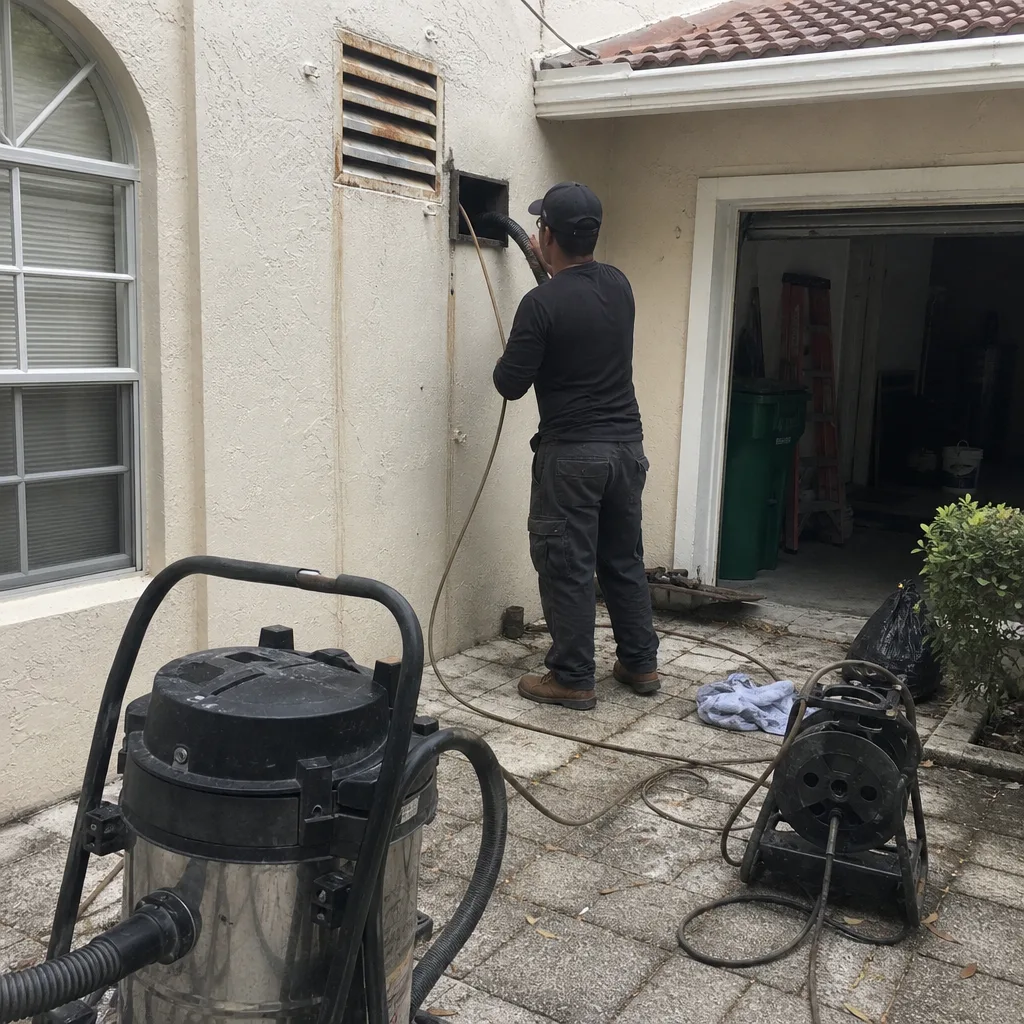 Before
 After
After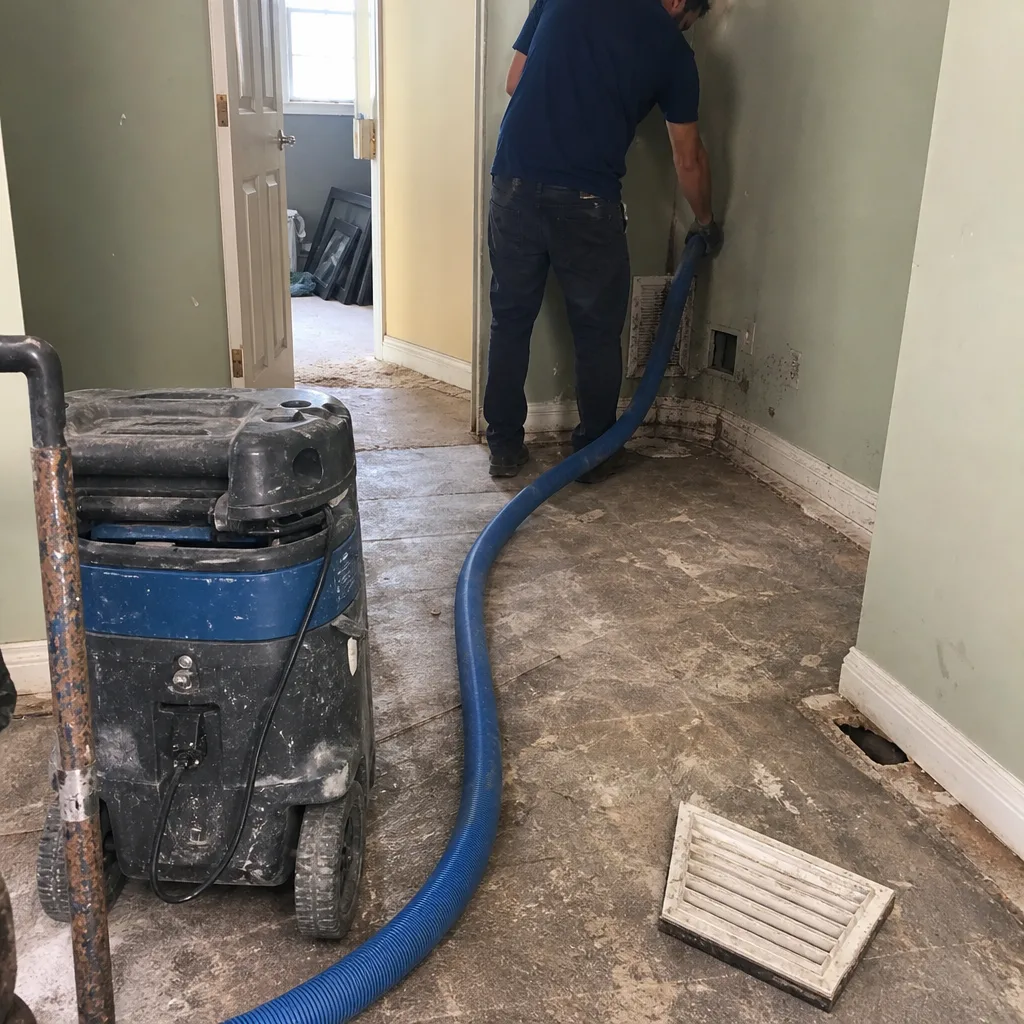 Before
 After
After