
Last updated October 15, 2026
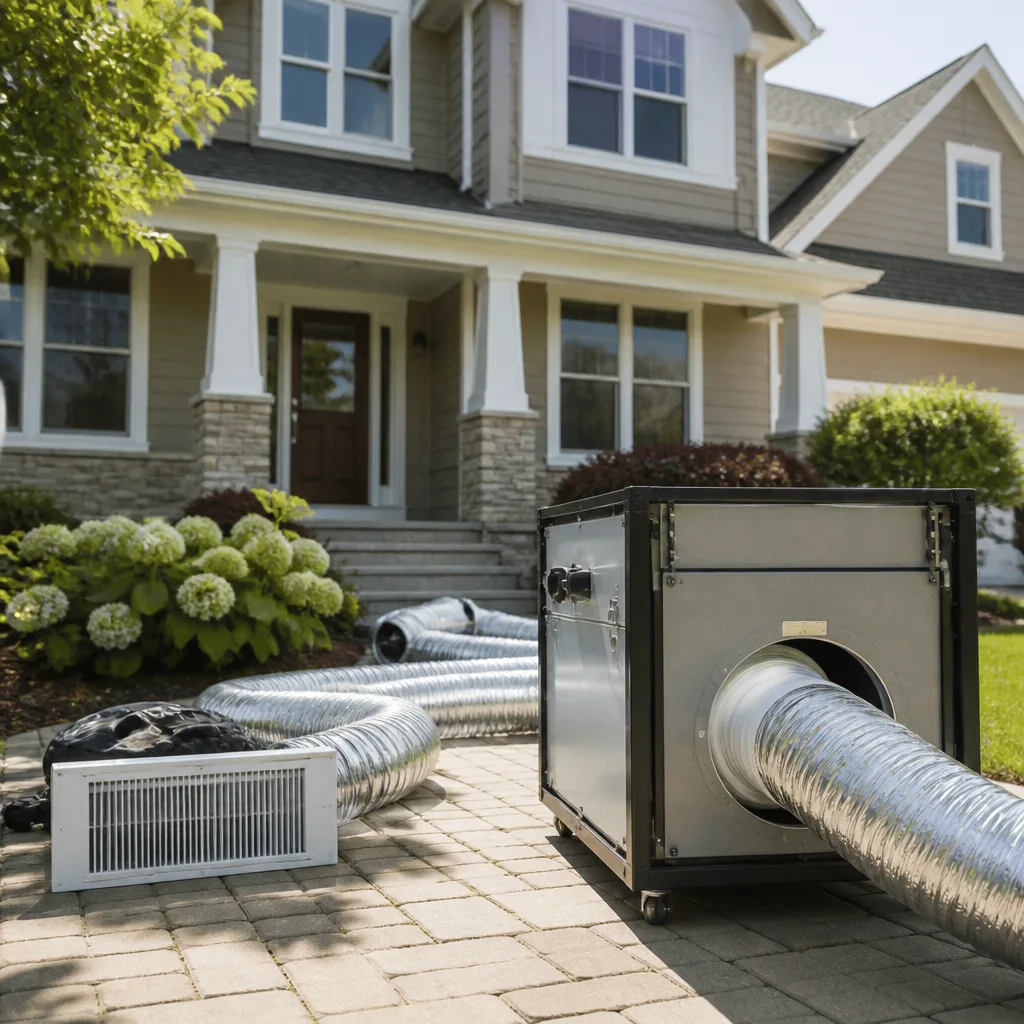 Whole-home duct cleaning
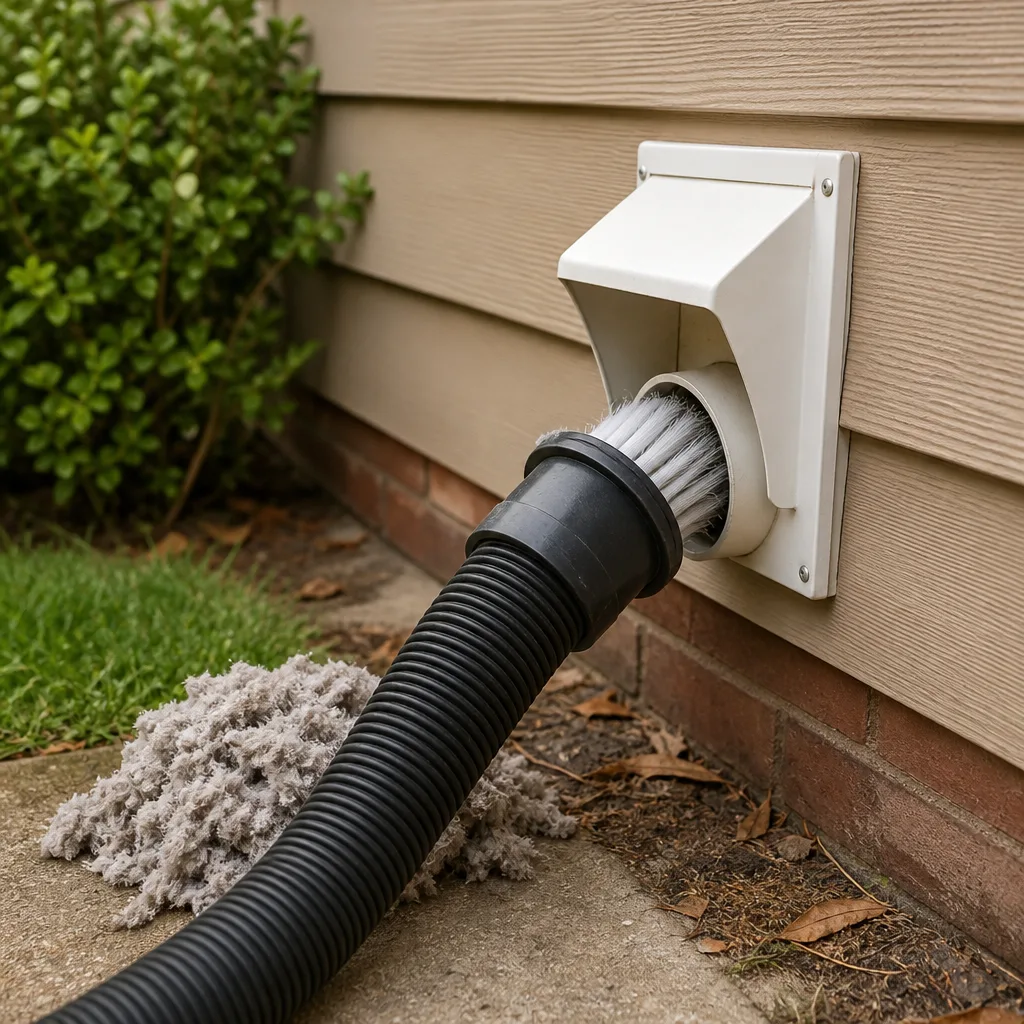 Dryer vent cleaning
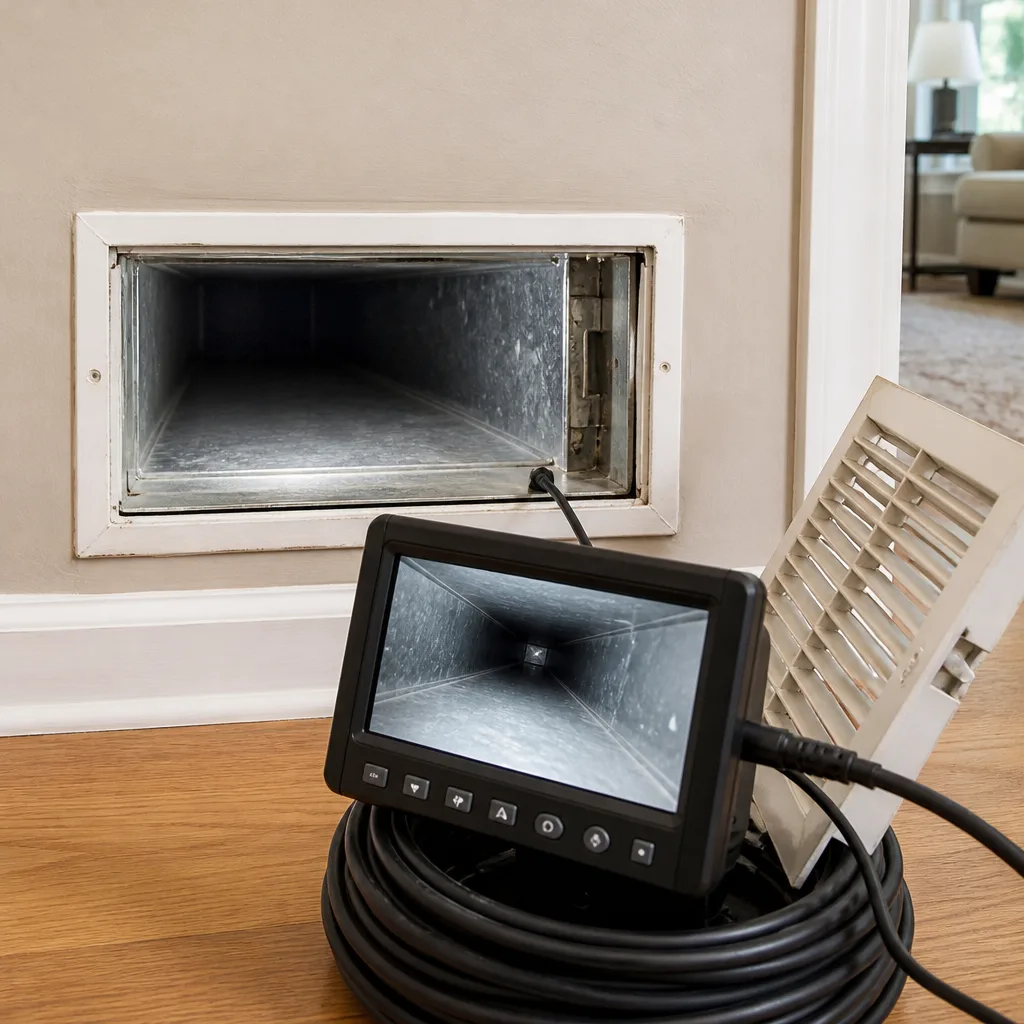 Camera inspection
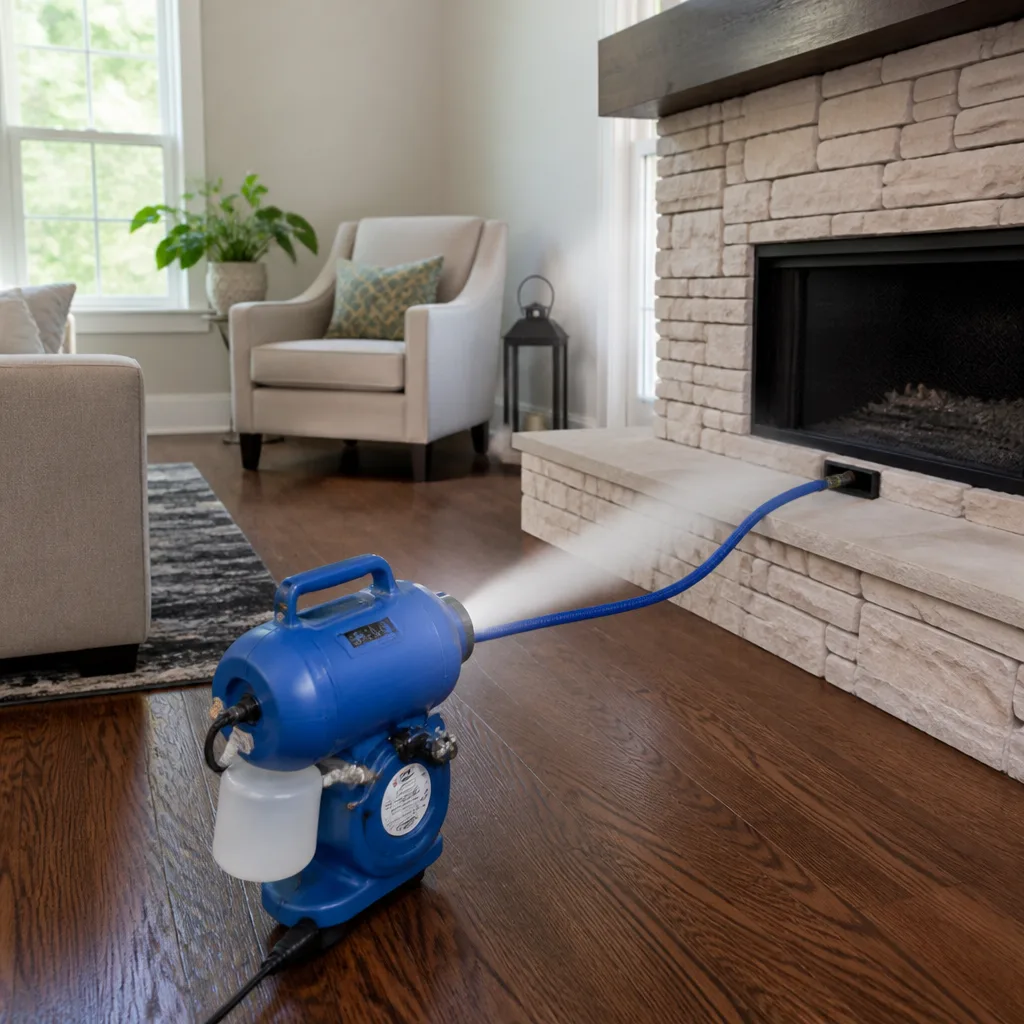 Sanitizing & deodorizing
Whole-system duct and dryer vent check with before-and-after photos - you see exactly what came out of your vents
That "$99 whole-house special" is a bait ad - the real number appears once they are in your hallway, or the "clean" is a shop-vac at the register. We photograph the inside of your ducts before and after instead.
The Complete Guide to Air Duct Cleaning in Miami
Miami averages 247 days a year with humidity above 60% relative humidity. That’s the threshold where mold can colonize a damp duct liner in under 72 hours after a water intrusion event. Most Air Duct Cleaning guides are written for dry climates like Phoenix or Denver, and they give maintenance intervals and advice that simply don’t hold up in South Florida. This guide explains how salt air, slab construction, and year-round humidity change what needs to be done inside your ducts, how often, and why a Miami home needs a different approach than a house in a dry climate.
Quick Answer
DIY vs Professional Air Duct Cleaning: The Miami Homeowner’s Decision Guide resources aside, professional air duct cleaning in Miami typically costs between $450 and $1,200 for a full system on a single-family home, and the job takes four to eight hours. Because of Miami’s humidity and salt air, most homes here need cleaning every three to five years, not the seven to ten years you’ll see in national guides. A proper Miami duct cleaning uses negative-pressure extraction to pull contaminants out, not push them around, and the work should always include a written scope of work before the crew starts.
Styles & brands we work with
Table of Contents
- Why Miami’s Climate Changes Duct Cleaning
- How Slab-on-Grade Construction Affects Your Ducts
- Fiberglass Lined vs. Sheet Metal Ducts in Miami Humidity
- Salt Air Corrosion in Coastal Miami ZIP Codes
- What NADCA ACR-2021 Standards Mean for Your Job
- What a Written Scope of Work Should Include
- How Much Air Duct Cleaning Costs in Miami
- Common Mistakes to Avoid
Why Miami’s Climate Changes Duct Cleaning
Miami’s air is never dry. The city sits on a limestone shelf between the Everglades and the Atlantic, and the relative humidity rarely drops below 55% even in January. That changes the physics of what happens inside your ducts. In a dry climate, dust settles in ducts and mostly stays put. In Miami, dust absorbs moisture from the air and turns into a damp, sticky film that adheres to duct walls and flex-duct liners. That film catches more dust, which holds more moisture, and the cycle compounds.
Here’s what that means in practical terms for a Miami homeowner:
- Dust buildup happens faster here than in dry climates, even with good filtration.
- Mold and mildew growth inside ducts is a real risk after any water event, including AC condensate overflow, roof leaks, or hurricane-driven rain intrusion.
- The standard national advice to clean ducts every seven to ten years is wrong for Miami. Our humidity accelerates buildup enough that three to five years is the realistic window for most single-family homes.
- Your AC system runs almost year-round in Miami, which means more air passes through your ducts annually than in a northern home, pulling in more dust, pollen, and outdoor contaminants.
We’ve cleaned ducts in Miami homes that had gone eight years without service, and the buildup we pulled out was comparable to what you’d see after fifteen years in a dry city. The climate does not give you grace periods. For a complete breakdown of what full-service cleaning involves, see our guide to Air Duct Cleaning in Miami.
How Slab-on-Grade Construction Affects Your Ducts
Most Miami homes are built on concrete slab foundations. There’s no crawl space, and rarely a usable basement. That means supply and return ducts are either embedded in the slab or, more commonly in homes built after 1990, run through the attic and drop down through interior wall chases. Both of these configurations create moisture problems that pier-and-beam homes in other states simply don’t have.
Here’s the issue with slab-embedded ducts, found in many older Miami homes and condo buildings. Concrete is porous. Ground moisture seeps through the slab and into the duct chases. When the AC pushes cold air through those chases, condensation forms on the outside of the duct and on the inside surfaces. That moisture has nowhere to dry in Miami’s humidity, and it becomes a standing source of dampness inside the duct run itself.
For attic-run flex ducts in newer construction, the problem is different but equally Miami-specific. Flex duct is a wire coil wrapped in fiberglass insulation and an outer vapor barrier. In an unconditioned attic that hits 130°F in August, any small tear in the vapor barrier lets humid attic air contact the cold duct surface inside, producing condensation inside the insulation layer. That water then pools at the low points of the flex run. In a dry climate, that moisture would evaporate. In Miami, it stays. And when duct cleaning pulls debris through a flex run with pooled water, that debris becomes mud.
What this means for the cleaning process:
- A proper Miami duct inspection checks for low-lying flex duct sag, because that’s where moisture collects.
- Cleaning should never add water to the system. Some companies use “fogging” or “sanitizing mist” services; those can make a Miami moisture problem worse, not better.
- After cleaning, we inspect for any vapor barrier damage and flag it, because leaving it unrepaired guarantees the condensation returns within weeks.
- If your ducts run through the slab and show signs of moisture intrusion, the source of the water must be addressed, not just cleaned around.
- Metal duct clamps and fasteners, especially on attic flex-duct connections.
- Damper assemblies and zone-control dampers, which can seize when the metal corrodes.
- The evaporator coil housing and drain pan, where salt-corroded surfaces hold moisture longer.
- Sheet metal plenum joints, where corrosion can cause air leaks that pull attic dust and humidity into the airstream.
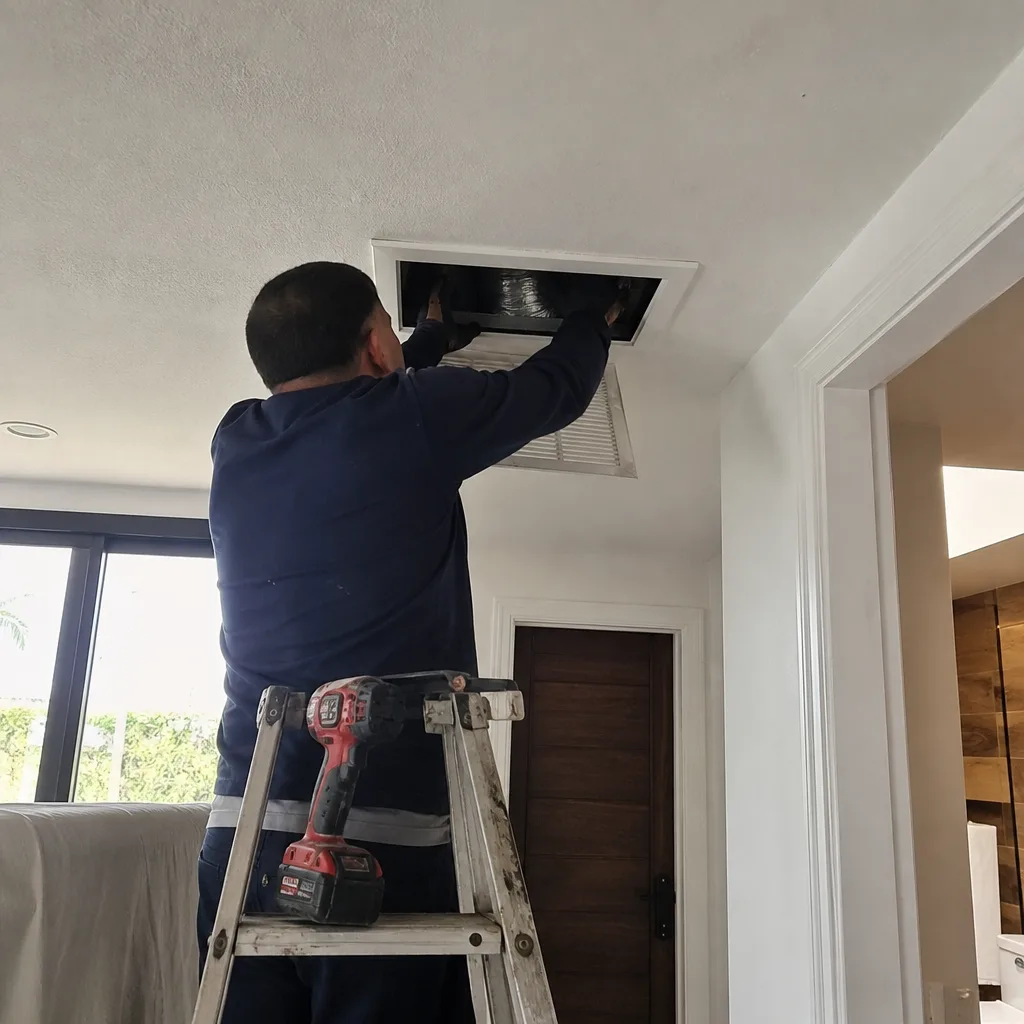
- Assessment. Before cleaning, the contractor must inspect the system, identify the duct material and configuration, and document the condition. You should get a written summary of what’s there before a single vent is touched.
- Source removal. Cleaning must remove debris from the system, not just loosen it. The standard requires that debris is physically extracted from the ducts and collected, not blown into the home or pushed downstream.
- Negative pressure containment. During cleaning, the system must be placed under negative pressure so that loosened particles are pulled out of the ductwork through a vacuum system, not pushed into your living space.
- Agitation and extraction together. Brushes, air whips, or other mechanical tools loosen debris while the vacuum pulls it out. One without the other is incomplete.
- Post-cleaning verification. After the work is done, the contractor should show you the results, ideally with before-and-after photos of the same duct locations.
- Number of supply vents and return grilles to be cleaned. Not “all vents,” but the actual count on your property.
- Whether the main trunk line is included. Some companies price per vent and omit the trunk, which is where most of the debris lives.
- Whether the blower compartment and evaporator coil are included. These are often called “add-ons” even though NADCA standards treat the whole system as the scope.
- The cleaning method. Mechanical brush agitation with negative-air extraction, not “we’ll vacuum what we can reach.”
- Whether access panels will be cut, and if so, where and how they’ll be sealed afterward. Cutting access panels without telling you is a common corner-cut. Proper sealing keeps those openings from becoming leak points in Miami’s humid air.
- The total price, in dollars, with no asterisks or “per-vent” pricing. A line-item price per vent is a bait-and-switch waiting to happen. You want one number for the full system, in writing, before anything starts.
- What is not included. If dryer vent cleaning or coil replacement is not part of the job, it should say so, so you don’t discover a surprise line item later.
- Condo or apartment (under 1,000 sq ft): $450 to $750, depending on access to the air handler and the number of vents.
- Single-family home (1,000 to 2,200 sq ft): $575 to $950, assuming standard attic or slab duct configuration.
- Larger home (2,200 to 3,500 sq ft): $800 to $1,200, with multi-zone systems adding time and complexity.
- Add-on dryer vent cleaning: $150 to $250 as a standalone service in Miami, often less when bundled with duct cleaning. See our separate dryer vent cleaning in Miami page for full pricing.
- Waiting for visible dust to call. By the time you see dust blowing from your vents in Miami, the buildup inside the ducts is already substantial. Dust you can see means dust that’s been circulating through your living space. Schedule inspections on a three-to-five-year cycle, not when symptoms appear.
- Assuming the AC filter protects your ducts. A standard 1-inch fiberglass filter catches large particles, but it does not stop fine dust, mold spores, or construction debris from entering the system. And in Miami, a clogged filter forces the blower to work harder, pulling more unfiltered air through bypass gaps.
- Hiring based on the lowest price. A $299 whole-house cleaning in Miami is a red flag. The labor, equipment, and time required for a legitimate job cannot be done for that price without cutting corners somewhere. The corner cut is usually the extraction step, which is the entire point.
- Letting anyone add moisture to the system. In Miami, sanitizer fogging or misting services can introduce moisture that never dries. Damp fiberglass liners are exactly where mold takes hold. A dry, mechanical cleaning with negative-pressure extraction is what this climate demands.
- Not getting the guarantee in writing. A verbal promise to “come back if there’s a problem” is worthless when the problem appears six months later and the phone goes to voicemail. The Kingswell Guarantee puts it in writing on every job: if the work fails within 365 days, we return and make it right at no charge.
- Forgetting about the dryer vent. Miami’s elevated humidity and laundry room configurations make lint accumulation a genuine fire risk. Many homes here have long, multi-bend dryer vent runs that clog faster than you’d expect. Cleaning the air ducts without checking the dryer vent leaves a known hazard unaddressed in the same visit.
- Choosing a company that doesn’t answer its phone. A live person answering at 2 a.m. might not be something you need today, but if a hurricane blows water into your ducts at 2 a.m. and you need a crew the next morning, you’ll be glad the call goes through. Our phones are answered by a real person, 24/7, every day of the year.
This is why the Kingswell way, our operating standard, tells our technicians to note the duct configuration on every single job in Miami. A slab home and an attic-run home get cleaned the same way mechanically, but the inspection and follow-up recommendations differ based on where the moisture risk lives.
Fiberglass Lined vs. Sheet Metal Ducts in Miami Humidity
There are two main types of ductwork in Miami homes: sheet metal with external insulation, and fiberglass duct board or fiberglass-lined metal. They behave very differently under sustained humidity, and they need different handling during cleaning.
Sheet metal ducts are more forgiving. The interior surface is smooth metal, which means dust and debris don’t adhere as aggressively. A brush agitation pass with a Rotobrush rotary system moves along the metal walls and dislodges buildup efficiently. Metal ducts also tolerate a stronger vacuum pull without risk of surface damage.
Fiberglass-lined ducts are a different animal. The interior surface is a mat of fiberglass fibers, which gives dust and mold spores something to grip. Under Miami’s humidity, that fiberglass liner can stay damp for extended periods, and once mold colonizes a damp fiberglass liner, surface cleaning will not remove it. The liner itself must be evaluated. In many cases with visible mold growth on fiberglass lining, the correct fix is liner replacement or duct replacement, not just cleaning. A crew that promises to “sanitize” a moldy fiberglass liner is not being straight with you.
The cleaning process also differs in drying. After we clean metal ducts with negative-pressure extraction, the system can be put back into service immediately. With fiberglass-lined ducts, we recommend running the AC fan for several hours after cleaning to push residual moisture out of the liner before the system sits idle. That’s a small step, but skipping it in Miami’s humidity invites a mold re-bloom.
Ask your contractor which type of ductwork you have before the job starts. If they can’t tell you after an inspection, find a different contractor. And if they don’t adjust their process for fiberglass versus metal, they’re charging you for a generic job done by generic standards.
Salt Air Corrosion in Coastal Miami ZIP Codes
If you live east of US-1 in neighborhoods like Brickell, Coconut Grove, Key Biscayne, Miami Beach, or North Bay Village, your ducts face a problem that inland Miami homes don’t: salt air corrosion. Salt particles carried off the Atlantic settle on every exposed metal surface, and where there’s salt plus humidity plus time, there’s galvanic corrosion.
Inside your duct system, the vulnerable components are:
A proper Miami duct inspection in a coastal ZIP code should include a visible check of these components. If a damper has seized from corrosion, cleaning the duct is pointless because the air isn’t flowing through it anyway. We’ve found frozen dampers in condo units that had been “cleaned” by other companies, and the homeowner had no idea because the other crew never looked. In our experience, coastal Miami homes benefit from an inspection every cleaning cycle, even if the ducts themselves don’t need service.
For the cleaning itself, salt buildup on metal duct surfaces responds to mechanical agitation, but the residue is corrosive, so removing it matters beyond just air quality. A Nikro negative-pressure unit keeps loosened salt and debris contained so it doesn’t blow back into the living space during the job. That containment matters more in salt-exposed homes because the debris includes metal oxides you don’t want settling back onto your furniture or floors.
What NADCA ACR-2021 Standards Mean for Your Job
NADCA is the National Air Duct Cleaners Association, and ACR stands for Assessment, Cleaning, and Restoration of HVAC Systems. The 2021 revision of the ACR standard is the current benchmark for how duct cleaning should be performed in the United States. When you’re hiring a Miami contractor, asking “do you follow NADCA ACR-2021?” is a legitimate question, and a contractor who can’t answer it coherently is not doing work to the standard. For help vetting candidates, see our guide on How to Hire a Air Duct Cleaning Contractor in Miami: A Step-by-Step Guide.
Here’s what the standard requires in plain language:
A NADCA-compliant cleaning in Miami looks the same as anywhere else on paper, but the Miami-specific risk is moisture. A NADCA-compliant cleaning that leaves a damp fiberglass liner behind has still failed in Miami’s climate. That’s why we pair the NADCA standard with our own Kingswell Guarantee: the job has to be done to the national standard, and it has to hold up in this specific climate for a full year, or we come back.
What a Written Scope of Work Should Include
This is where Miami homeowners get taken advantage of the most. The crew shows up, gives a verbal price, starts working, and the final invoice includes charges for things you never agreed to. A responsible contractor puts the scope of work in writing before the job begins. Here’s what that document should contain, line by line:
At Kestrel Air Duct Miami, the written price is in your hands before a single vent is touched. That’s not a promotional offer. It’s been the standing policy since 2004, written into the Kingswell Guarantee, and it applies to every job in Miami, no exceptions. If a contractor won’t put the scope in writing, walk away.
How Much Air Duct Cleaning Costs in Miami
Miami pricing for air duct cleaning runs higher than the national average, and there’s a reason for that. Homes here are harder to access, the climate demands extra inspection time, and the density of construction means more attic work in tight spaces. Here’s what you can expect to pay for a full-system cleaning in Miami based on home size:
You’ll find quotes lower than $450 in Miami. The math is simple: a full NADCA-compliant cleaning on an average Miami home takes two technicians four to six hours with professional equipment. A company charging $299 for that is either not doing the full scope, not using real extraction equipment, or planning to make up the difference with add-ons once the van is in your driveway. The industry’s reputation for bait-and-switch pricing exists for a reason, and the Southeast Florida market has more than its share of offenders.
When you call Kestrel Air Duct Miami, you’ll get a written price for the full system before we schedule the crew. That price covers the complete scope: supply vents, returns, trunk line, air handler, and blower compartment. If the job takes longer than we estimated, the price doesn’t move. If we find something unexpected, we show you and explain your options before anything changes. That’s the way the Kestrel Air Duct Miami home team has operated since 2004, and it’s the reason people in Miami call us back when it’s time to clean again.
Common Mistakes to Avoid
See the difference
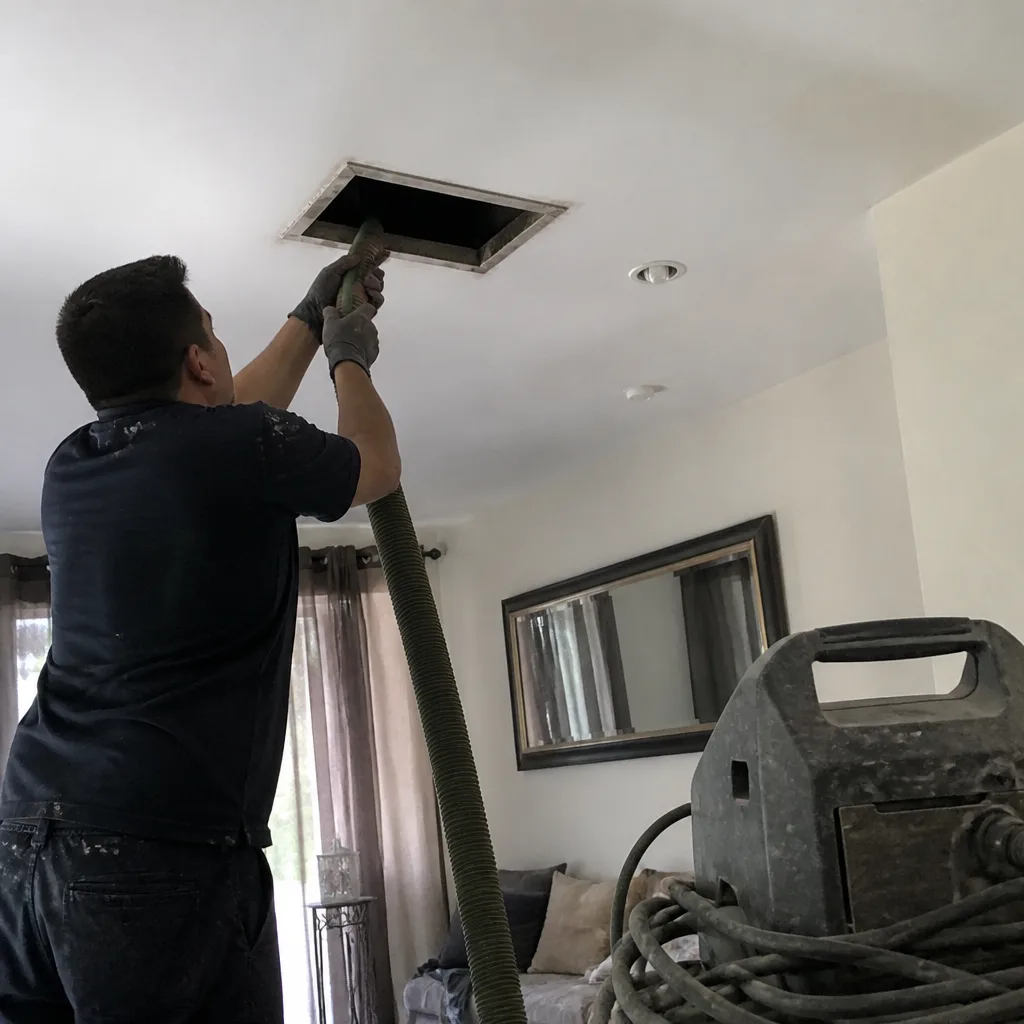 Before
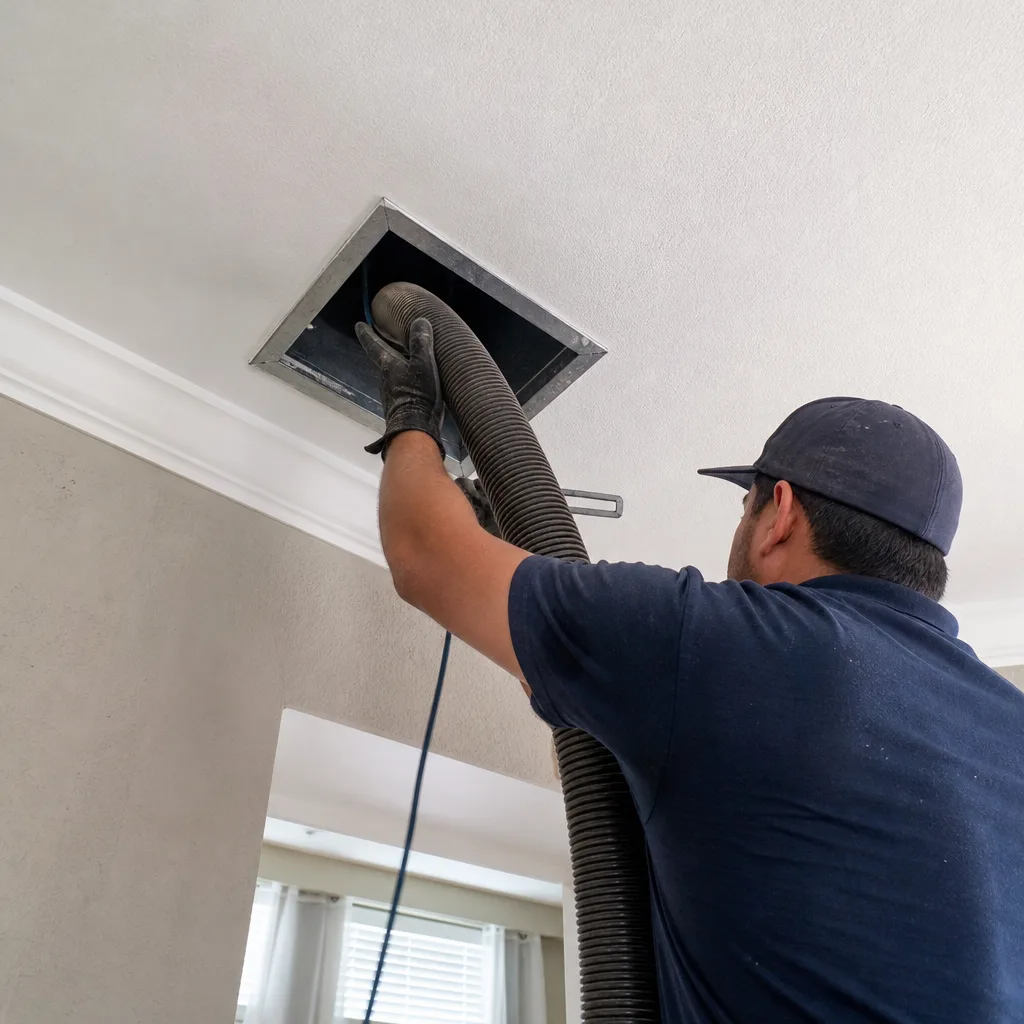 After
After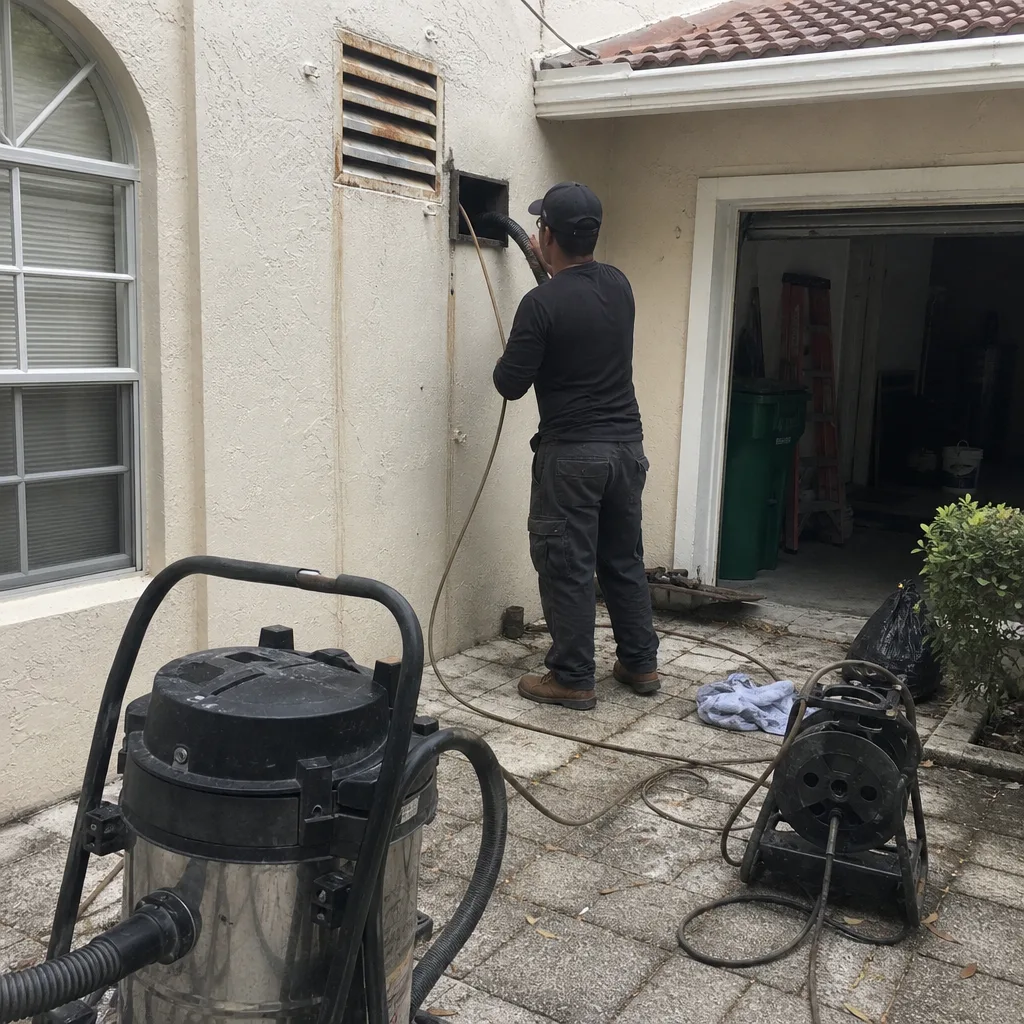 Before
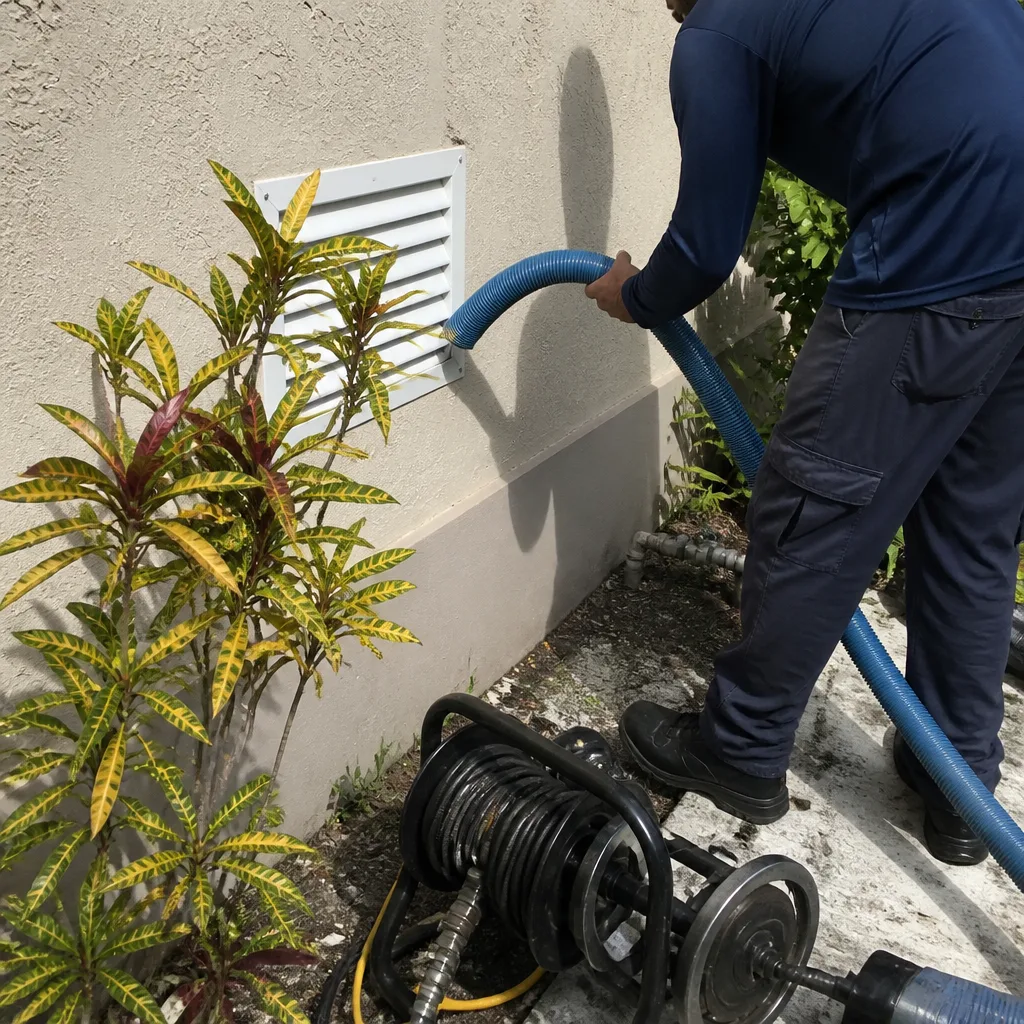 After
After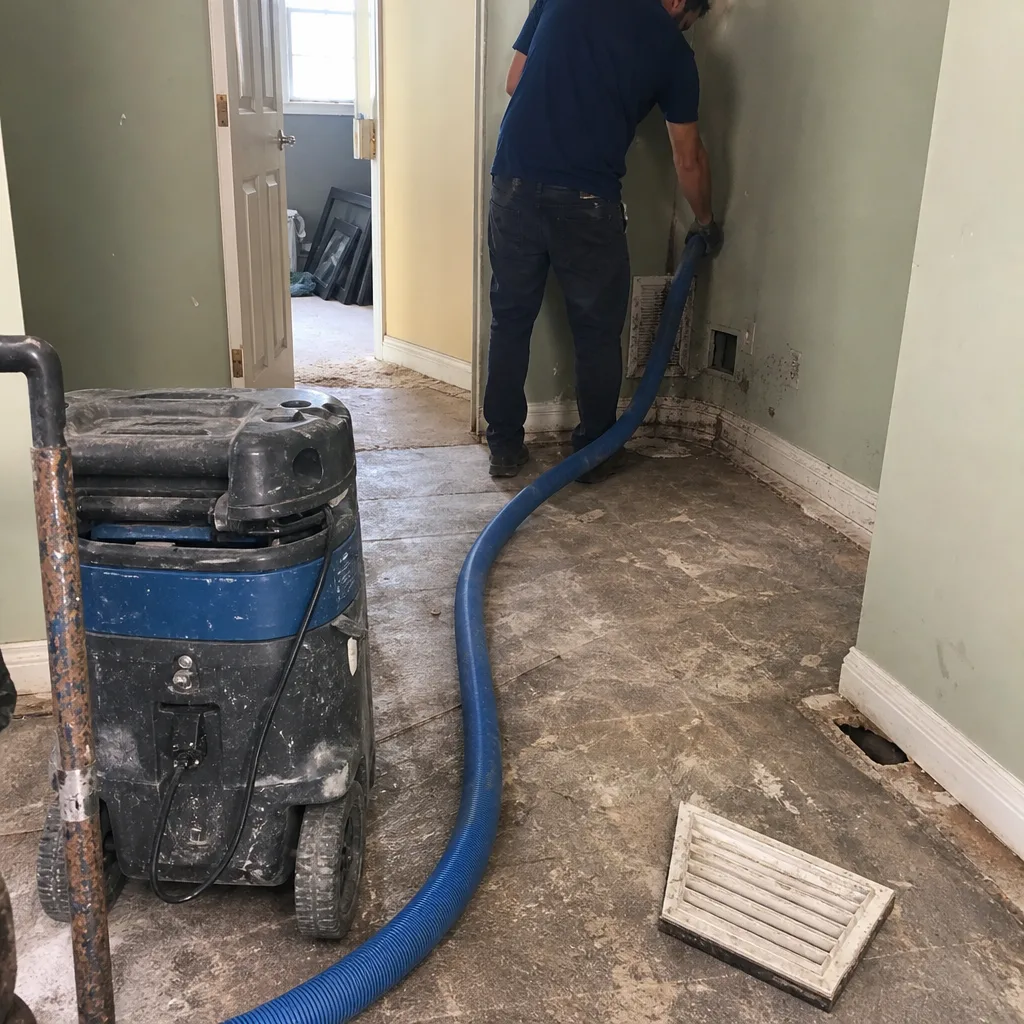 Before
 After
AfterWhen to Call a Professional
Call a professional duct cleaning company when you see dust buildup on vent grilles even after cleaning them, when you smell a musty odor that returns after changing the AC filter, when renovations have put drywall dust into the system, or when a water event like a leak, overflow, or storm intrusion has soaked any part of the ductwork. In Miami, the last one is urgent. Water inside ducts in this humidity converts to mold risk within days, not weeks. If you suspect moisture in your ducts and you’re in Miami, call Kestrel Air Duct Miami at (850) 779-9240 for a free estimate. We’ll inspect, tell you what we find, and put the price in writing before any work begins.
Frequently Asked Questions
Expect to pay between $450 and $1,200 depending on home size, with most single-family homes in Miami landing between $575 and $950 for a full NADCA-compliant system cleaning. Condos start lower, larger multi-zone homes run higher, and add-on services like dryer vent cleaning are separate. Any quote significantly below that range in Miami is likely cutting out the extraction step or planning door-step add-ons. Call (850) 779-9240 for a written quote on your specific home. Estimates are free.
Cheap quotes in Miami usually mean one of three things: the company is not running negative-pressure extraction, the scope excludes the trunk line or air handler, or the low price is a door-opener meant to be inflated once the crew arrives. A full system cleaning takes real time, real equipment, and real labor. When the math doesn’t work at the quoted price, the work isn’t being done to the standard. Kestrel gives you one written price for the whole system before anything starts, and that price doesn’t change when the van pulls up.
Ask for before-and-after photos of the same duct locations, taken by the crew during the job. A NADCA-compliant contractor can show you what the duct looked like before cleaning and what it looks like after. At Kestrel, we photograph key duct sections and share those images with you at the end of the job, so you’re not taking it on faith. You can also look inside accessible ducts with a flashlight; a properly cleaned duct should show clean interior surfaces, not a dust film. Call (850) 779-9240 to ask how we verify our work.
In Miami’s humidity, every three to five years is the realistic interval for most homes, compared to seven to ten years in dry climates. Homes with pets, recent renovations, coastal salt exposure, or a history of moisture problems should lean toward the three-year end. If you don’t know when your ducts were last cleaned and you’ve lived in the home more than five years, it’s time for an inspection.
Yes. Miami’s sustained humidity above 60% RH means that any moisture inside a duct, whether from condensation, a leak, or storm intrusion, creates conditions where mold can colonize a fiberglass liner within 72 hours. Air passing over that mold circulates spores through the living space every time the AC runs. A proper Miami cleaning removes the debris and moisture that feeds mold, and a responsible contractor will tell you when the liner itself needs replacement instead of just cleaning.
Every job comes with the 365-Day Done Right Promise in writing. If the work falls short within one year, Kestrel returns and makes it right at no charge. That promise is part of the Kingswell Guarantee, which also includes a written price before work begins, a defined arrival window, and a clean job site. It’s the same standard we’ve applied to every job in Miami since 2004.
The Bottom Line
Air duct cleaning in Miami is not the same job it is in Denver, Phoenix, or even Atlanta. Salt air, slab foundations, and 247 humid days a year mean your ducts face conditions most guides never address. Explore our more guides & resources for deeper dives into Miami HVAC care. The fix is a cleaning approach that combines NADCA-compliant negative-pressure extraction with a Miami-specific inspection of moisture, corrosion, and duct configuration. Expect to pay $450 to $1,200 for a full system, demand a written scope of work, and don’t settle for a contractor who can’t explain what they’re doing in plain language. Call Kestrel Air Duct Miami at (850) 779-9240 for a free estimate, and get the written price before a single vent is touched.
Written by Dale Whitmore, Owner at Kestrel Air Duct Miami, serving Miami since 2004.