
Last updated October 15, 2026
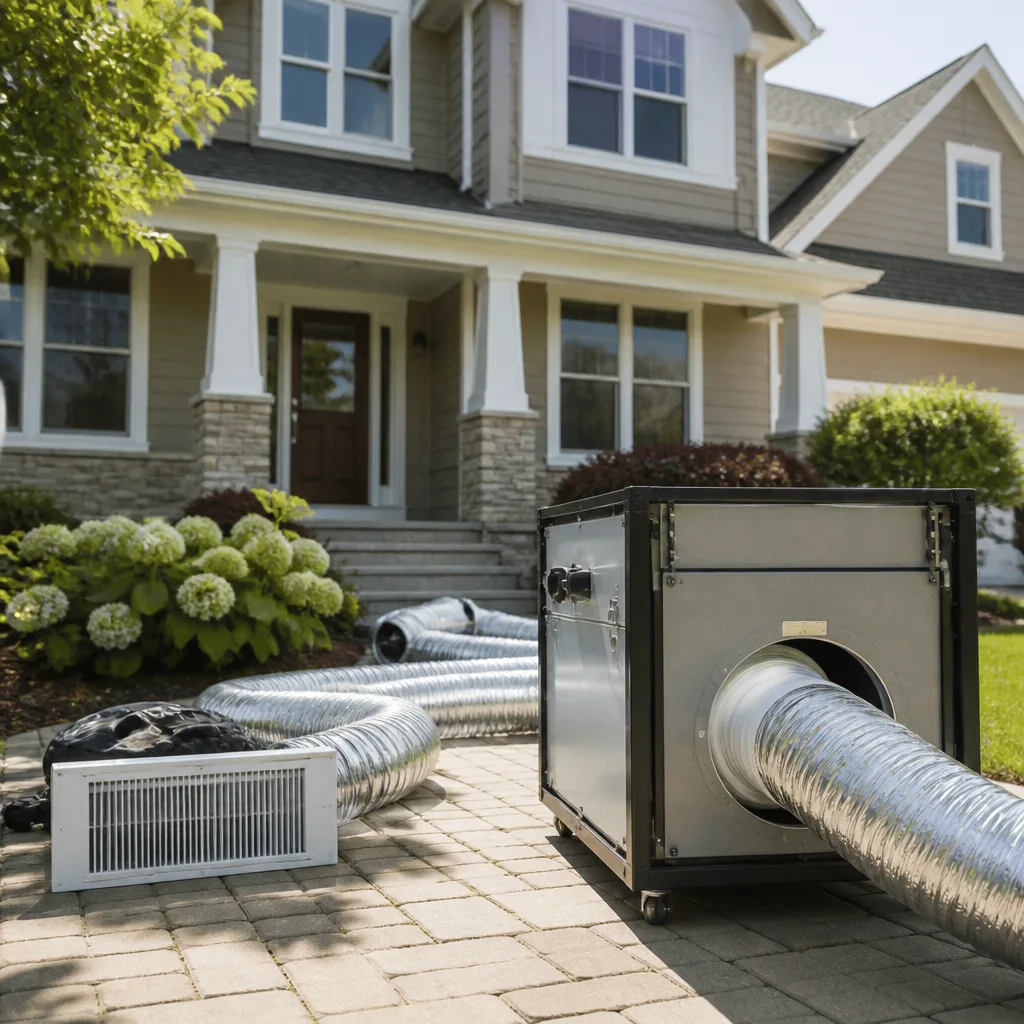 Whole-home duct cleaning
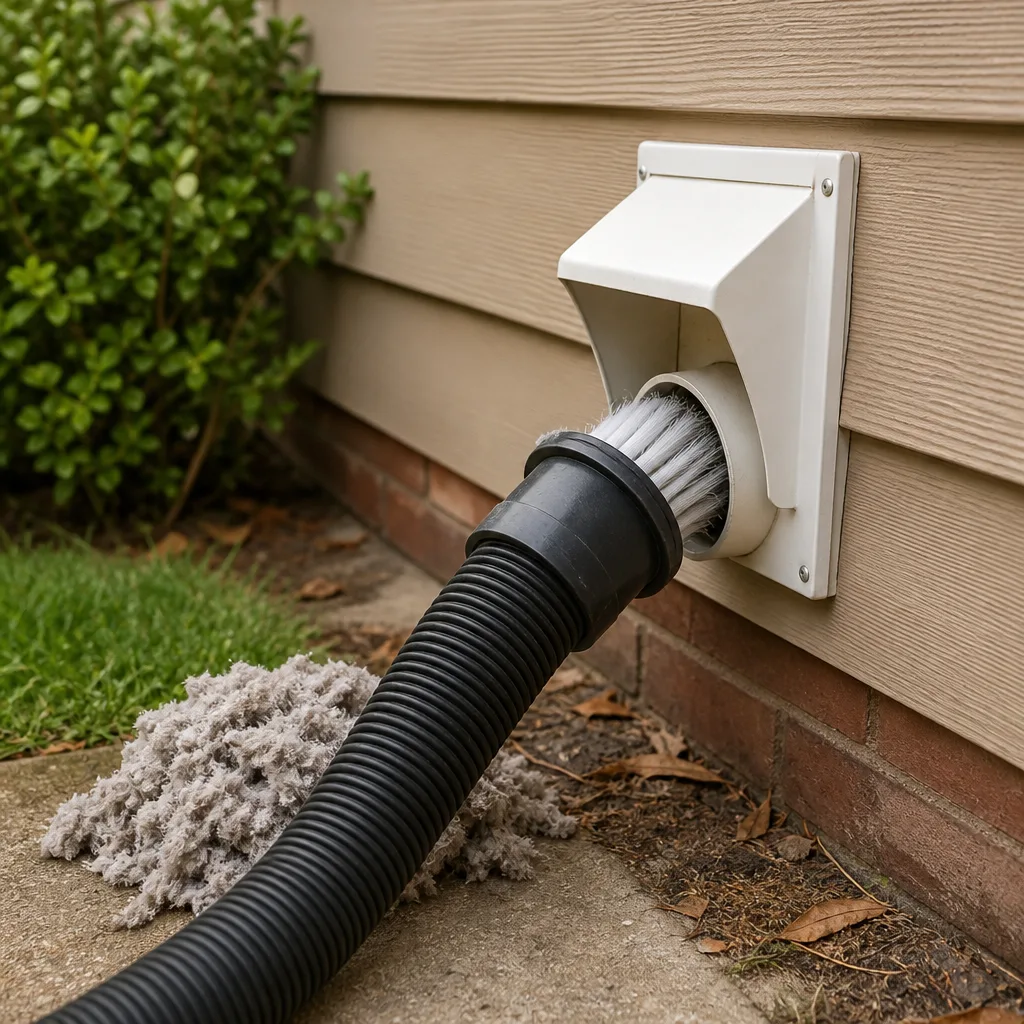 Dryer vent cleaning
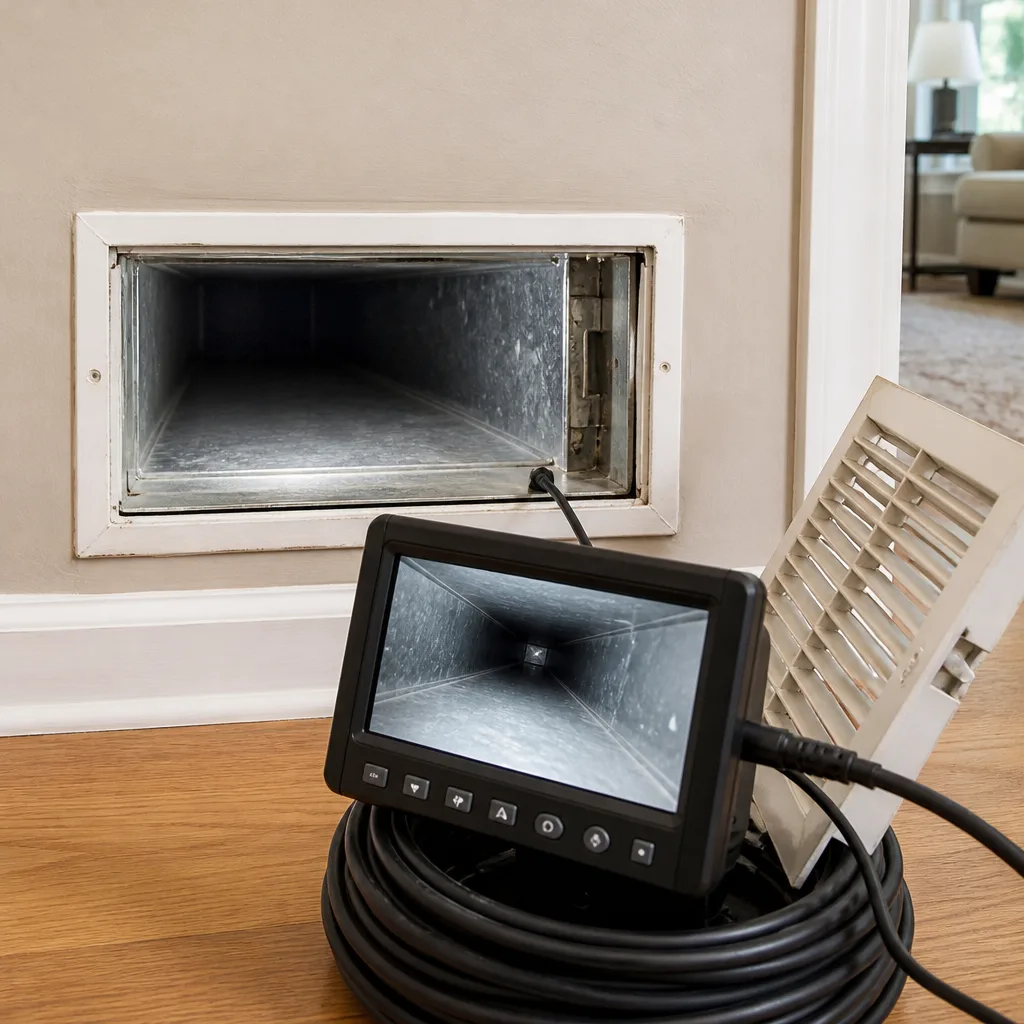 Camera inspection
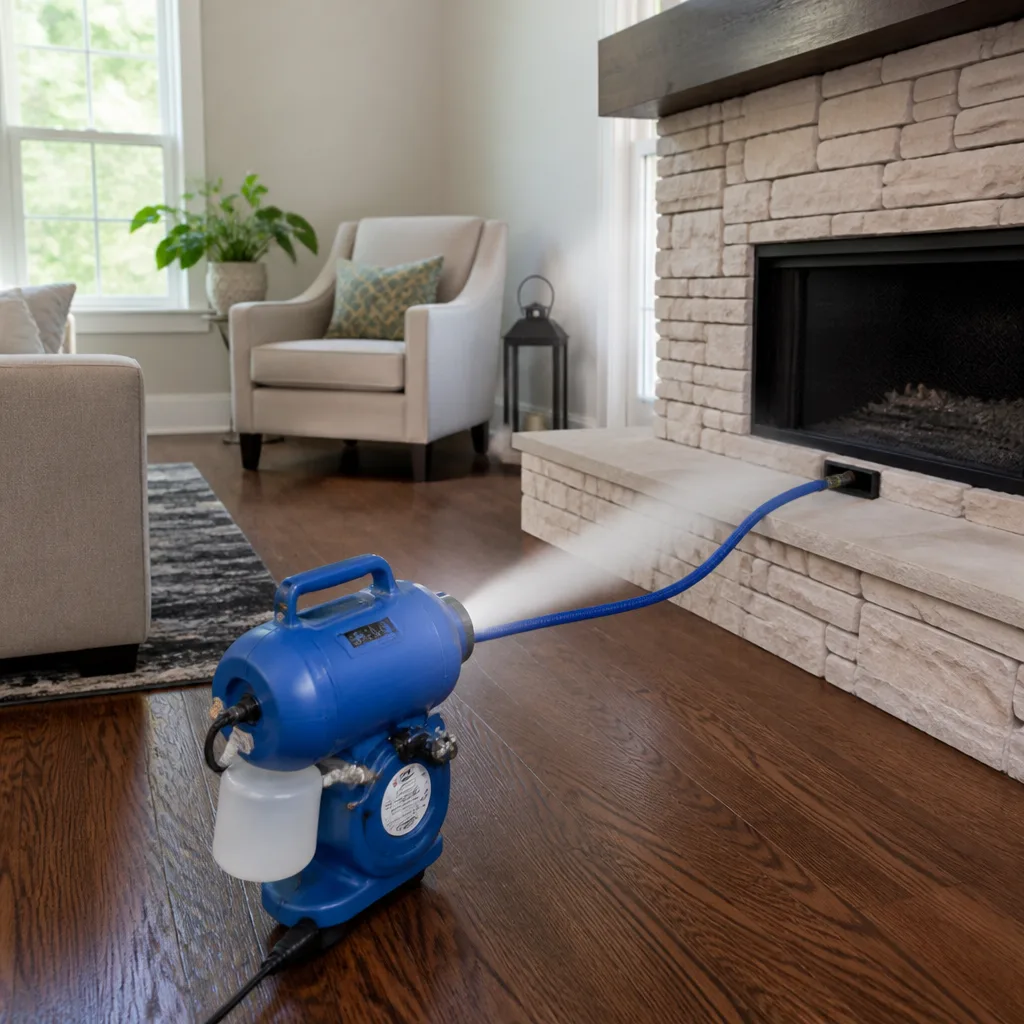 Sanitizing & deodorizing
Whole-system duct and dryer vent check with before-and-after photos - you see exactly what came out of your vents
That "$99 whole-house special" is a bait ad - the real number appears once they are in your hallway, or the "clean" is a shop-vac at the register. We photograph the inside of your ducts before and after instead.
How to Hire a Air Duct Cleaning Contractor in Miami: A Step-by-Step Guide
The Florida Department of Agriculture and Consumer Services logs hundreds of air duct cleaning complaints every year, and the single most common pattern isn’t shoddy work. It’s a price quoted over the phone that doubles or triples once the crew is inside the home, a tactic made easier because most Miami homeowners don’t know what questions would have exposed it upfront. This guide-along with our Seasonal Air Duct Cleaning Care for Miami: Year-Round Homeowner’s Guide-gives you those questions, teaches you to read a written estimate like a contract, and shows you what separates a legitimate Miami contractor from a bait-and-switch operation before anyone steps through your door.
Quick Answer
To hire a legitimate air duct cleaning contractor in Miami, start by asking five specific questions on the phone: what’s the total written price, what equipment will they use, what does the price include, what’s the written guarantee, and will they provide before-and-after photos. A trustworthy contractor gives you a flat whole-system price before work starts, uses professional-grade negative-air equipment, and puts the guarantee in writing. Anyone who quotes “starting at” pricing, refuses to commit to a number, or can’t explain their cleaning method in plain English should be disqualified before they ever reach your driveway.
Styles & brands we work with
Table of Contents
- The Five Phone Questions That Expose a Bad Contractor
- Florida Licensing Reality Check: What Credentials Actually Matter
- How to Read a Written Estimate Like a Contract
- What to Watch During the Job
- Written Guarantees vs. Verbal Pledges: Your Recourse in Florida
- Why Miami’s Climate Makes Duct Cleaning Different
- Common Mistakes to Avoid
- When to Call a Professional
The Five Phone Questions That Expose a Bad Contractor
The fastest way to filter out a bad contractor in Miami is to ask the right questions before you schedule anything. A legitimate company answers these directly, in plain English, without hesitation. A bait-and-switch operation deflects, hedges, or tries to get you off the phone and onto a “free inspection.” Here are the five questions, and what a trustworthy answer actually sounds like.
Question 1: “What’s the total price for my whole system, in writing?”
A legitimate contractor gives you a flat number for your entire duct system. Most Miami homes run between $350 and $650 for a complete cleaning, depending on system size and the number of returns. A deflecting answer is anything that sounds like “it depends on what we find” without a ceiling, or “we start at $79 and go from there.” That’s not pricing. That’s a doorway. We put the written price in your hands before a single vent is touched, and that number does not move. If a company won’t commit to a number over the phone, the number will be different when the technician arrives.
Question 2: “What equipment do you use?”
Listen for specific brand names and methods. The professional answer mentions negative-air extraction, which means a powerful vacuum unit creates suction at the system level so debris is pulled out rather than pushed around, and brush agitation, which means a rotating brush physically dislodges caked-on dust from the duct walls. At Kestrel Air Duct Miami home service calls, our technicians use Rotobrush rotary systems for agitation and Nikro negative-pressure units for extraction. The wrong answer is vague: “industrial equipment” or “our special process.” If they can’t name the tools, they’re probably using a box-store shop vac.
Question 3: “What exactly is included in that price?”
Every legitimate estimate lists what’s covered: supply ducts, return ducts, trunk lines, registers, the blower compartment, and the air handler or plenum. Ask specifically whether the price includes cleaning all vents, all returns, and the main trunk lines. Some operators charge per vent, which turns a $400 job into $900 once they count 28 vent openings. A flat whole-system price is the only honest structure. If the company hesitates on this question, or says they’ll “see how many vents you have,” you’re talking to someone building an invoice rather than a quote.
Question 4: “What’s your guarantee, in writing?”
A legitimate company commits to a written guarantee. Ours is the 365-Day Done Right Promise: if the work falls short within the guarantee period, we return and make it right at no charge. A bad contractor’s answer sounds like “we guarantee your satisfaction” with nothing behind it. That’s not a guarantee. That’s a marketing phrase. Ask what happens if you call back in three months because dust is already accumulating again. If the answer is “we’d have to come take a look,” with no written obligation, you’re dealing with a company that’s been paid and has moved on.
Question 5: “Will you show me before-and-after photos of my ducts?”
Any legitimate air duct cleaning contractor in Miami should be willing to take photos of your ducts before the work begins and after it’s complete. This isn’t optional. It’s the difference between work that happened and work that was narrated. Our technicians document every job with photos, so you can see the duct walls, the registers, and the actual condition of your system before and after we clean it. If a contractor balks at this request, or says “you’ll see how clean the air feels,” you should assume the work is performative. A real cleaning leaves visible proof, and any company that won’t show you that proof is hiding something.
Florida Licensing Reality Check: What Credentials Actually Matter
Here’s a fact that surprises most Miami homeowners: air duct cleaning is not independently licensed in the state of Florida. There is no “duct cleaning license” issued by any Florida regulatory body. That means any contractor who flashes a generic “Florida license” as proof of duct cleaning expertise is either confused or misleading you. So what actually matters? Here’s the short list of credentials that carry real weight in this industry.
NADCA membership. The National Air Duct Cleaners Association sets the technical standard for the industry. Members are required to follow specific cleaning protocols and maintain equipment standards. While NADCA membership isn’t a license, it’s the closest thing this industry has to a professional credential. Ask directly: “Are you a NADCA member?” A legitimate company answers yes or no without stammering.
EPA Section 608 certification. This applies only if the contractor is handling refrigerants, which most air duct cleaning jobs don’t require. But if your cleaning work expands into air handler service or coil cleaning that touches the refrigerant lines, the technician needs EPA Section 608 certification. It’s a federal requirement for anyone handling refrigerant, and a legitimate Miami contractor knows this. If a company claims they’ll “clean the whole system including the AC coils” but no one on their crew holds Section 608, walk away.
General liability insurance with adequate minimums. Florida doesn’t mandate a specific amount for duct cleaners, but any legitimate company carries at least $500,000 in general liability coverage. Ask for a certificate of insurance, and verify the company name on the certificate matches the company on the estimate. This isn’t bureaucratic nitpicking. It’s the difference between a contractor whose insurance covers a damaged duct system and one who disappears.
Background-checked, uniformed technicians. This isn’t a legal requirement, but it’s a signal that the company operates under a defined code. Under The Kingswell Way, our technicians are background-checked and uniformed, and they adhere to a specific set of on-site standards: say the price, show up in the window we gave, leave the place cleaner, put the guarantee in writing, and come back if it fails. If a contractor arrives in unmarked clothes, with no company identification, and no defined on-site protocol, you’re rolling dice on who’s in your home.
Equipment you can verify. A legitimate contractor names their equipment because it’s a point of pride. Rotobrush rotary brushes, Nikro negative-pressure units, and Abatement Technologies HEPA filtration systems are professional-grade tools that cost thousands of dollars. A company using this equipment is making a real investment in the work. A company using a “powerful truck-mounted system” without a brand name is often using rented equipment or a repurposed shop vac. Ask what’s on the truck. The answer tells you everything.
For more on what a proper cleaning should involve, read our breakdown of Air Duct Cleaning in Miami.
How to Read a Written Estimate Like a Contract
A written estimate is either a contract or a suggestion, and the difference is in the language. Here’s how to read one critically, line by line, so you know exactly what you’re agreeing to before the work starts.
Line items that must appear
- Total system price, in dollars, not “starting at.” If the estimate says “starting at $299” or “$299 and up,” it’s not an estimate. It’s a hook. A flat price means the company has enough confidence in their process to commit to a number before they see your ducts. If they need to “see the system first,” they should be able to quote a range with a firm ceiling.
- Scope of work, itemized. Supply ducts, return ducts, trunk lines, registers, blower compartment, and plenum. Each should be listed, or the total should explicitly state “entire system.” If the scope is vague, the price is negotiable later.
- Cleaning method, specified. Negative-air extraction, brush agitation, or both. If the method isn’t named, the customer can’t judge whether the work was done properly.
- Time estimate. A legitimate cleaning of a typical Miami home takes 2 to 4 hours. If the estimate says 45 minutes, the company is doing a visual inspection, not a cleaning.
- Guarantee terms, in writing. What’s covered, for how long, and what the company will do if the work fails. Not a “satisfaction pledge.” A documented obligation.
Vague language that signals upselling
Watch for phrases like “additional services as needed,” “mold remediation available,” “duct replacement recommended,” or “we’ll assess and advise.” These are soft openings for the real pitch, which comes after the technician is inside the home and the customer is already committed. A legitimate estimate lists the work and the price for that work. If the company wants to recommend additional services, that’s a separate conversation with a separate written quote, and the customer should never feel pressure to approve anything on the spot.
One common upsell is the “mold scare.” A technician pokes a camera into a vent and says, “See that dark spot? That’s mold. We need to treat it.” Here’s the thing: dark dust accumulation is not mold. Mold requires moisture and will look organically spongy under magnification. If a contractor claims mold without a lab test, they’re selling fear, not service. Our policy is straightforward: if we see something concerning, we show you the photo, explain what we’re seeing, and let you decide. We don’t manufacture emergencies.
Why “starting at” pricing is a contractual red flag
“Starting at” pricing exists for one reason: to get the van in the driveway. Once the technician is on site, the “starting” price becomes the base, and every additional element, and extra vent, and each return, and the “deep cleaning” for pet hair, becomes an add-on. The customer, who has blocked off an afternoon and is standing in a dusty hallway with a stranger, is already psychologically committed. This is not negotiation. It’s leverage. A flat whole-system price eliminates this dynamic entirely, because the number on the paper is the number on the invoice. Period.
What to Watch During the Job
You’ve hired a contractor. The written price is in your hand. The crew arrives on time, in uniform, with equipment. Now what? Here’s what to watch for during the job, and what questions to ask mid-service to determine whether the work is real or performative.
Where to stand. You don’t need to hover over the technician’s shoulder, but you should be able to see the equipment in operation. Negative-air extraction involves a large vacuum unit connected to your duct system, usually at the air handler or a return point. Brush agitation involves access ports cut into the ductwork (temporarily, then sealed) through which a rotary brush snakes in to dislodge debris. If the technician is only moving a vacuum hose from vent to vent, they’re not cleaning the system. They’re vacuuming the vent openings. There’s a difference, and it’s visible.
What to listen for. A negative-air unit running at full power sounds like a serious machine, not a household vacuum. You should hear a low rumble at the system level, not just a high-pitched whine at individual vents. The brush agitation should sound like a mechanical rotation inside the walls at each access point. If the quiet is broken only by conversation and a shop vac’s whine, ask what method is being used.
Questions to ask mid-job:
- “Where are you accessing the trunk lines?” A legitimate contractor cuts access ports into the main trunk and seals them after. If there are no access ports, there’s no brush agitation happening beyond the vent openings.
- “Can you show me the debris collection?” Negative-air units with HEPA filtration collect debris in a container or bag. A legitimate contractor can show you the accumulated dust, and a professional-grade unit should be capturing visible debris. At Kestrel, our techs can point to the collection chamber and show you what’s been pulled from your system.
- “Which returns are you cleaning?” A whole-system cleaning covers every return, not just the visible ones. If the tech hesitates or checks a list, the original estimate may have been built on partial coverage.
Red flags during the job: the crew “discovers” a problem that wasn’t in the estimate; the pressure to sign a change order “right now while we’re here”; the offer of a “cash discount” for immediate approval; a technician who can’t explain what a particular piece of equipment is doing. Any of these means the structured process is breaking down, and the final invoice is likely to be higher than the written estimate.
Written Guarantees vs. Verbal Pledges: Your Recourse in Florida
The difference between a written guarantee and a verbal pledge is the difference between a document you can hold onto and a memory you can’t. Here’s what a legitimate guarantee contains, and what your actual recourse is in Florida when work falls short.
A real guarantee names three things: what’s covered, how long the coverage period lasts, and what the company will do if the work fails. Ours does exactly that. The 365-Day Done Right Promise covers the entire cleaning, and every Kestrel job includes it in writing, not as a courtesy but as a standing commitment. If the work falls short within the guarantee period, we return and make it right at no charge. That’s the whole guarantee. No fine print about “normal accumulation” or “acts of God” or “customer must rebook within 30 days.” Just a return visit, at no charge, within the stated period.
A verbal pledge sounds like: “You’ll be happy, we guarantee it” or “We stand behind our work.” Those are feelings, not obligations. Under Florida law, a verbal promise about the quality of a service is difficult to enforce, especially without documentation. Florida’s Deceptive and Unfair Trade Practices Act (FDUTPA) protects consumers from deceptive trade practices, including bait-and-switch pricing and false advertising, but proving a verbal promise after the fact is nearly impossible. That’s why the written estimate matters: it’s the document a court or the Florida Department of Agriculture and Consumer Services can actually read.
Your recourse in Florida if work is substandard:
- Contact the company in writing. Reference the written estimate and the specific failure. A legitimate company responds because their guarantee obligates them to. A bad contractor ignores you.
- File a complaint with the Florida Department of Agriculture and Consumer Services. FDACS handles consumer complaints about services, including bait-and-switch pricing and failure to honor written commitments. The process is free and can be started online.
- File a complaint with NADCA if the contractor is a member. NADCA has a code of ethics and can investigate members who violate it.
- Dispute the charge. If you paid by credit card, you can file a dispute with your card issuer. If the contractor accepted payment without performing the written scope of work, the dispute process is straightforward.
The practical takeaway: before you ever need recourse, verify the guarantee is in writing. Ask the contractor to put it in the estimate. If they won’t, they’ve told you something important about how they do business.
Why Miami’s Climate Makes Duct Cleaning Different
Miami’s humidity doesn’t just make the air feel heavy. It changes how ducts accumulate debris and what lives in them. Homes in Miami deal with a specific set of challenges: mold-adjacent humidity, salt air near the coast, and air conditioning systems that run nearly year-round. Here’s how those factors affect the hiring decision.
Humidity means biological growth happens faster. Miami’s average relative humidity hovers around 70 percent for most of the year. Inside ductwork, moisture condenses on cool metal surfaces, and dust plus moisture equals microbial growth. A legitimate Miami contractor understands this and can clean your ducts in a way that removes accumulated debris without leaving behind moisture that makes the problem worse. The negative-air extraction method matters here: it pulls contaminants out at the system level rather than redistributing them into the living space. Our Abatement Technologies HEPA filtration captures loosened particles during the cleaning so they don’t end up on your furniture.
Salt air near the coast accelerates corrosion. Homes in neighborhoods like Coral Gables, Coconut Grove, and Key Biscayne sit close enough to the ocean that salt spray infiltrates the air. Salt accelerates corrosion on metal components, including duct joints, dampers, and the air handler. A Miami contractor who’s worked in coastal neighborhoods knows to look for corroded components and can tell you whether what you’re seeing is normal wear or a sign of a larger problem.
AC systems run year-round. In Miami, your air conditioner is not a seasonal appliance. It’s a permanent roommate. That means ducts accumulate debris at a faster rate than in a northern city where the system hibernates for months. Most Miami homes should have their ducts cleaned every 3 to 5 years, and homes with pets, recent renovations, or smokers should lean toward the shorter end of that range. If you have a dryer vent, that needs separate attention, and you can read about our Dryer Vent Cleaning in Miami service for details.
Common Mistakes to Avoid
- Treating a low door-hanger price as a starting point for negotiation. A $79 whole-house duct cleaning coupon is not a discount. It’s a mechanism to get a technician into your home where the real invoice is built. Legitimate whole-system cleanings in Miami cost between $350 and $650. If the price is dramatically lower, the work being described is dramatically smaller, and you’ll discover the gap once the crew arrives.
- Hiring a company that can’t name its equipment. “Professional-grade” without a brand name means nothing. Rotobrush, Nikro, and Abatement Technologies are specific manufacturers that make specific tools. If a contractor can’t tell you what’s on the truck, they’re probably renting it or they’ve never actually seen it.
- Accepting a verbal guarantee. In Florida, if it’s not in writing, it didn’t happen. A verbal satisfaction pledge evaporates the moment you call back with a complaint. Ask for the guarantee in the written estimate, and read it before you sign anything.
- Scheduling a cleaning because a contractor knocked on the door offering one. Door-to-door duct cleaning solicitation is a known pattern in Miami and across Florida. Legitimate contractors don’t go door to door. They answer the phone, provide written estimates, and schedule the work in advance.
- Believing a “mold” diagnosis without a lab test. Dark dust is not mold. Mold requires moisture and a specific appearance under magnification. If a technician “finds” mold during a routine cleaning, demand a lab test before paying for remediation. Legitimate companies don’t diagnose mold from a grainy camera feed.
- Paying the full amount up front. A legitimate contractor may require a deposit, but the balance is due on completion of the work. If a company wants full payment before the crew arrives, you’re financing their float, not their service.
- Skipping before-and-after photos. If the company won’t document the work, there’s no way to verify it happened. Photos are the simplest accountability tool in this industry, and any contractor who resists them is telling you something.
When to Call a Professional
The honest answer is that duct cleaning is not a handyman-adjacent job. It requires professional equipment, access to the main trunk lines, and a systematic approach that no amount of household vacuuming can replicate. Call a professional if you’ve lived in your Miami home for more than three years without a cleaning, if you notice dust accumulating on surfaces within days of cleaning, if your energy bills have crept upward without an obvious cause, or if anyone in the home struggles with allergies or respiratory issues that worsen indoors. Renovations, new construction dust, and pet dander all settle into ducts and circulate through the living space. A professional cleaning with negative-air extraction and brush agitation removes what you can’t reach. Kestrel Air Duct Miami offers free estimates in Miami, call (850) 779-9240, and we’ll give you a written price before any work begins, with no obligation and no doorstep revisions.
See the difference
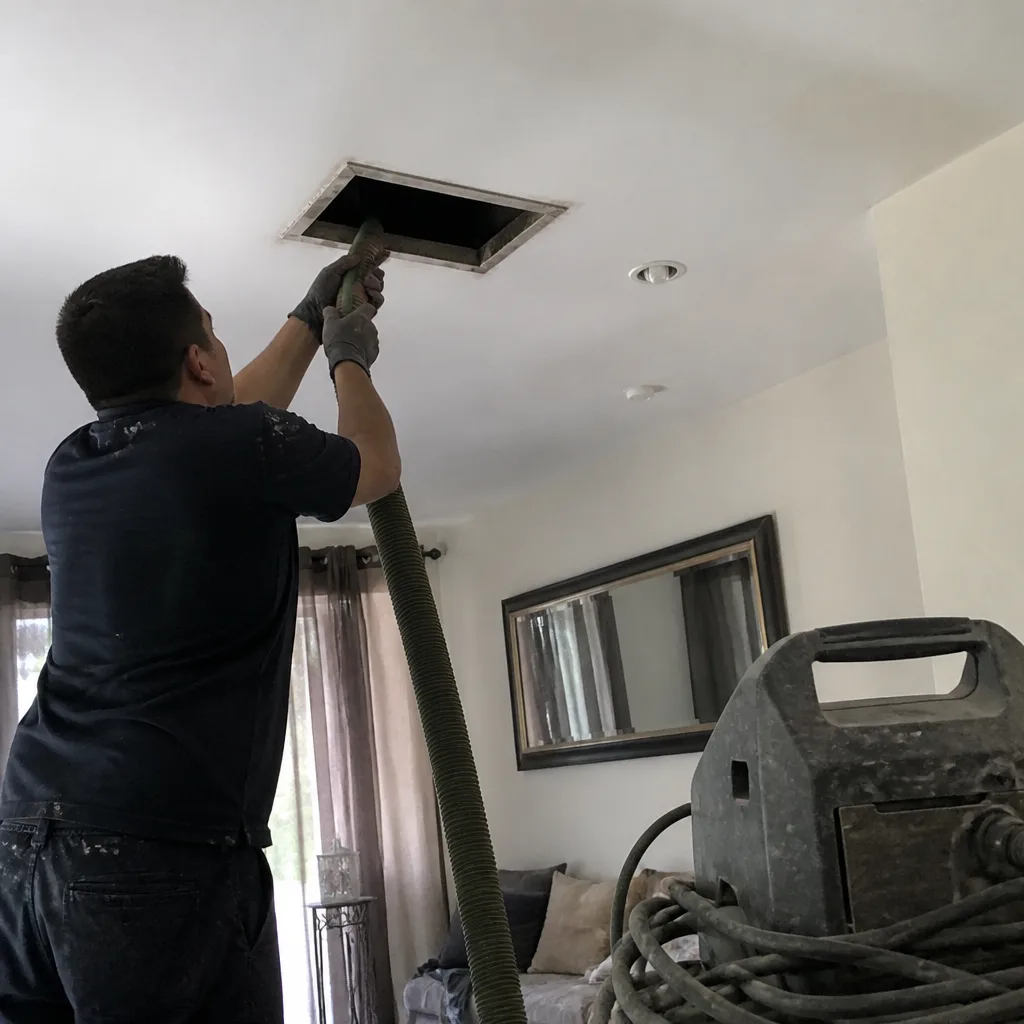 Before
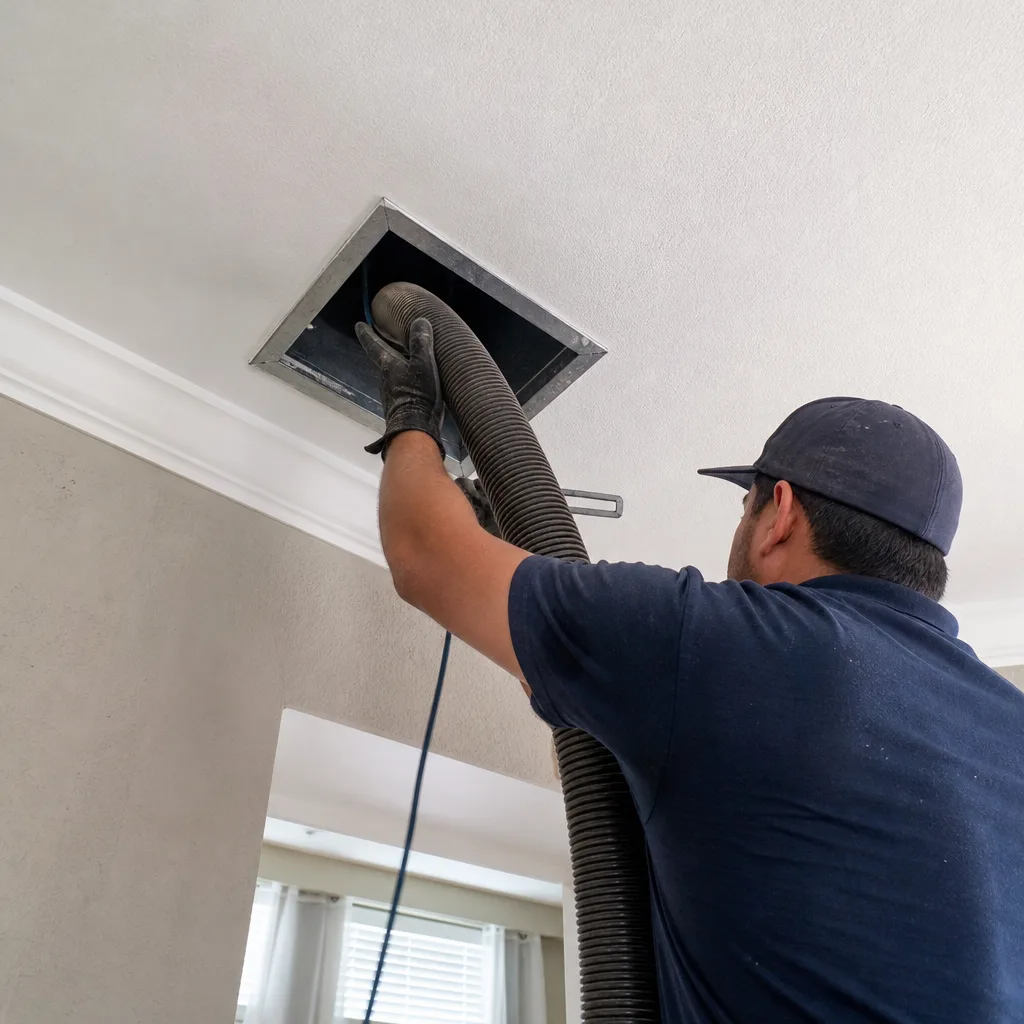 After
After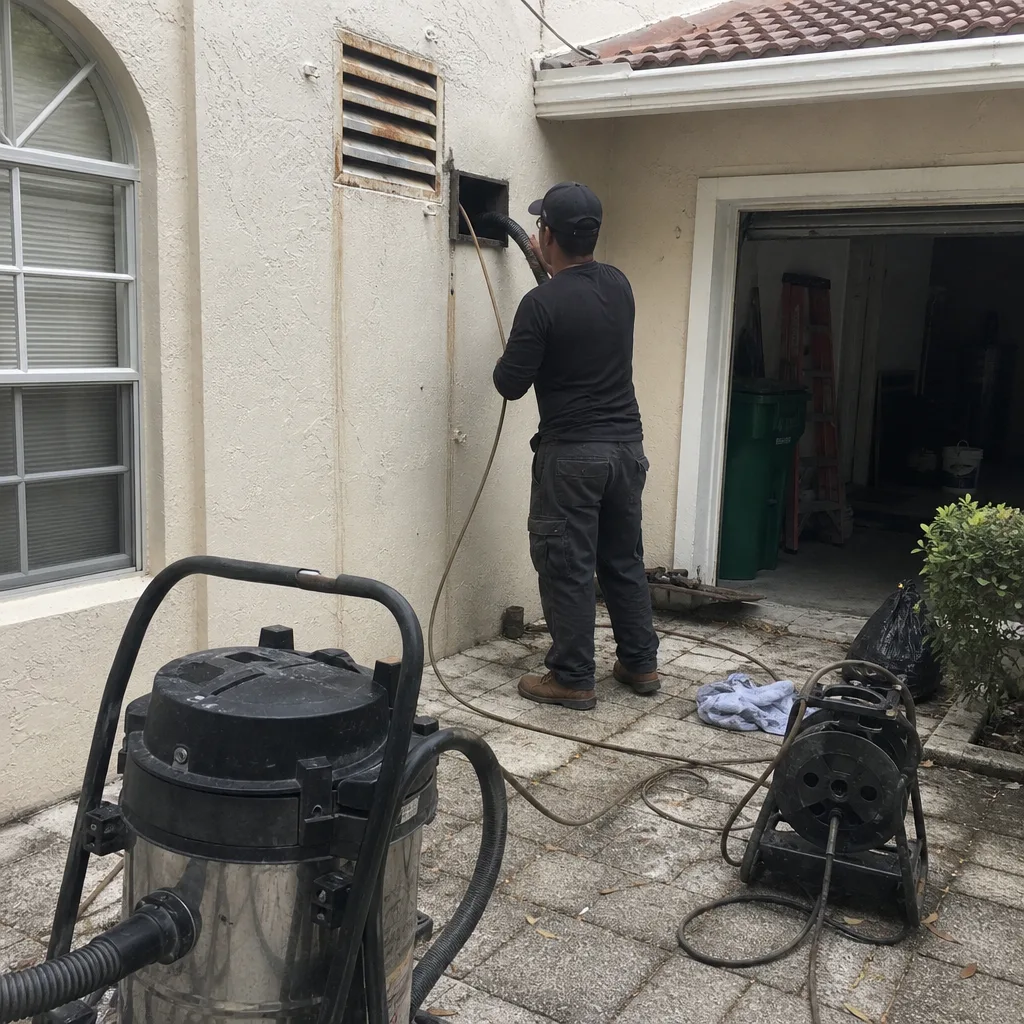 Before
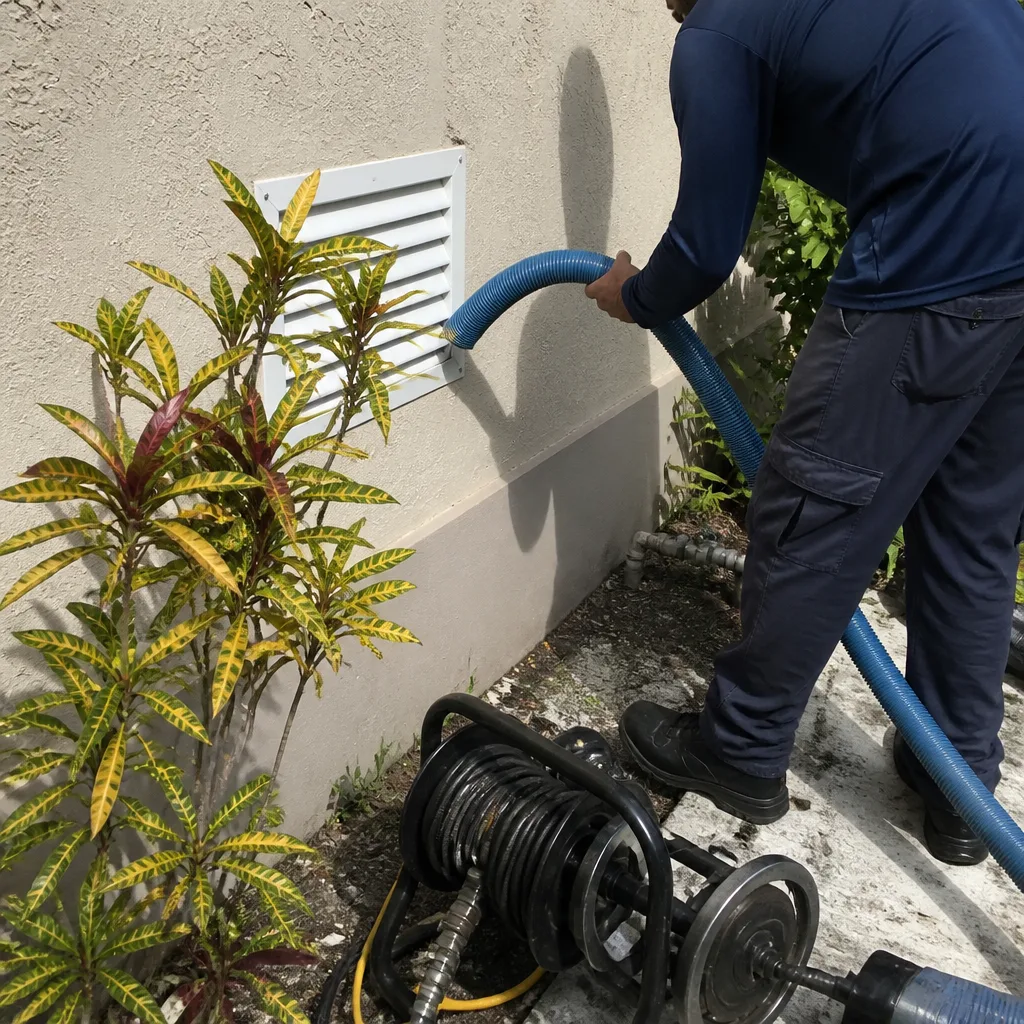 After
After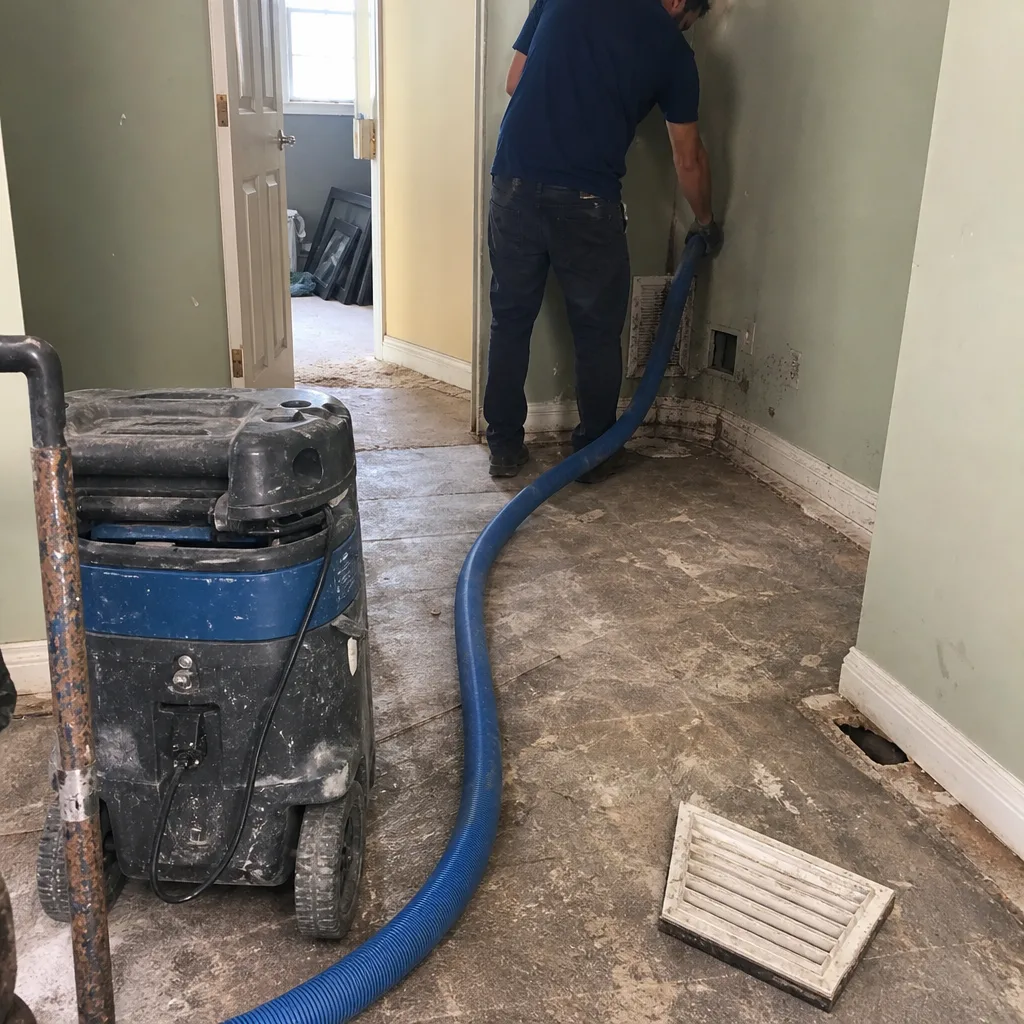 Before
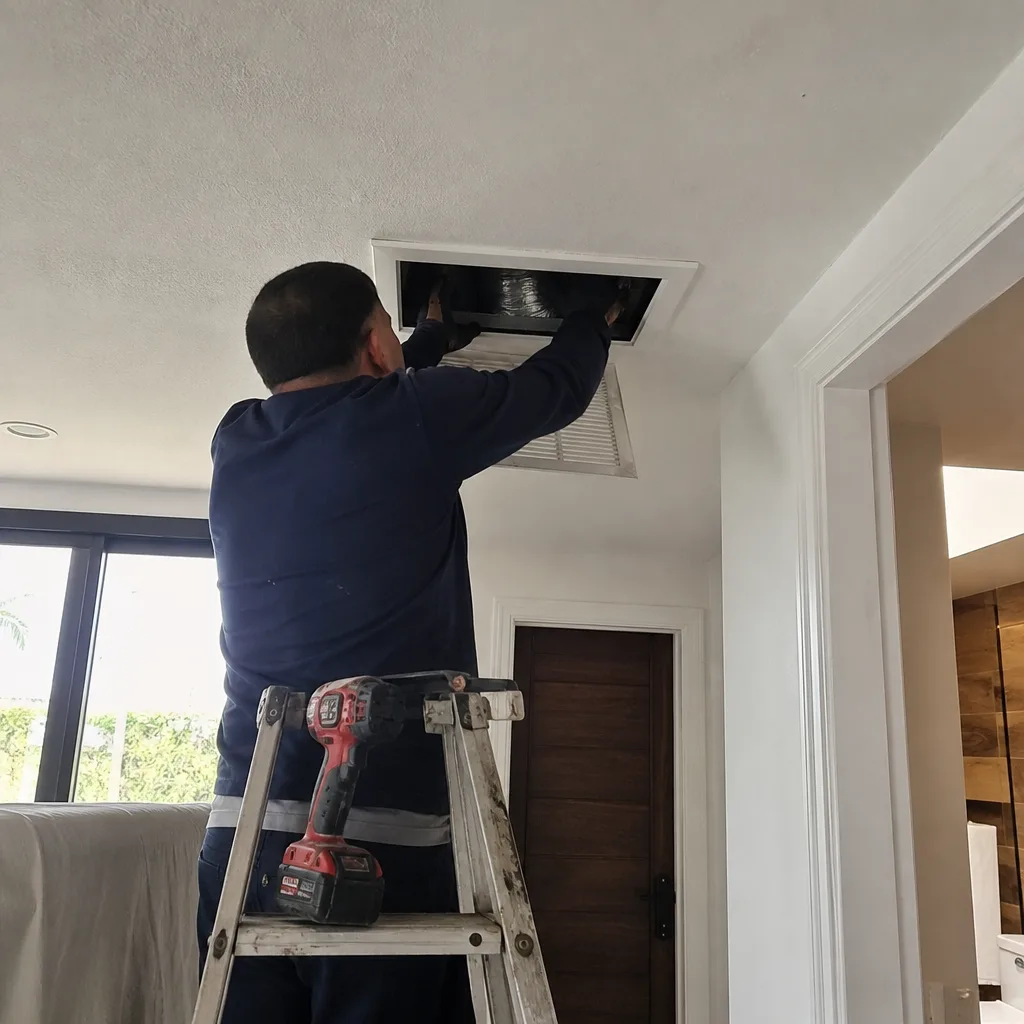 After
AfterFrequently Asked Questions
Most Miami homes run between $350 and $650 for a complete whole-system cleaning, depending on the size of the system, the number of returns, and the condition of the ductwork-see our Air Duct Cleaning Cost Breakdown: The Miami Homeowner’s Reference for 2026 for full pricing details. Homes with severe buildup, pet hair, or construction debris may run higher, but a legitimate contractor gives you a flat price before work starts, not a range that shifts once the crew arrives. Call (850) 779-9240 for an exact quote based on your home. Estimates are free.
Cheap quotes usually describe cheap work. A $99 whole-house special is almost always a per-vent upsell in disguise, where the “whole house” consists of six vents and the actual system cleaning is sold separately at ten times the advertised price. Legitimate companies quote a flat whole-system price because they’re cleaning the whole system. If a quote is dramatically below the $350 to $650 range typical for Miami, ask what exactly is included, and get the answer in writing before you commit. Call (850) 779-9240 for a written quote that won’t change at the door.
Before-and-after photos of your own ducts are the standard. A legitimate contractor photographs the duct interiors before cleaning and after, showing the difference at the duct walls and registers. You should also see the debris collection from the negative-air unit, not just a vague description of “what came out.” If the company won’t provide photographic proof, the work is unverifiable. We photograph every job, and you can see your own ducts before and after we clean them.
In Miami’s climate, most homes need air duct cleaning every 3 to 5 years. The year-round AC operation, high humidity, and (in coastal neighborhoods) salt air all accelerate debris accumulation. Homes with pets, recent renovations, or smokers should move toward the shorter end of that range. If you’ve never had your ducts cleaned and your home is more than five years old, schedule an inspection. Call (850) 779-9240 and we’ll give you an honest assessment without a sales pitch.
No. Florida does not issue a specific air duct cleaning license. That absence makes other credentials more important: NADCA membership, general liability insurance, and technicians who are background-checked and trained on professional equipment. When you call a contractor, ask about NADCA membership and insurance before you ask about price. A legitimate company answers both questions immediately. For more on what a proper cleaning should involve, read our guide to Air Duct Cleaning in Miami.
Air duct cleaning covers the HVAC system: supply ducts, return ducts, trunk lines, registers, and the air handler. Dryer vent cleaning is a separate service that clears the lint from the vent pipe that runs from your dryer to the outside. Dryer vents clog with lint and are a fire hazard if not cleaned regularly. Kestrel provides both services, and you can learn more about our Dryer Vent Cleaning in Miami service. Call (850) 779-9240 to schedule either one, and we’ll give you a written price for each before the work begins.
The Bottom Line
Hiring a legitimate air duct cleaning contractor in Miami comes down to five phone questions, a written flat-price estimate, and a guarantee that exists on paper rather than in a sales pitch. The companies that fail those tests fail them immediately: they can’t name their equipment, they won’t commit to a number, and their promises dissolve the moment you ask for documentation. The Kingswell Way defines how we operate: say the price before the work starts, show up when we said we would, leave the place cleaner than we found it, document the work with photos, and stand behind it with the 365-Day Done Right Promise in writing. Call (850) 779-9240 for a free estimate, and you’ll have a written price in your hands before any work begins.
Written by Dale Whitmore, Owner at Kestrel Air Duct Miami, serving Miami since 2004.