
Last updated October 15, 2026
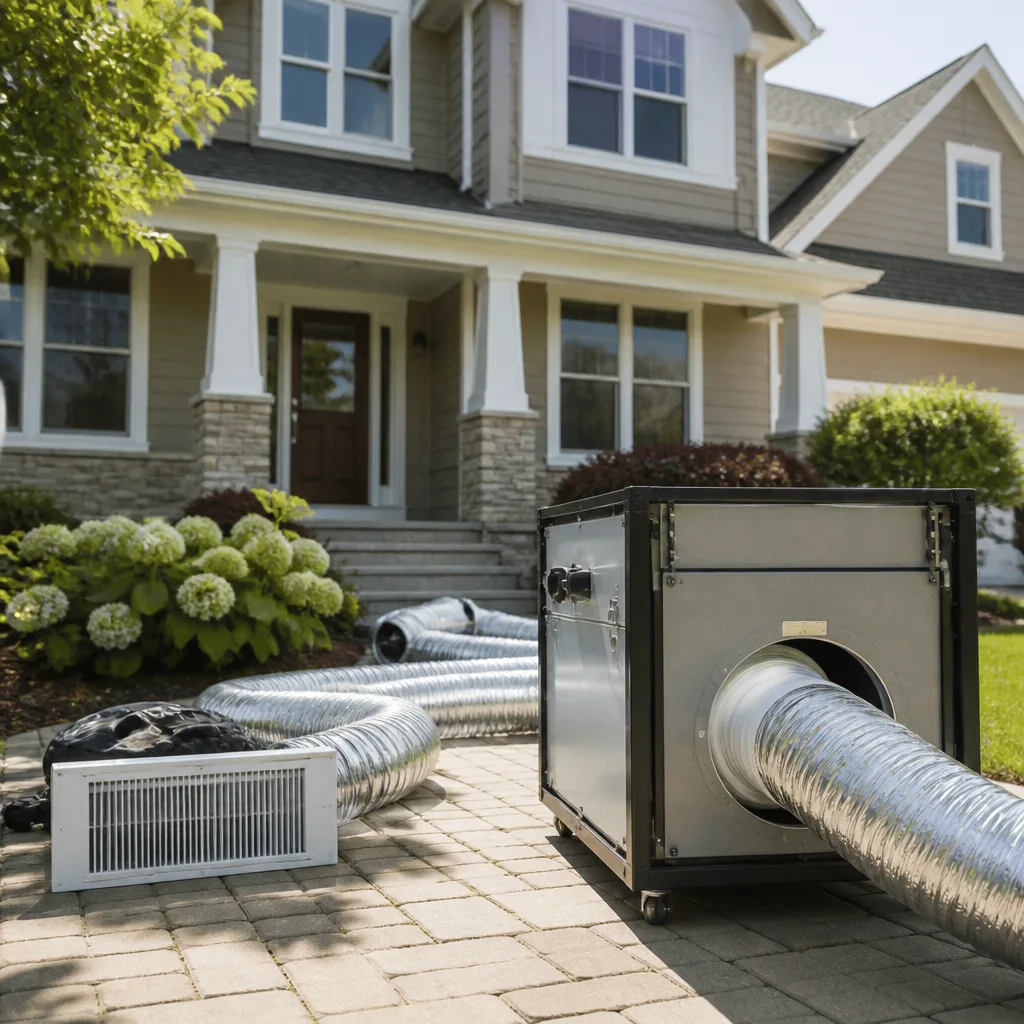 Whole-home duct cleaning
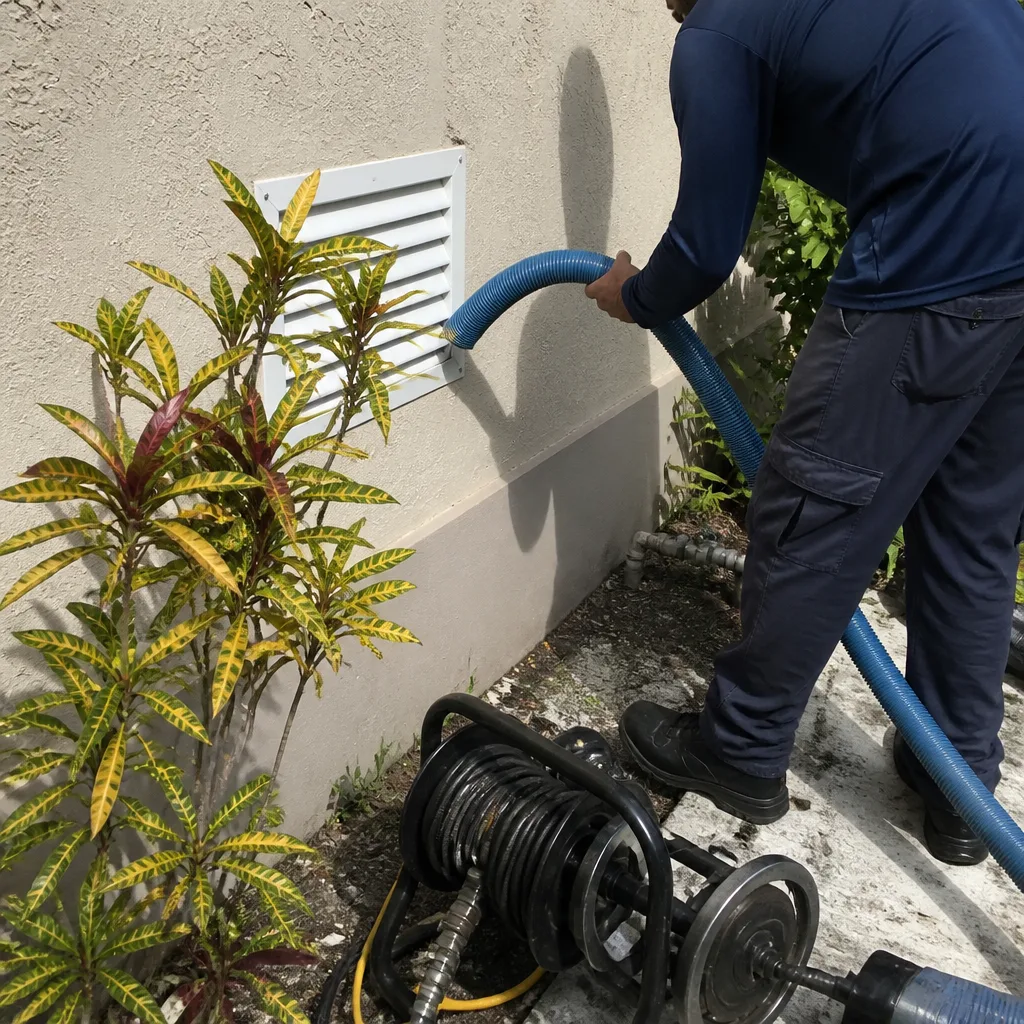
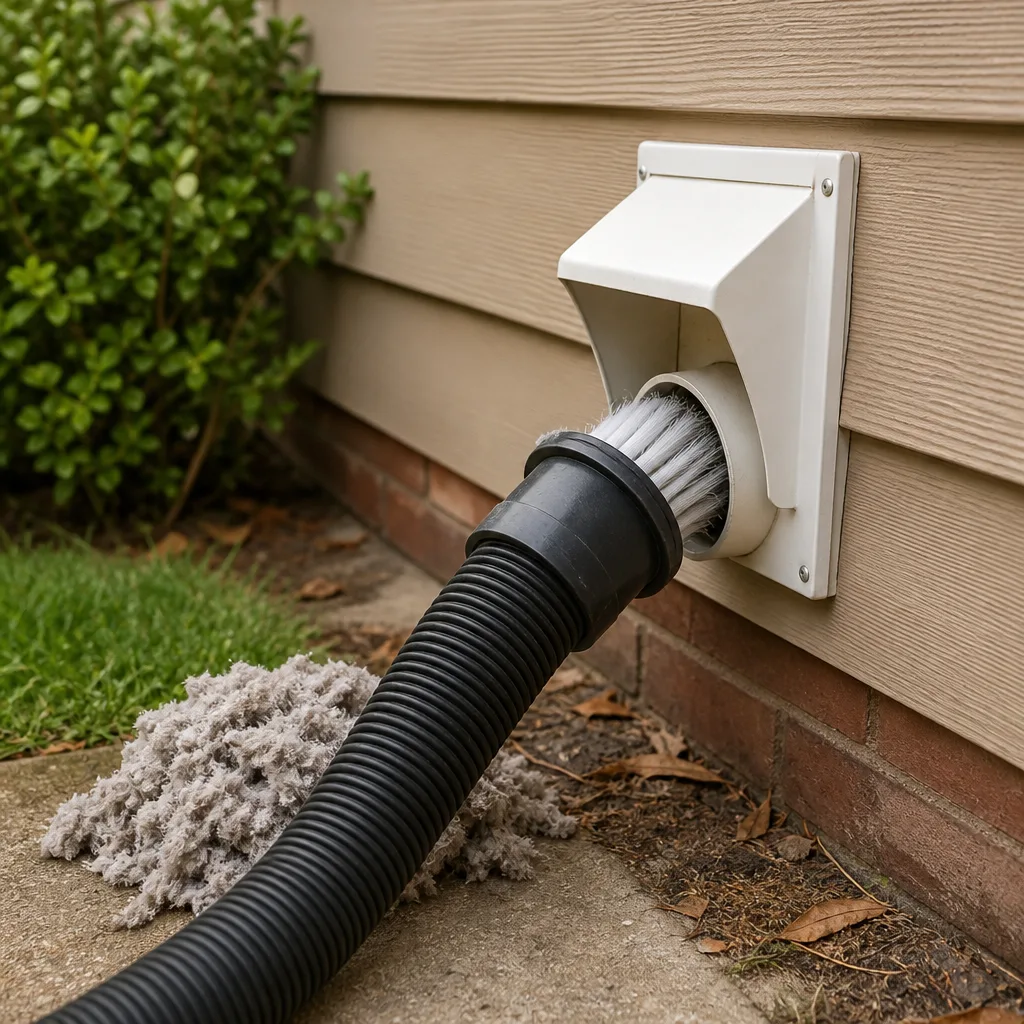 Dryer vent cleaning
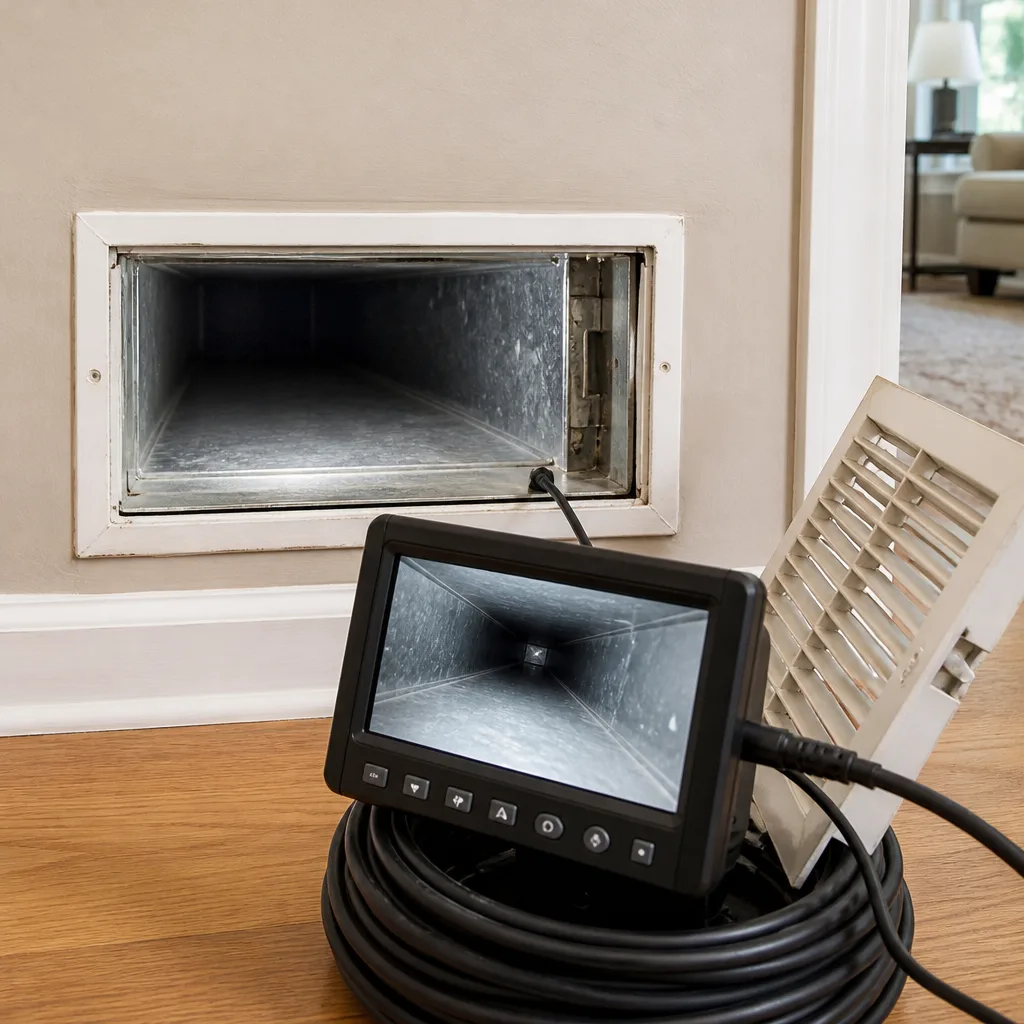 Camera inspection
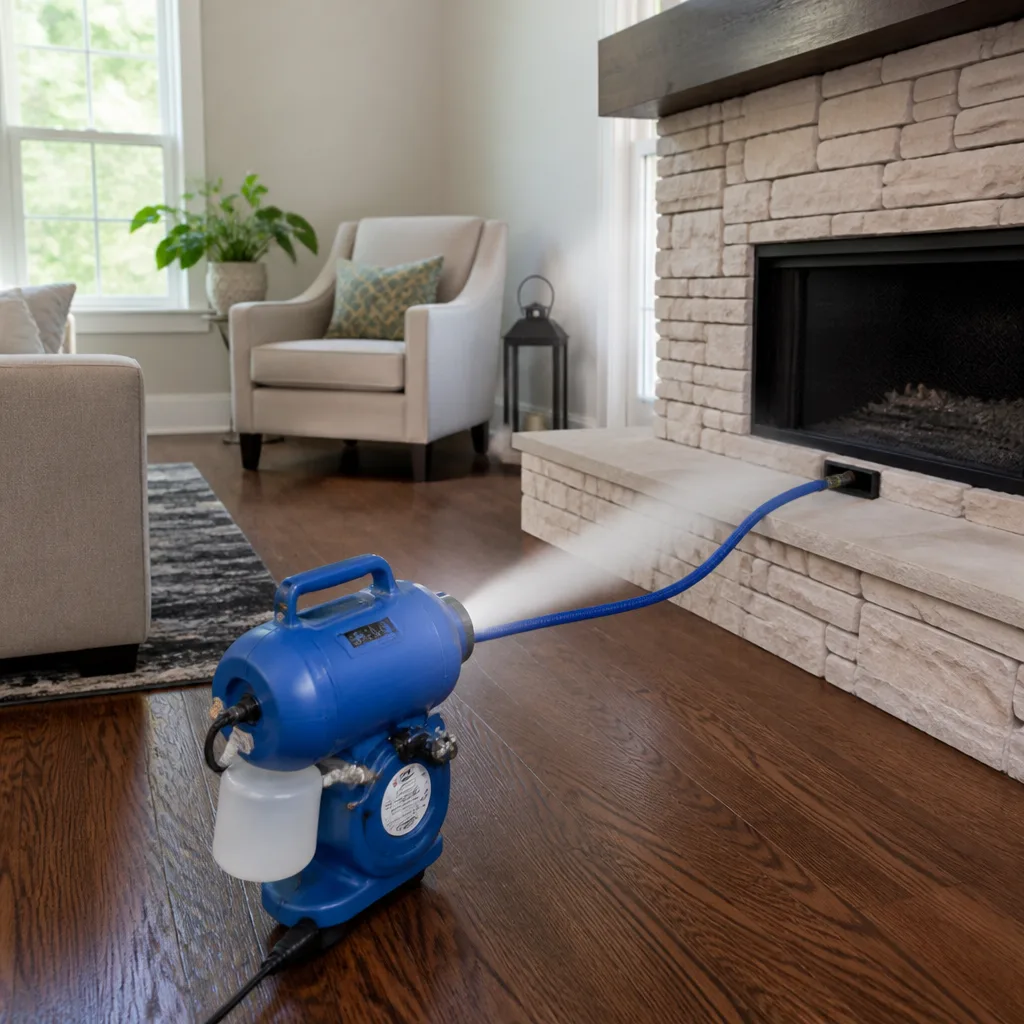 Sanitizing & deodorizing
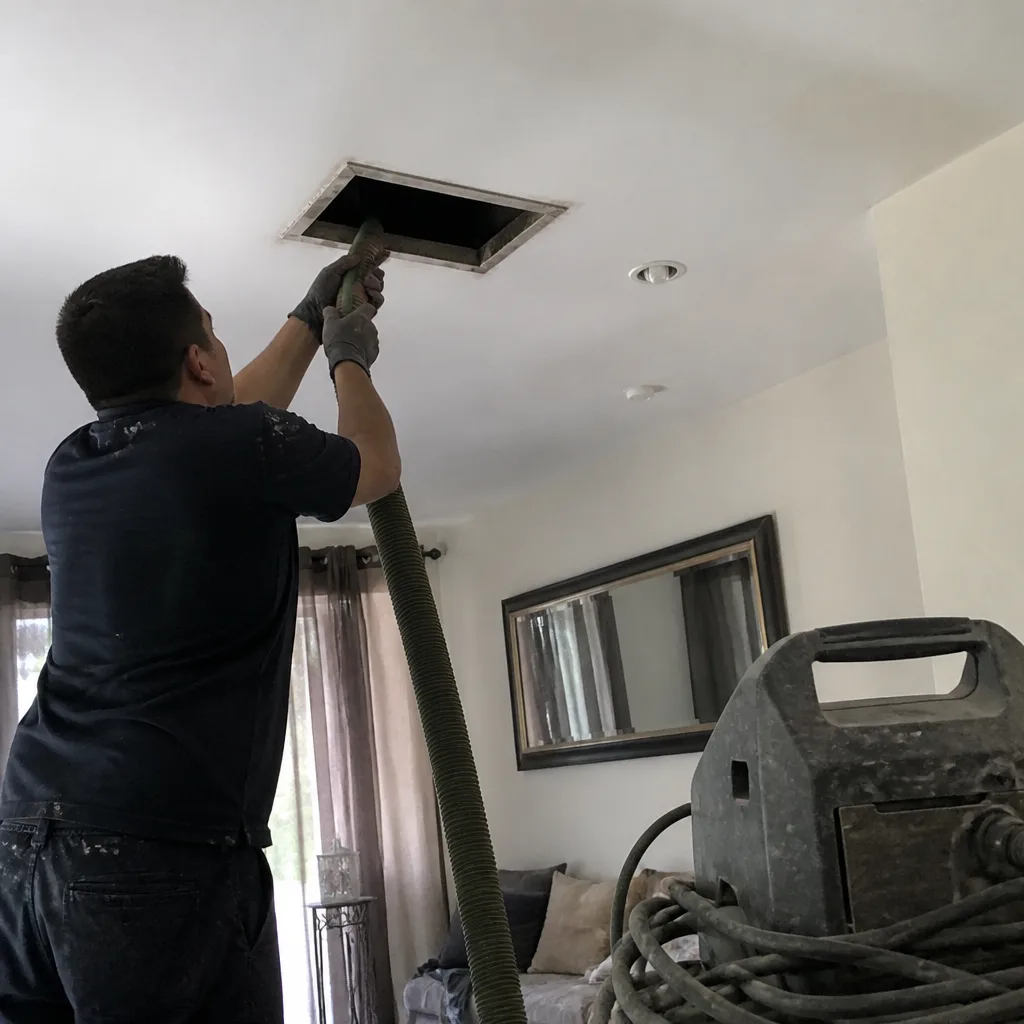
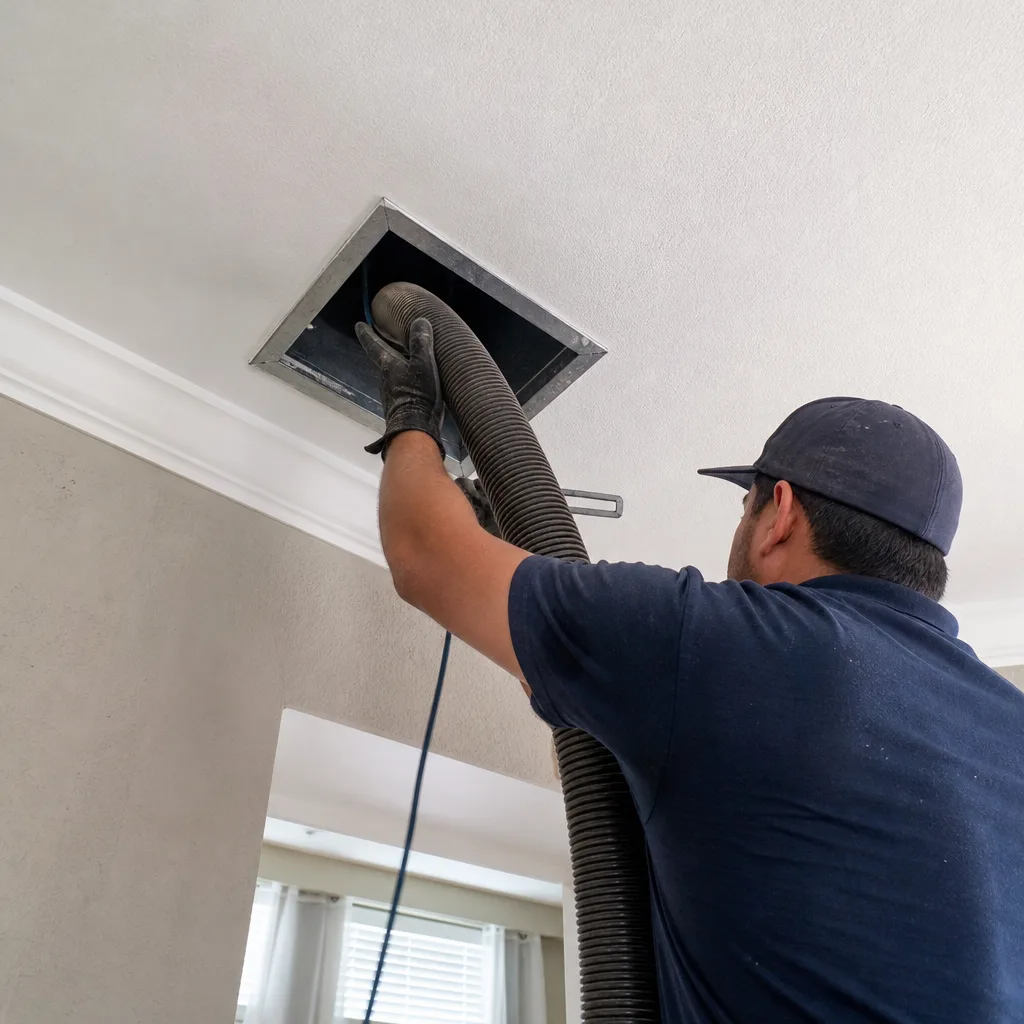
Whole-system duct and dryer vent check with before-and-after photos - you see exactly what came out of your vents
That "$99 whole-house special" is a bait ad - the real number appears once they are in your hallway, or the "clean" is a shop-vac at the register. We photograph the inside of your ducts before and after instead.
Air Duct Cleaning Warning Signs: A Miami Homeowner’s Reference Guide
Most Miami homeowners have been taught to ignore their ducts. The thinking goes: it’s humid here, everything smells a little musty, and that thin layer of gray dust on the return grille is just South Florida being South Florida. But here’s the counterintuitive part: the very climate that makes these conditions common also makes them more damaging, not less. When outdoor humidity hovers near 80 percent for months at a time, what starts as a minor duct issue becomes a self-amplifying problem. This guide will walk you through the warning signs that actually matter in Miami, which ones mimic normal household conditions, and how to tell the difference before a $400 problem becomes a $4,000 one.
Styles & brands we work with
Quick Answer
The most reliable air duct cleaning warning signs in Miami are a musty odor that appears only when the AC runs, dark oily rings around return-air grilles, condensation beading on supply registers, uneven room temperatures in a home with a healthy HVAC system, and allergy symptoms that improve when you leave the house for two days or more. Any one of these is worth investigating. Two or more together usually means the ducts need Air Duct Cleaning services, not just a filter change.
Table of Contents
- The First-Blast Musty Smell: What It Actually Means
- Condensation on Supply Registers: Normal Physics or Warning Sign?
- Uneven Room Temperatures: The Collapsed Flex Duct Problem
- Return-Air Grilles: Reading the Debris Pattern
- Allergy Symptoms That Point to Duct Contamination
- Dust Levels: When Normal Accumulation Becomes a Signal
- Noises, Rattles, and Airflow Changes
- The Miami Timeline: When Each Season Makes Duct Problems Worse
- Common Mistakes to Avoid
- When to Call a Professional
- Frequently Asked Questions
- The Bottom Line
The First-Blast Musty Smell: What It Actually Means
The single most misread warning sign in Miami homes is a musty odor that appears only when the AC kicks on. Homeowners routinely blame outdoor humidity, or the age of the house, or “that’s just how Florida smells.” The actual source is often microbial growth on the duct liner or inside the air handler, a condition that worsens with every cooling cycle and is entirely addressable.
Here’s what happens: warm, humid Miami air passes across the evaporator coil inside your air handler. The coil pulls moisture from the air, and that moisture has to go somewhere. Most of it drains properly, but a thin film of condensation persists on the coil, the drain pan, and the interior surfaces of the air handler. Over time, dust and organic particles carried in the return air stick to those damp surfaces. That’s the food source. Add Miami’s year-round warmth and you have the perfect environment for microbial growth, not just in the drain pan (which an HVAC tech can clean) but on the fibrous insulation that lines the interior of many duct systems.
The key diagnostic distinction is when the smell appears. If you walk into the house and it smells musty all the time, the problem might be the ducts, the air handler, or the house itself. But if the smell is strongest during the first 30 to 60 seconds after the blower kicks on, and then it fades or becomes less noticeable as the air continues to run, you’re smelling whatever is growing inside the air stream. The first blast of air pushes out the accumulated odor that’s been building while the system was idle. That points to duct or air handler contamination, not general household humidity.
There are three common culprits, and they need different professionals:
- Duct liner contamination: The interior of flexible or fiberglass-lined ducts has become damp, and microbial growth is established on the liner surface. This requires professional air duct cleaning in Miami to remove the contamination and treat the surfaces. Replacing badly contaminated duct runs may also be necessary.
- Drain pan sludge: The condensate pan under the coil has accumulated a layer of organic sludge, and it smells when air blows across it. This is an HVAC service job, not a duct cleaning job.
- Coil fouling: The evaporator coil itself is matted with dust, hair, and biofilm. Again, an HVAC tech needs to clean the coil. But here’s the overlap: if the coil is that dirty, the ducts downstream are almost certainly distributing the same particles through the house, so duct cleaning is often the follow-up step.
In our experience, Miami homes with a first-blast musty smell typically have a combination of all three. The duct liner is the one most often overlooked because it’s out of sight. A professional duct inspection can determine which surfaces are involved before any cleaning begins, as explained in our DIY vs Professional Air Duct Cleaning: The Miami Homeowner’s Decision Guide.
Condensation on Supply Registers: Normal Physics or Warning Sign?
We get calls about “sweating vents” every summer in Miami. Sometimes the caller has a legitimate duct problem. Sometimes they have a normal physics problem. Knowing the difference saves you money.
Here’s the physics: when cold air exits a supply register into a warm, humid room, the metal surface of the register drops below the dew point. Moisture from the room air condenses on that cold metal. That’s the same reason a cold glass of water sweats on a Miami patio. If the condensation is light, appears only on the metal register face during the hottest and most humid hours, and drips only occasionally, you’re looking at normal South Florida dew-point behavior.
But there are three patterns that signal a real problem:
- Condensation rings or stains on the ceiling around the register. If the drywall or ceiling material around the register shows water staining, the moisture isn’t just on the visible metal face. It’s likely condensing inside the duct boot or on the back of the register, wicking into surrounding material. This means the register or the duct connection is leaking cold air into spaces that should be sealed. That pulled-in humid air is condensing inside wall or ceiling cavities, creating conditions for hidden microbial growth.
- Water beading on insulated flex duct in the attic. If you go into the attic on a humid Miami afternoon and find the exterior of the flex duct runs beaded with water, the duct insulation is failing or the vapor barrier is torn. Cold air inside the duct cools the outer surface below dew point, and the moisture in the attic air condenses on it. That water drips onto your insulation, reducing its effectiveness and eventually creating stains on the ceiling below. This is a duct repair or replacement issue, and it’s also a growth environment for whatever the water lands on.
- Condensation on the register accompanied by weak airflow. If the register is sweating more than it should and the airflow from that register feels weak, you may have a duct leak or a crushed flex run reducing air delivery. The register gets colder than normal because less air is moving across it, which drops the surface temperature further below dew point. The condensation is a symptom of the airflow problem, not just humidity.
The Miami-specific reality is that condensation on registers is sometimes just August being August. But when condensation appears year-round, or on registers in interior rooms far from exterior walls, or paired with a musty smell, it’s worth an inspection. A professional can distinguish between dew-point physics and a duct insulation or sealing failure in about 20 minutes.
Uneven Room Temperatures: The Collapsed Flex Duct Problem
Miami’s attic spaces are brutal on flexible ductwork. Daytime attic temperatures regularly exceed 130 degrees Fahrenheit from May through October. The outer jacket of flex duct degrades under that sustained heat. The inner liner, which is typically a thin plastic or foil tube held open by a spiral wire, sags and stretches. And the fiberglass insulation between the liner and the outer jacket loses its loft over time, which reduces the duct’s ability to keep the conditioned air cool on its journey through the hot attic.
Eventually, the inner liner of a flex duct run can collapse. The spiral wire that holds the tube open fails at a joint, or the duct gets kinked where it passes over a truss, and the air path narrows to a fraction of its original diameter. The result is a room that never quite reaches the set temperature no matter what the thermostat says.
Homeowners often misread this as an equipment problem. They call an HVAC company, the tech confirms the compressor is running and the refrigerant charge is correct, and the homeowner is told “everything looks fine.” The system is fine. The duct delivering air to the hot room is not.
There are two patterns we see repeatedly in Miami:
- The “end of the run” hot room. The branch duct that serves the farthest room from the air handler is the longest run, which means it has the most linear feet exposed to attic heat and the most opportunity to sag, kink, or collapse. If the hot room is the one at the end of the longest duct run, collapsed flex is a prime suspect.
- The “upstairs afternoon” hot room. Rooms over unconditioned space, or rooms with a large west-facing wall, heat up faster than the rest of the house. But if that room stays hot even after the sun goes down, while the thermostat reports the rest of the house has reached temperature, the issue is airflow, not just heat gain. A restricted duct run delivers less cooled air to offset the heat that’s already in the room.
The diagnostic step that costs nothing: walk through the house on a warm afternoon and hold your hand in front of each supply register. Compare the airflow from room to room. If one room has noticeably weaker airflow than its neighbors, and that’s also the room that feels warm, you’ve got a duct delivery problem. A professional duct inspection can then confirm whether the run has collapsed, kinked, or disconnected entirely, and whether repair or replacement is the right fix. See The Complete Guide to Air Duct Cleaning in Miami for what to expect.
Return-Air Grilles: Reading the Debris Pattern
Return-air grilles in Miami collect dust. That’s not news. But there’s a difference between normal dust accumulation and a pattern that indicates your duct system is pulling air from places it shouldn’t.
Normal dust accumulation on a return grille is uniform and light gray. It builds up evenly across the face over weeks or months, and it wipes away with a damp cloth. It’s mostly skin cells, fabric fibers, and general household dust carried on the air returning to the air handler.
The pattern to watch for is darker and more specific. We call it the “oily ring” pattern. Instead of even accumulation, you see a dark, sticky residue concentrated around the edges of the grille, often with thin streaks extending outward along the wall or ceiling surface. The residue is darker than normal household dust, sometimes nearly black, and it resists dry wiping. It feels slightly tacky.
That pattern means the return air path is pulling air through gaps around the return boot, the framing, or the wall cavity itself. Instead of drawing air only through the open face of the grille, negative pressure from the return side of the blower is drawing air from the attic, the wall cavity, or the space between floors. That air carries insulation fibers, attic dust, and whatever aerosolized organic material exists in those hidden spaces. The sticky components of that material – oils, tars, and particulates from insulation – deposit on the grille edges as the air accelerates around the perimeter.
In Miami terms, this often means your air handler is pulling attic air, which averages 130 degrees in summer and is loaded with fiberglass particles and whatever else lives in the attic space. That contaminated air bypasses the filter entirely and gets distributed through the supply ducts into your living areas.
The fix depends on the source. Sealing the return boot to the drywall, sealing gaps in the return plenum, or repairing a disconnected return duct are the usual remedies. But if the attic air has been drawn through the system for months or years, the supply side of the ductwork is now coated with whatever came through it. Duct cleaning follows the sealing repair.
Allergy Symptoms That Point to Duct Contamination
Miami’s outdoor allergen load is aggressive. Pollen from oak and pine in the spring, mold spores from the ever-present humidity, and the year-round presence of dust mites make it hard to attribute allergy symptoms to any single source. But there’s a pattern that makes duct contamination a more likely culprit than outdoor allergens, and it’s a diagnostic signal worth taking seriously.
The pattern is this: your symptoms improve when you leave the house for 48 hours or more, and they return within a day or two of coming home. Outdoor allergens would follow you to a hotel or a relative’s house, at least to some degree. But symptoms that fade when you’re away and flare when you’re home point to something in the house itself. And if the air handler is running, whatever is in the ducts is being distributed continuously through every room.
What’s in the ducts matters. The interior of a contaminated duct system in Miami typically contains a mix of dust mite frass (the primary dust mite allergen), mold spore fragments, cockroach byproducts, and pet dander – all of which are recognized asthma and allergy triggers. The air handler circulates air across these deposits, picks up fine particles, and delivers them to the breathing zone. The filter catches some of it, but fiberglass filters, which are the most common type in South Florida homes, only trap the largest particles. The fine stuff passes straight through.
Symptoms that are commonly associated with duct-borne contaminants include:
- Morning congestion or sinus pressure that improves after you’ve been outside for an hour or two
- Asthma symptoms that are worse at night, when the air handler cycles most frequently
- Eye irritation or throat dryness that improves when you sleep with the AC off or the windows open
- Symptoms that affect multiple members of the household simultaneously, despite different outdoor exposures
This pattern is worth reporting to a contractor. It tells them to look not just for visible debris but for the fine particulate coating on duct surfaces that many inspections miss. And it justifies the use of HEPA-filtered negative-air extraction during cleaning, which removes contaminants from the house instead of resuspending them. We use Abatement Technologies HEPA filtration for exactly this reason – it keeps loosened particles out of the living space during the cleaning itself.
Dust Levels: When Normal Accumulation Becomes a Signal
Every house in Miami produces dust. The question is whether your dust is made by the house or distributed by the ducts.
Here’s a useful baseline. A home with healthy ducts and a functioning filter typically accumulates a visible dust layer on flat surfaces in about 10 to 14 days. You notice it on dark furniture, on the tops of ceiling fan blades, and on TV screens. That’s normal household dust: mostly shed skin cells, fabric fibers from clothing and upholstery, and whatever fine particles blow in through windows and doors.
But if you dust thoroughly on a Saturday and find a visible layer back on the same surfaces by Wednesday, the rate of accumulation is faster than household activity alone could explain. The ducts are putting dust back into the air as fast as it settles. That’s a distribution problem.
There’s also a quality issue. Normal dust is light and gray. Duct-distributed dust in Miami often appears slightly darker and grittier. If you wipe a surface and feel grit between your fingers, or if the dust leaves a faint dark smear on the cloth, you’re dealing with attic insulation particles, construction debris from previous renovations, or organic material that’s been accumulating in the duct system since the house was built. Homes that have been through a re-roof, which is a common event in Miami, often have fiberglass insulation particles throughout the duct system from the attic work. A roof replacement generates enormous quantities of fine debris that inevitably find their way into any unsealed duct joint or return penetration.
The filter also tells a story. If your return-air filter is loading up with visible debris much faster than it used to, the system is moving more particulates than it should. A filter that’s packed after 30 days in a home with no major renovations and no active construction nearby means the ducts are delivering particle loads that exceed what normal household activity generates. That’s a signal to inspect the duct system, not just change the filter more often. And if you’re using a cheap fiberglass filter, upgrading to a higher-efficiency media filter from Aprilaire or a similar brand can reduce the particle load between cleanings, but it won’t address the accumulated deposits inside the ducts themselves.
Noises, Rattles, and Airflow Changes
Duct systems make noise when they’re working normally – a low rush of air at the registers, the distant hum of the blower. The warning signs are the changes.
A rattle that starts suddenly and corresponds with the blower kicking on usually means something inside the duct work has come loose. Flex duct straps can fail in Miami attics as the wood they’re stapled to dries out and the staple loosens. The duct then bangs against a truss or the top plate of a wall each time the system cycles. Left unaddressed, the motion works the duct joints apart, widening the leak and increasing the amount of attic air being pulled into the system.
A whistling sound at a supply register means the air pressure inside the duct is higher than the register face can pass quietly. That usually means a restricted run, a closed damper you don’t know about, or a filter that’s been pulled into the return plenum by suction because it wasn’t seated properly. The noise itself isn’t the problem; it’s the airflow restriction the noise is reporting.
The most important “sound” change in Miami is actually the absence of sound. If a room that used to have audible airflow now seems silent, and the room is warmer than it used to be, the duct serving that room has likely disconnected or collapsed. Air is still leaving the system, but it’s dumping into the attic instead of the room. The blower keeps running, the thermostat keeps calling for cooling, and your electric bill climbs while the room never cools. That’s a duct problem hiding as an air conditioning problem.
Airflow changes on the return side are harder to hear but visible if you know what to look for. A return grille that used to hold a tissue against it by suction but now barely pulls it tells you the return path is blocked – usually by a collapsed return duct, a filth-choked filter, or a return boot that’s come apart at the drywall. Restricted return air means reduced system efficiency and increased negative pressure inside the conditioned space, which draws in outside air through every available crack and gap. In Miami’s humidity, that extra infiltration is additional moisture load on the coil and additional allergens pulled into the house.
The Miami Timeline: When Each Season Makes Duct Problems Worse
Miami doesn’t have four seasons, but duct problems have seasonal behavior anyway. Knowing when each signal gets louder helps you time inspections and cleanings. For year-round maintenance advice, check our more guides & resources.
Spring (March through May): Pollen season peaks in South Florida. Oak and pine pollen ride the prevailing easterly winds. The air handler pulls pollen through any unsealed return path and deposits it on the coil, the blower wheel, and the duct surfaces. The first-blast musty smell often becomes noticeable during this period because the system is cycling more frequently as temperatures rise. Allergy symptoms that track outdoor pollen counts can make it hard to distinguish duct contamination from seasonal allergies, but the 48-hour away-from-home test still works as a diagnostic.
Summer (June through September): The system runs nearly continuously. Humidity is at its annual maximum. Condensation problems peak now, both in ducts and around registers. Attic temperatures hit their highest levels, which accelerates flex duct degradation and increases the likelihood of collapse. This is also the season when a marginal system shows its weaknesses – the long duct run to the back bedroom that was barely adequate in April becomes a hot room in August.
Fall (October through November): The rain shifts, the humidity drops slightly, and the system gets its first real break since spring. This is the window when many homeowners notice the accumulated dust in the house, because the AC is cycling less and whatever settled gets to stay put. The fall also brings leaf and debris accumulation at the exterior portion of the HVAC system, which is fine as long as the return path is sealed.
Winter (December through February): The shortest season barely qualifies, but cooler weather means the system runs less and the first-blast smell can actually become more pronounced. Longer idle periods allow microbial volatile compounds to concentrate inside the ducts, so the first cycle after hours of downtime delivers a stronger odor punch. This is also when Florida’s occasional cold snaps prompt homeowners to run heat for the first time in months, which sends a wave of dust and odor through the house as the blower stirs up whatever settled on the duct surfaces during the cooling season.
The practical takeaway: schedule duct inspections in spring before the summer load hits, or in fall when the system is running less and inspections are easier. Problems can be addressed any time of year, but catching a collapsing flex run in March is better than discovering it in August.
Common Mistakes to Avoid
- Ignoring the first-blast musty smell because “it’s just Florida.” A musty odor when the AC kicks on is a report from your duct system, not a neutral feature of the climate. The longer it’s left unaddressed, the more established the microbial growth becomes and the more surface area it affects.
- Blaming the AC equipment for airflow problems. A healthy compressor and a clean coil can’t fix a collapsed duct run. If your HVAC tech says the equipment is fine and the room is still hot, the duct is the next place to look.
- Replacing filters more often to solve a dust problem. A thicker layer of fiberglass catches a few more particles, but it doesn’t remove the source. The dust that’s already accumulated on duct surfaces keeps circulating until the surfaces are cleaned.
- Assuming condensation on registers is normal physics without checking the pattern. Light condensation on the register face during peak humidity may be normal. Staining around the register, condensation on the duct in the attic, or condensation paired with weak airflow is not.
- Trusting a visual inspection of the first few feet of duct. What’s visible at the registers or through the first turn of the flex is a tiny fraction of the system. The collapsed run or the disconnected joint is usually in the middle of the attic, far from any point you can see without a scope.
- Waiting until the smell is constant before acting. A musty smell that only appears on startup is early-stage. A smell that’s constant is an established problem requiring more extensive remediation. The earlier you address it, the less invasive and less expensive the fix.
- Assuming all duct cleaners are equivalent. The difference between a Rotobrush rotary brush system with negative-air extraction and a shop vac attached to the register is the difference between cleaning and redistributing. The equipment matters, and so does whether the company backs the work in writing after the job is done.
When to Call a Professional
Some warning signs are worth watching. Others are worth calling about immediately. If you have a first-blast musty smell that persists for more than a week, a dark oily ring around the return grille, water staining around a supply register, or a room that stays hot despite a healthy AC system, schedule a professional inspection now. These conditions don’t resolve on their own, and each cooling cycle makes them incrementally worse. If allergy symptoms consistently improve when you leave the house and flare when you return, mention that pattern to the contractor – it guides the inspection toward fine particulate contamination that visual checks miss. Kestrel Air Duct Miami offers free estimates in Miami – call (850) 779-9240 to schedule a duct inspection and get a written price before any work begins.
Frequently Asked Questions
Most Miami homes run between $450 and $850 for a full air duct cleaning, depending on the size of the system, the number of return points, the degree of contamination, and whether the job includes the air handler interior, the return plenum, and all supply runs. Larger homes, systems that haven’t been cleaned in decades, and jobs that require additional access points in the ductwork fall above that range. Duct cleaning is typically priced per system, not per vent. Call (850) 779-9240 for an exact quote on your home – the estimate is free, and the price is in writing before any work begins.
Cheap duct cleaning quotes usually come from companies that skip the negative-air extraction step, use underpowered agitation equipment, or quietly add per-vent surcharges once the technician arrives and sees the system. Some quote a single price for “up to” a certain number of vents and then charge extra for every vent beyond that, even though no homes have fewer vents than the limit. A legitimate duct cleaning requires brush agitation at the duct wall and simultaneous negative-pressure extraction to pull loosened debris out of the house. Equipment like Rotobrush rotary brush systems and Nikro negative-air units is expensive, and companies that use it charge accordingly. If a quote is dramatically below the range above, ask what equipment they use and whether the price includes all supply and return runs, the air handler, and the return plenum.
Ask for before-and-after photos of the duct interior. A professional duct cleaning company should be able to show you the condition of the duct surfaces before cleaning and after, typically through a scope camera inserted into the ductwork. You should also be able to see the extracted debris – many companies use a clear collection canister on the negative-air unit so the homeowner can watch the material being removed. Beyond verification, the guarantee matters. We put our 365-Day Done Right Promise in writing on every single job, which means if the work falls short within the guarantee period, we return and make it right at no charge. A company that won’t document the results or back them in writing is asking you to trust a process you can’t see.
In Miami, most homes benefit from duct cleaning every 3 to 5 years. Homes with pets that shed heavily, homes that have been through a renovation, homes with occupants who have asthma or significant allergies, and homes within a few miles of the coast (where salt-laden air accelerates certain types of corrosion on unsealed duct components) may need it more frequently. The system itself will tell you: if the first-blast musty smell returns within a year or two of a professional cleaning, the underlying moisture issue wasn’t resolved and needs a different kind of attention. A visual inspection every few years is a reasonable way to determine whether cleaning is due, and a competent contractor can tell you whether you need a full clean or just a localized treatment.
You can replace filters, vacuum accessible register openings, and keep the area around return grilles clear of dust and furniture. What you cannot do with homeowner-grade equipment is clean the interior surfaces of the duct runs themselves. The interior of a flex duct run is a 4 to 10 inch diameter tube of fiberglass insulation with a thin inner liner. Reaching more than a foot or two into that space requires professional rotary brush equipment designed for the purpose. Attempting it with a shop vac or a household vacuum with a long hose often makes the problem worse by dislodging material from the accessible portion of the duct and redistributing it deeper into the system. Professional cleaning uses brush agitation at the duct wall paired with negative-pressure extraction, so loosened material is pulled out of the house through the vacuum unit rather than blown into the living space.
Duct cleaning is not an allergy treatment; it’s a system cleaning. The purpose is to remove accumulated debris from the air distribution system so the system can do its job without spreading that debris through the house. Whether or not you have allergy symptoms, a contaminated duct system is reducing the efficiency of your AC, providing a reservoir for dust that resettles on your furniture, and, in Miami’s humidity, creating the conditions for the musty smells that indicate microbial growth on damp surfaces. If your ducts are visibly clean, there’s nothing to do. If they’re not, the cleaning has value regardless of your symptom profile. A professional inspection tells you which situation applies. Call (850) 779-9240 to schedule one.
The Bottom Line
Miami’s climate makes duct problems more likely and easier to misread. The musty first-blast smell, the sweating register with a water stain around it, the hot room at the end of the run, and the dark ring around the return grille are not normal features of a South Florida home – they’re reports from the system itself. Learning to read them is the difference between catching a flex duct collapse before it destroys your summer electric bill and discovering it in August. If you’re seeing one or more of these signs, get an inspection. The consultation is free, the price is in writing before any work starts, and nobody benefits from ignoring the report. Kestrel Air Duct Miami provides dryer vent cleaning in Miami as well as full air duct cleaning services, and we’re glad to answer any further questions about what you’re seeing in your home. Call (850) 779-9240.
Written by Dale Whitmore, Owner at Kestrel Air Duct Miami, serving Miami since 2004.
See the difference
 Before
 After
After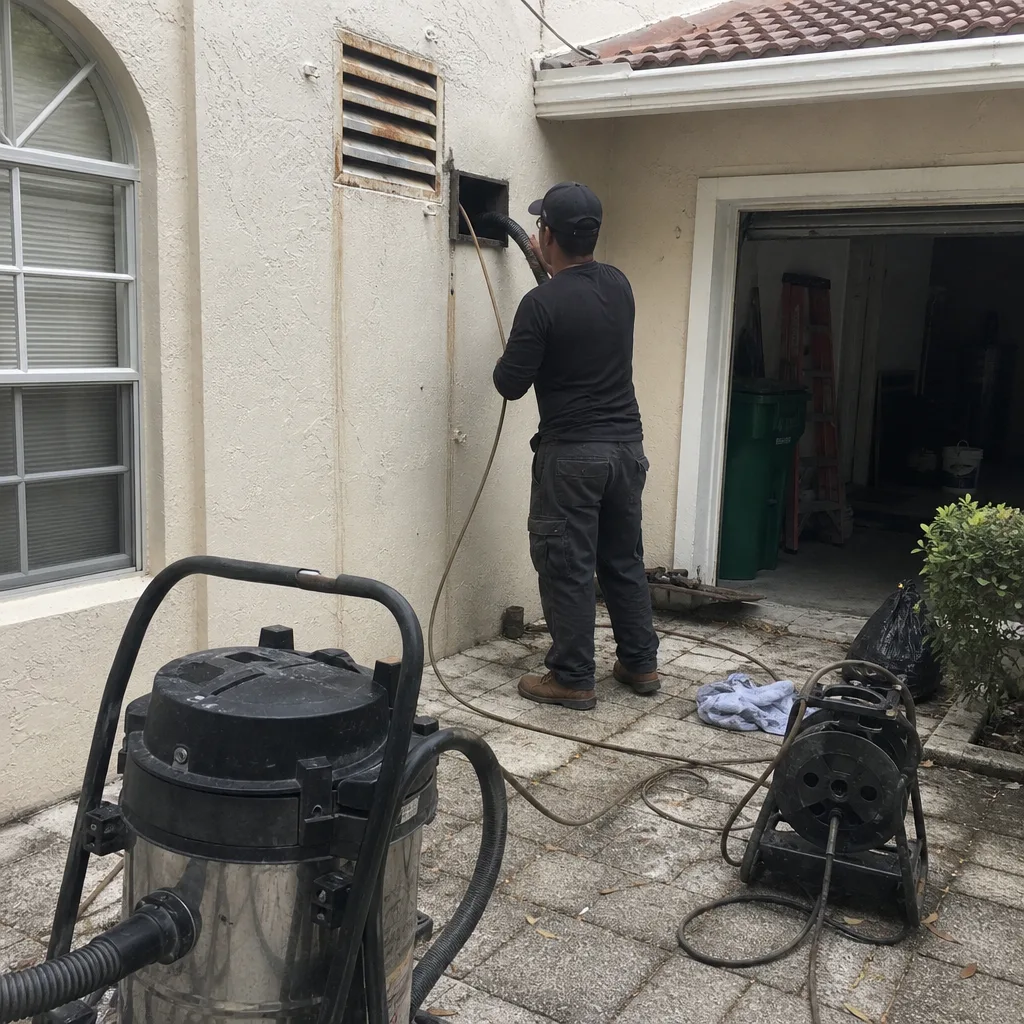 Before
 After
After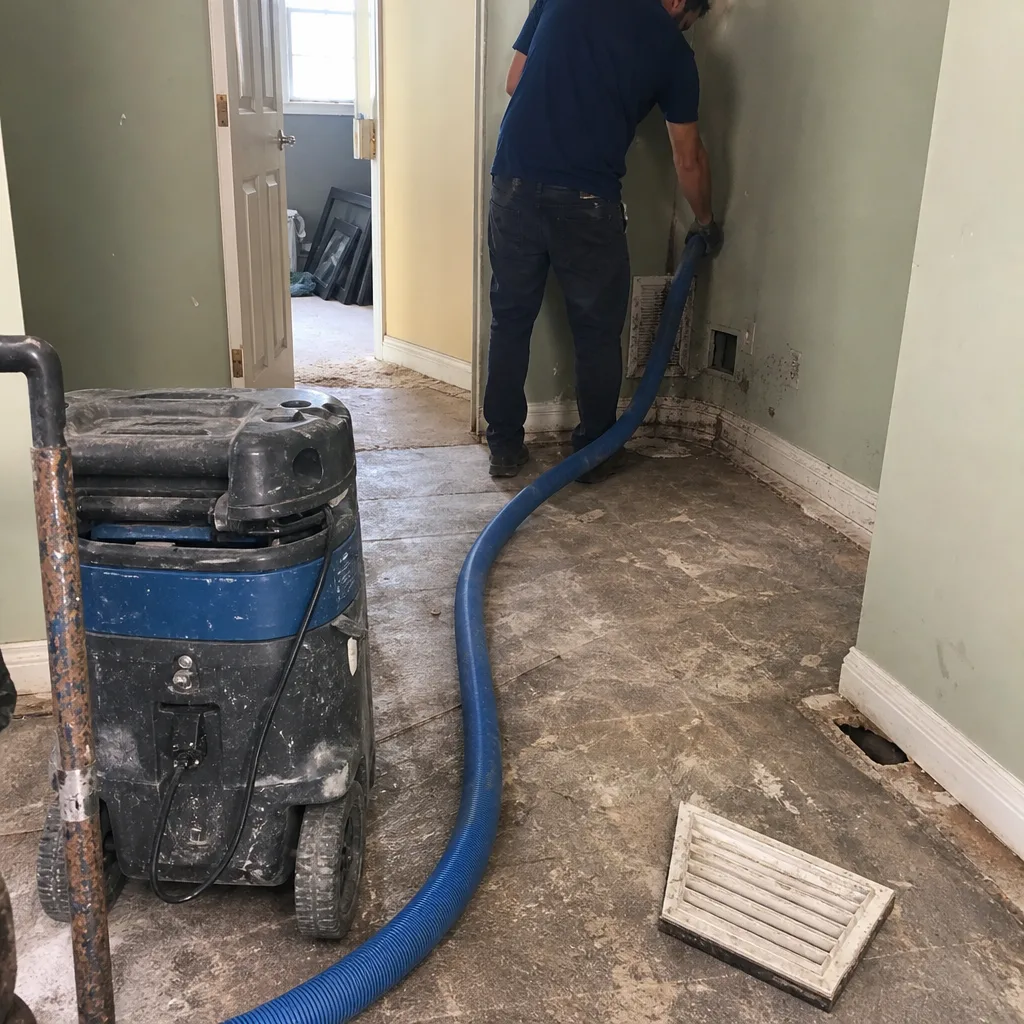 Before
 After
After